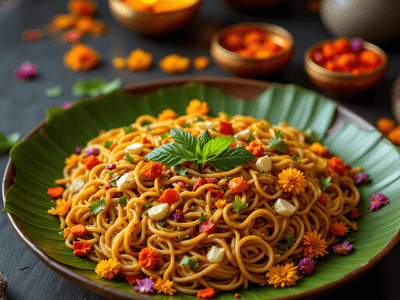
Vegan Ragi Noodles
Lunch • India
How to Make Vegan Ragi Noodles (Traditional & Healthy Version)
Vegan Ragi Noodles are a delicious and wholesome lunch option that beautifully blend the nutty flavor of ragi (nachni/finger millet) with the vibrant spices and vegetables of South Indian cuisine. Ragi, a staple grain especially in Karnataka and Tamil Nadu, is revered for its nutritional value and is commonly used to make ragi mudde, dosas, and porridges. Transforming this ancient grain into noodles makes the dish both modern and rooted in tradition, offering a unique way to enjoy millet in your daily diet. These noodles are light, gluten-free, and vegan, incorporating colorful Indian vegetables like carrots, capsicum, and beans, all tossed together with aromatic tempering of mustard seeds, curry leaves, and ginger. The earthy, slightly sweet taste of ragi pairs perfectly with the crunch of fresh veggies and classic Indian seasonings, creating a satisfying meal that’s rich in texture and flavor. Popular during festivals like Sankranti, when millets are celebrated, ragi noodles are a smart choice for anyone seeking a nutritious, easy-to-digest, and authentic Indian lunch.
Ingredients(for 1 bowl (approx. 200g))
- 150g Ragi noodles (uncooked) (nachni noodles, available in Indian stores)
- 1 small Carrot (grated or julienned)
- 1 small Capsicum (Shimla mirch) (thinly sliced)
- 8-10 French beans (finely chopped)
- 1 medium Onion (thinly sliced)
- 1 Green chilies (slit, adjust to taste) - optional
- 1/2 inch Ginger (finely grated (adrak))
- 1/2 tsp Mustard seeds (rai)
- 8-10 Curry leaves (kari patta)
- to taste Salt
- 2 tsp Cold pressed groundnut oil (or coconut oil for authentic flavor)
- 1/4 tsp Turmeric powder (haldi) - optional
- 2 tbsp Fresh coriander leaves (finely chopped, dhania) - optional
- 1 tsp Lemon juice (for freshness) - optional
Instructions
- 1
Boil 1.5 liters of water in a large saucepan. Add a pinch of salt and the ragi noodles. Cook as per package instructions (usually 4-5 minutes) until just tender. Drain and rinse under cold water to stop cooking. Toss with a few drops of oil to prevent sticking.
7 minutes
Do not overcook ragi noodles as they can break easily.
- 2
Heat oil in a large kadhai or pan on medium flame. Add mustard seeds and let them splutter. Add curry leaves and grated ginger, sauté for a minute until aromatic.
2 minutes
Use cold pressed groundnut or coconut oil for enhanced South Indian flavor.
- 3
Add sliced onions and green chilies (if using). Sauté until onions turn translucent.
2 minutes
Keep flame medium to avoid burning onions.
- 4
Add carrots, beans, and capsicum. Stir-fry for 3-4 minutes until vegetables are slightly tender but retain crunch.
4 minutes
Do not overcook veggies; retain their color and crunch for best nutrition.
Why This Dish is Healthy
Vegan Ragi Noodles are an ideal healthy lunch option as they combine the ancient goodness of millets with the nutritional diversity of fresh vegetables. Ragi is low in glycemic index, making it suitable for those managing weight or diabetes, while being high in dietary fiber for satiety and gut health. The use of minimal oil and a rainbow of veggies ensures the dish is heart-friendly, easy to digest, and packed with essential nutrients for an energy-boosting midday meal.
Ragi (finger millet) is a powerhouse of nutrition, especially rich in calcium, iron, and dietary fiber, making these noodles beneficial for bone health and digestion. The addition of a variety of fresh vegetables provides vitamins A, C, and K, as well as antioxidants. The dish is low in saturated fat, contains complex carbohydrates for sustained energy, and is gluten-free. Ragi is also known for its high protein content compared to other millets and is an excellent source of essential amino acids.
Pro Tips
- 💡Tip 1: Rinse cooked noodles in cold water to prevent them from sticking.
- 💡Tip 2: Always use fresh curry leaves and ginger for authentic South Indian aroma.
- 💡Tip 3: Toss noodles gently to avoid breakage and maintain texture.
Storage & Serving
Store leftover ragi noodles in an airtight container in the refrigerator for up to 24 hours. Reheat gently on a tawa or in a microwave, sprinkling a little water to retain moisture.
Best served: Breakfast or Lunch
Nutrition Facts
| Nutrient | Per 100g |
|---|---|
| Energy | 210.0 kcal |
| Protein | 3.0 g |
| Carbohydrates | 22.0 g |
| Total Fat | 2.0 g |
| Fiber | 3.0 g |