Thin Garlic Papad
Lunch • India
How to Make Thin Garlic Papad (Traditional & Healthy Version)
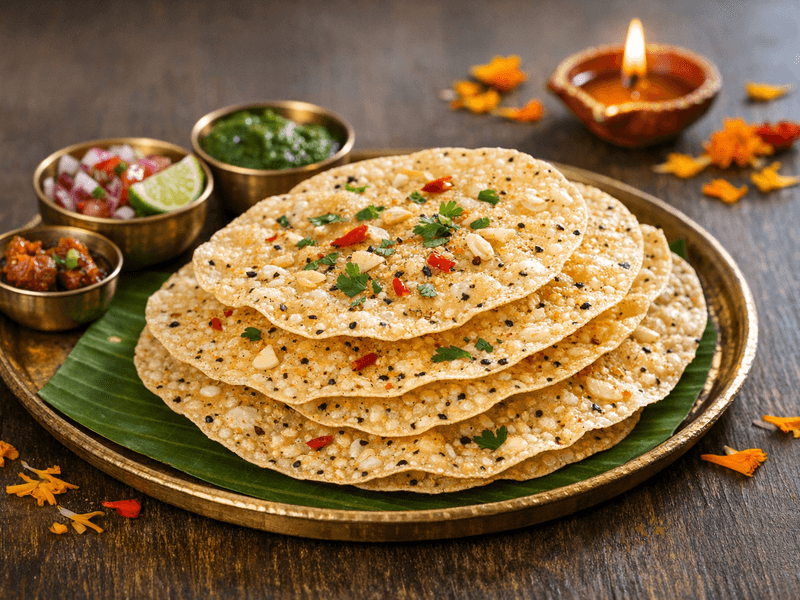
Thin Garlic Papad, known as Lehsuni Papad in many Gujarati and Rajasthani households, is a beloved crisp accompaniment found across West India. Crafted with urad dal flour (split black gram lentil flour) and infused with fresh lasun (garlic), this paper-thin cracker is synonymous with festive thalis and special occasions. Its origins trace back to the vibrant kitchens of Gujarat and Rajasthan, where papad-making is often a communal activity, especially before festivals like Diwali and Holi. Traditionally, Thin Garlic Papad brings together the punchy aroma of garlic and the subtle earthiness of lentils, creating an irresistible crunch. It’s enjoyed as a side during lunch, a light snack, or even as a palate cleanser in elaborate Indian meals. The papad’s delicate, crispy texture makes it ideal for pairing with spicy dals, khichdi, or sabzi. With a focus on minimal oil and wholesome ingredients, this healthy version maintains authenticity while keeping calories in check—making it a perfect choice for today’s health-conscious families. Whether roasted on a tawa or flame, this papad is a testament to the simplicity and richness of Indian culinary traditions.
Ingredients(for 2 medium papads per serving)
- 1 cup Urad dal flour (split black gram flour (उड़द दाल का आटा))
- 6-8 cloves Fresh garlic (finely crushed (लहसुन))
- 1/2 tsp Black pepper (freshly ground (काली मिर्च))
- 1/4 tsp Red chilli powder (लाल मिर्च पाउडर)
- 1/2 tsp Jeera (cumin seeds) (जीरा)
- a pinch Hing (asafoetida) (हींग)
- to taste Salt (नमक)
- 1/8 tsp Baking soda (for crispiness)
- as needed Water (for kneading)
- 1 tsp Oil (optional, for kneading) - optional
Instructions
- 1
In a large mixing bowl, combine urad dal flour, crushed garlic, black pepper, red chilli powder, jeera, hing, salt, and baking soda. Mix well to distribute spices evenly.
3 minutes
Sift the flour for lump-free papad dough.
- 2
Gradually add water and knead into a stiff, smooth dough. Add 1 tsp oil if desired for extra pliability.
5 minutes
Do not over-wet the dough; papads need a tight, non-sticky consistency.
- 3
Divide the dough into small equal-sized balls (about marble size).
2 minutes
Cover the dough balls with a damp cloth to prevent drying.
- 4
Using a belan (rolling pin) on a clean surface, roll each ball into a paper-thin circle. Dust lightly with flour as needed to avoid sticking.
5 minutes
The thinner you roll, the crispier your papad will be.
Why This Dish is Healthy
This papad recipe is a healthy choice because it uses minimal oil, relies on protein-rich urad dal flour, and is roasted instead of fried, significantly reducing calories and saturated fat. The inclusion of garlic adds heart-health benefits, and the recipe is naturally vegetarian and adaptable for vegan diets. Perfect for calorie-conscious eaters and those seeking nutritious Indian lunch accompaniments.
Thin Garlic Papad is naturally gluten-free (if made with pure urad dal flour) and provides a good source of plant-based protein and dietary fiber. Garlic offers anti-inflammatory and immune-boosting benefits, while cumin aids digestion. By skipping deep-frying and opting for tawa roasting, this recipe keeps fat content low. Essential vitamins like B-complex and minerals such as iron and magnesium from urad dal add to the overall nutrition, making it a smart, balanced side for any Indian meal.
Pro Tips
- 💡Tip 1: For ultra-thin papad, use a pasta machine or chakla-belan and roll with gentle, even pressure.
- 💡Tip 2: Dry the papads completely before storing; any moisture can lead to spoilage.
- 💡Tip 3: Add a pinch of hing for extra digestive benefits and authentic flavor.
Storage & Serving
Store uncooked papads in an airtight container in a cool, dry place for up to 2 months. Roasted papads should be kept in a moisture-proof box to maintain crispness and consumed within a week.
Best served: Lunch
Nutrition Facts
| Nutrient | Per 100g |
|---|---|
| Energy | 36.0 kcal |