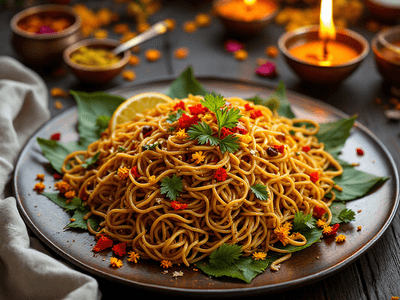
Stir Fried Ragi Noodles
Lunch • India
How to Make Stir Fried Ragi Noodles (Traditional & Healthy Version)
Stir Fried Ragi Noodles is a wholesome and innovative South Indian lunch recipe that brings together the nutritional power of ragi (finger millet) and the vibrant flavors of traditional Indian stir fry. Ragi, known as nachni in Hindi and kezhvaragu in Tamil, has been a staple millet in Southern India for centuries, especially in the states of Karnataka and Tamil Nadu. These gluten-free noodles are tossed with crisp seasonal vegetables, aromatic spices, and a hint of ginger, creating a dish that is both satisfying and light on the stomach. Loved for its earthy taste and soft texture, Stir Fried Ragi Noodles is perfect for those who seek healthy alternatives to refined flour noodles without compromising on flavor. Traditionally, ragi was used in making mudde (ragi balls) and dosai, but today its versatility shines in modern dishes like these noodles. Enjoyed especially during summer months and around festival times like Ugadi and Pongal, this dish supports balanced eating and fits well into vegetarian and vegan diets. With its rich fiber content and low glycemic index, it’s an ideal choice for those watching their calories or blood sugar levels. Make this easy, nutritious recipe for a quick lunch or pack it into your tiffin for a fulfilling meal.
Ingredients(for 1 medium bowl (approx. 200g) per serving)
- 150 grams Ragi noodles (finger millet noodles, available in health stores)
- 1 small Carrot (julienned (gajar))
- 1 small Capsicum (sliced (shimla mirch))
- 1/2 cup Cabbage (shredded (patta gobhi))
- 1 small Onion (thinly sliced (pyaaz))
- 1-2 Green chilies (slit (hari mirch), adjust to taste)
- 1 tsp Ginger (finely chopped (adrak))
- 1/4 tsp Mustard seeds (rai)
- 8-10 Curry leaves (kari patta)
- 2 tsp Oil (preferably cold-pressed sesame or groundnut oil)
- to taste Salt
- 1 tbsp Fresh coriander (chopped (dhaniya patta), for garnish) - optional
- 1 tsp Lemon juice (nimbu ras, optional for tang) - optional
Instructions
- 1
Boil water in a deep vessel and add a pinch of salt. Add the ragi noodles and cook as per package instructions (usually 3-4 minutes) until just tender. Drain and rinse under cold water to prevent sticking. Set aside.
5 minutes
Toss noodles with a few drops of oil to keep them non-sticky.
- 2
Heat oil in a large kadhai or non-stick pan over medium flame. Add mustard seeds and allow them to splutter, then add curry leaves, chopped ginger, and green chilies. Sauté for 1 minute till aromatic.
2 minutes
Do not burn the spices; keep flame low.
- 3
Add sliced onions and sauté until translucent. Stir in carrots, capsicum, and cabbage. Stir fry on high heat for 3-4 minutes until the veggies are crisp yet cooked.
5 minutes
Retain crunch in veggies for best texture and nutrition.
- 4
Add the cooked ragi noodles to the pan. Sprinkle salt and mix gently using tongs, ensuring noodles do not break.
3 minutes
Gently toss to avoid mushy texture.
Why This Dish is Healthy
This Stir Fried Ragi Noodles recipe is a healthy alternative to traditional noodles, thanks to its use of ragi which has a low glycemic index and is rich in calcium, iron, and antioxidants. The inclusion of colorful vegetables increases the nutrient density without adding excess calories. The preparation uses minimal oil and is free from artificial additives, suiting modern health-conscious Indian diets. It’s perfect for those looking to eat clean, wholesome, and nourishing vegetarian meals.
Ragi (finger millet) is an ancient grain loaded with dietary fiber, calcium, and essential amino acids. It is naturally gluten-free, making it suitable for those with gluten intolerance. The combination of fresh vegetables provides vitamins A, C, and K, along with minerals such as potassium and magnesium. Using minimal cold-pressed oil keeps the dish light in fats yet flavorful. The high fiber content aids digestion and promotes satiety, making it an excellent choice for weight management and diabetes control.
Pro Tips
- 💡Tip 1: Do not overcook ragi noodles as they can turn mushy quickly.
- 💡Tip 2: Prep all vegetables in advance for quick stir frying.
- 💡Tip 3: Use cold-pressed sesame or groundnut oil for authentic South Indian flavor and better nutrition.
Storage & Serving
Store cooled noodles in an airtight container in the refrigerator for up to 24 hours. Reheat gently in a pan, sprinkling a little water to refresh the texture. Best enjoyed fresh.
Best served: Breakfast or Lunch
Nutrition Facts
| Nutrient | Per 100g |
|---|---|
| Energy | 230.0 kcal |