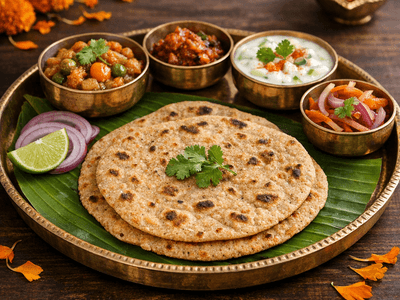
Multigrain Chapati 2 Piece
Lunch • India
How to Make Multigrain Chapati 2 Piece (Traditional & Healthy Version)
Multigrain Chapati is a wholesome, fiber-rich flatbread that has deep roots in North Indian cuisine. Traditionally enjoyed as a staple during lunch, these chapatis blend the goodness of various grains like wheat (gehun), millet (bajra), barley (jau), and gram flour (besan), making them a nutritionally dense choice. The use of multiple grains not only enhances the flavor and texture but also increases the nutrient profile, making it a favorite among health-conscious families in India. The soft yet slightly nutty taste of multigrain chapati pairs well with classic Indian dals, curries, and sabzis. They are especially popular during festive times like Makar Sankranti and Lohri, when whole grains are celebrated for their warming properties. Making chapatis on a hot tawa is a ritual in most Indian households, symbolizing care and tradition passed down through generations. This authentic recipe is perfect for those seeking a nutritious meal without compromising on taste, and it supports balanced eating for the entire family.
Ingredients(for 2 chapatis (approx. 6-inch diameter each))
- 1/2 cup Whole wheat flour (gehun ka atta)
- 2 tbsp Bajra (pearl millet) flour
- 1 tbsp Jau (barley) flour
- 1 tbsp Besan (gram flour)
- 1 tbsp Oats flour (finely ground)
- 1/4 tsp Salt (namak)
- 1/4 tsp Ajwain (carom seeds) - optional
- as needed Water (for kneading)
- 1/2 tsp Ghee or oil (for brushing (optional)) - optional
Instructions
- 1
In a large parat (mixing bowl), combine whole wheat flour, bajra flour, jau flour, besan, and oats flour. Add salt and ajwain.
3 minutes
Mixing the flours well ensures even distribution of taste and nutrients.
- 2
Gradually add water and knead to form a soft, pliable dough. Knead for at least 5-6 minutes until smooth.
6 minutes
A well-kneaded dough makes chapatis softer and easier to roll.
- 3
Cover the dough with a damp cloth and let it rest for 10 minutes.
10 minutes
Resting helps the gluten relax, making chapatis fluffier.
- 4
Divide the dough into 4 equal portions. Roll each portion into a smooth ball.
2 minutes
Rolling evenly prevents chapatis from tearing or puffing unevenly.
Why This Dish is Healthy
This recipe is healthy as it replaces refined grains with whole grains, increasing the fiber and micronutrient content. The use of minimal oil and absence of processed ingredients keeps the calorie count low, making multigrain chapati suitable for weight loss, diabetes management, and heart health. It’s a smart choice for those aiming for a wholesome, balanced Indian meal.
Multigrain chapati is a powerhouse of nutrition, providing complex carbohydrates, plant-based protein, and dietary fiber. The combination of grains like bajra and jau adds essential minerals such as magnesium, iron, and phosphorus, while besan and oats contribute additional fiber and B vitamins. These chapatis help regulate blood sugar, support digestion, and keep you fuller for longer, making them ideal for weight management and balanced diets.
Pro Tips
- 💡Tip 1: Sift all flours together for a lump-free, smooth dough.
- 💡Tip 2: Use warm water for kneading to make chapatis softer.
- 💡Tip 3: Always keep the dough covered with a damp cloth to prevent drying.
Storage & Serving
Store cooked chapatis in a clean cotton cloth inside a casserole for up to 6 hours. Reheat on tawa before serving. For longer storage, freeze in foil and thaw before use.
Best served: Breakfast or Lunch
Nutrition Facts
| Nutrient | Per 100g |
|---|---|
| Energy | 160.0 kcal |