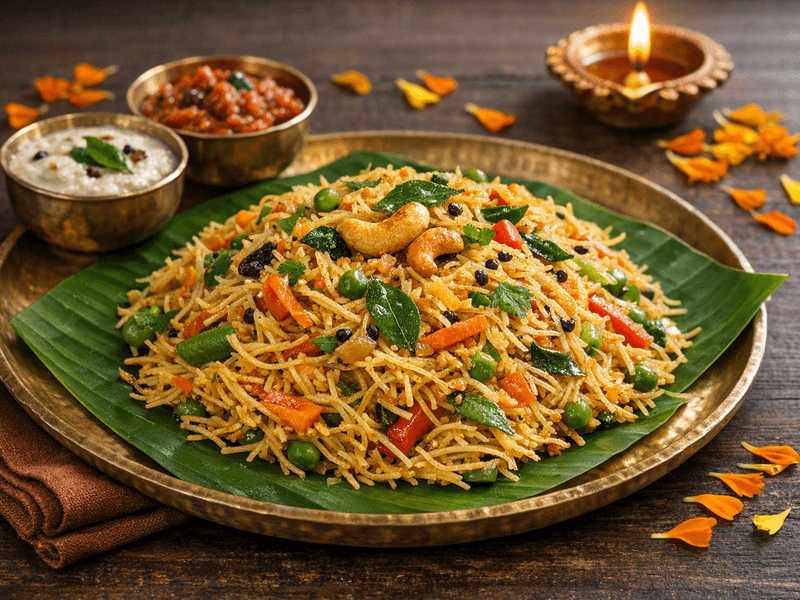
Millet Sevai with Vegetables
Lunch • India
How to Make Millet Sevai with Vegetables (Traditional & Healthy Version)
Millet Sevai with Vegetables is a wholesome, fiber-rich South Indian lunch recipe that combines the goodness of millets (bajra, ragi, or jowar) with a medley of fresh, seasonal vegetables. Traditionally known as 'millet semiya upma' in Tamil Nadu, this dish is a nutritious twist on the classic sevai, replacing regular rice vermicelli with millet-based sevai for enhanced health benefits. The delicate strands of sevai soak up the fragrant tadka of mustard seeds, curry leaves, and hing, creating a light yet satisfying meal that is easy on the stomach and packed with natural flavors. This dish is deeply rooted in Indian culinary traditions and is often prepared for special occasions or as a comforting lunch during festivals like Pongal and Navratri, when light and sattvic meals are preferred. Millet Sevai with Vegetables is an ideal choice for those looking to include ancient grains in their diet, supporting both digestive health and sustained energy. The inclusion of colorful vegetables not only makes it visually appealing but also increases the nutrient profile, making it suitable for all age groups. Whether enjoyed during a family gathering or packed in a tiffin box for a wholesome office meal, this gluten-free sevai dish is a beautiful representation of South India's commitment to healthful, plant-based cooking. Its subtle flavors, easy digestibility, and quick preparation time make it a modern favorite for urban kitchens seeking both taste and nutrition.
Ingredients(for 1 medium bowl (approx. 200g))
- 1 cup Millet sevai (vermicelli) (bajra, ragi, or jowar sevai)
- 1 small, finely chopped Carrot (gajar)
- 8-10, finely chopped French beans (sem ki phali)
- 1/4 cup Green peas (matar)
- 1 small, thinly sliced Onion (pyaz)
- 8-10 Curry leaves (kadi patta)
- 1/2 tsp Mustard seeds (rai)
- 1, finely chopped Green chilli (hari mirch) - optional
- 1/2 inch, grated Ginger (adrak)
- a pinch Asafoetida (hing)
- 2 tsp Oil (cold-pressed coconut or groundnut oil)
- to taste Salt (namak)
- 1 tsp Lemon juice (nimbu ras) - optional
- 2 tbsp, chopped Fresh coriander (hara dhaniya) - optional
Instructions
- 1
Boil 4 cups of water in a kadhai. Add millet sevai, a pinch of salt, and cook for 3-4 minutes till soft but not mushy. Drain well and spread on a plate to cool.
5 minutes
Do not overcook sevai; it should be firm yet soft.
- 2
Heat oil in a tawa or heavy-bottomed pan. Add mustard seeds, let them splutter, then add hing, curry leaves, ginger, and green chilli.
2 minutes
Tempering (tadka) releases natural flavors—keep flame medium to avoid burning.
- 3
Add sliced onions and sauté till translucent. Add chopped carrots, beans, and peas. Sprinkle a pinch of salt and cook covered for 5-6 minutes until veggies are tender but crisp.
8 minutes
Cut vegetables uniformly for even cooking.
- 4
Fluff the cooled sevai with a fork and add it to the cooked vegetables. Gently mix everything on a low flame so sevai absorbs the flavors.
3 minutes
Use light hands to prevent sevai strands from breaking.
Why This Dish is Healthy
Choosing millet sevai over regular rice vermicelli makes this recipe lower in glycemic index, supporting better blood sugar management—ideal for diabetics and weight watchers. The high fiber content aids satiety and gut health, while the inclusion of fresh vegetables ensures a range of phytonutrients. The use of cold-pressed oils and the absence of heavy spices make it gentle and nourishing.
Millet Sevai with Vegetables is rich in dietary fiber, complex carbohydrates, and plant-based protein, thanks to the use of millets like bajra, jowar, or ragi. These ancient grains are naturally gluten-free and provide essential minerals such as iron, magnesium, and phosphorus. The variety of vegetables adds vitamins A, C, and K, along with antioxidants that support immunity and digestive health. With minimal oil and no refined grains, this dish is perfect for balanced nutrition.
Pro Tips
- 💡Tip 1: Always use freshly chopped vegetables for best taste and nutrition.
- 💡Tip 2: Do not overcook millet sevai to maintain a non-sticky texture.
- 💡Tip 3: A dash of lemon juice elevates flavor and aids mineral absorption.
Storage & Serving
Store cooled millet sevai in an airtight container in the refrigerator for up to 24 hours. Sprinkle a little water and reheat on a tawa for best texture. Avoid freezing.
Best served: Breakfast or Lunch
Nutrition Facts
| Nutrient | Per 100g |
|---|---|
| Energy | 230.0 kcal |