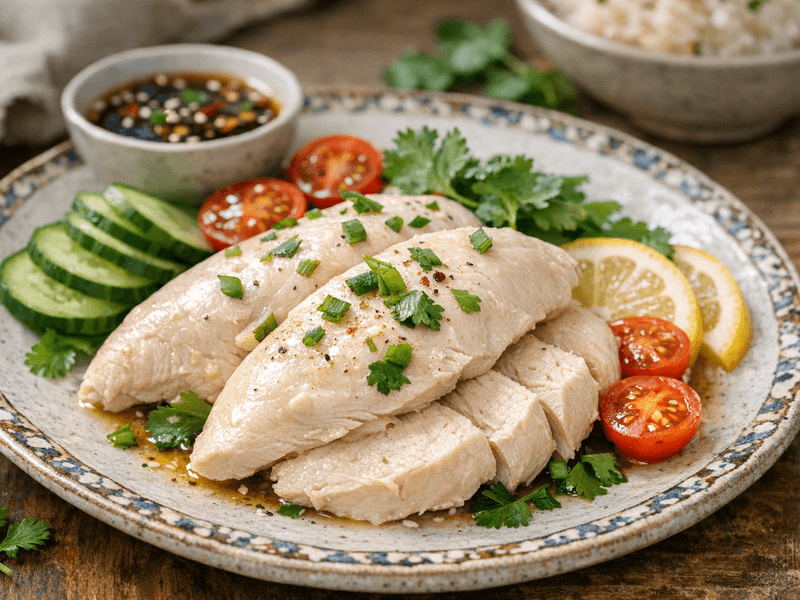
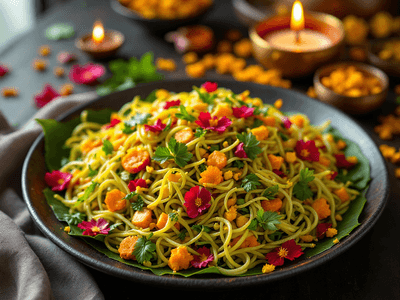
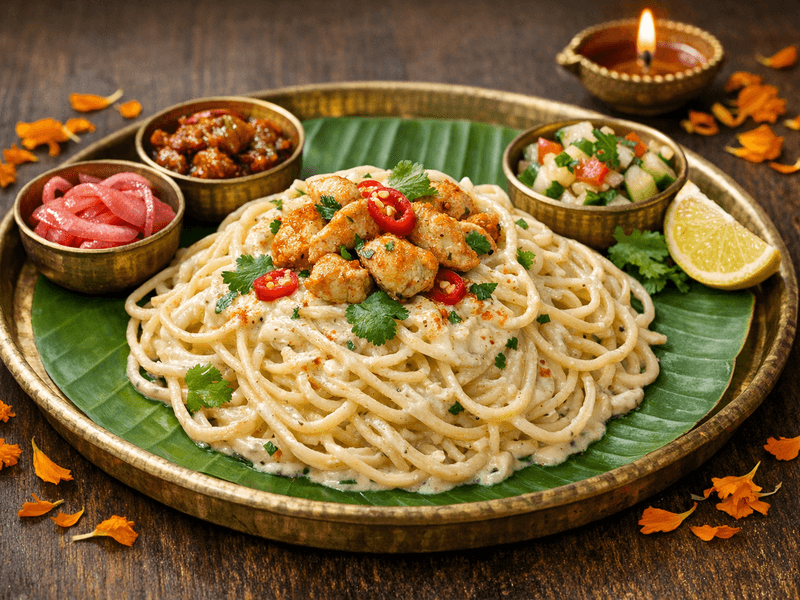
📸 Image coming soon for Japanese Ramen with Chicken
Japanese Ramen with Chicken
Lunch • India
How to Make Vegetarian Japanese Ramen (Traditional & Healthy Version)
Vegetarian Japanese Ramen is a delightful fusion of Japanese flavors adapted for Indian palates and dietary preferences. Traditionally enjoyed as a soul-warming noodle soup, this recipe replaces chicken with protein-rich tofu, making it suited for vegetarians while still delivering a hearty and umami-rich experience. The base is a light, aromatic broth infused with ginger, garlic, and soy sauce, complemented by fresh seasonal vegetables such as carrots, spinach (palak), and mushrooms. Noodles, often made from atta (whole wheat flour), are simmered to perfection, providing a comforting meal ideal for lunch. In India, especially among urban food lovers, Ramen has emerged as a trendy choice due to its customizable flavors and wholesome ingredients. The dish is perfect for family lunches, especially during monsoon or winter when a steaming bowl of noodle soup brings warmth and comfort. Its light yet satisfying taste makes it a great choice for health-conscious individuals, and it can be easily adapted to suit local festivals or regional tastes by adding seasonal produce or using homemade masalas. This healthy vegetarian ramen not only caters to taste buds but also supports a balanced diet, making it a wonderful inclusion in your lunch menu, especially for those seeking nutritious, high-protein vegetarian options with an Indian twist.
Ingredients(for 1 large bowl (approx. 400ml) per serving)
- 100 grams Whole wheat noodles (atta noodles preferred)
- 100 grams Tofu (paneer as alternative)
- 1 medium, julienned Carrot (gajar)
- 1 cup, chopped Spinach (palak)
- 1/2 cup, sliced Mushrooms (button or oyster)
- 2, finely chopped Spring onions (hara pyaaz)
- 1 inch, grated Ginger (adrak)
- 3 cloves, minced Garlic (lahsun)
- 2 tablespoons Low-sodium soy sauce (shoyu)
- 3 cups Vegetable broth (ya sabzi ka stock)
- 1 teaspoon Sesame oil (til ka tel)
- 1/2 teaspoon Black pepper powder (kali mirch)
- to taste Salt (namak)
- 1 teaspoon Lemon juice (nimbu ras) - optional
Instructions
- 1
Boil atta noodles according to package instructions until just cooked (al dente). Drain and set aside.
7 minutes
Rinse noodles in cold water to prevent sticking and overcooking.
- 2
Heat sesame oil (til ka tel) in a deep pan or kadhai. Add grated ginger (adrak) and minced garlic (lahsun), sauté until fragrant.
2 minutes
Keep flame on medium to avoid burning the aromatics.
- 3
Add carrots (gajar), mushrooms, and half the spring onions (hara pyaaz). Stir-fry for 2-3 minutes till slightly soft.
3 minutes
Don’t overcook; vegetables should retain crunch and nutrients.
- 4
Pour in the vegetable broth (sabzi ka stock) and bring to a gentle boil. Add soy sauce (shoyu), salt, and black pepper (kali mirch).
5 minutes
Taste and adjust seasoning according to your preference.
Why This Dish is Healthy
Ramen is often considered indulgent, but this version uses whole wheat noodles, minimal oil, and is packed with vegetables and tofu, making it a light yet filling meal. It is low in saturated fat, cholesterol-free, and provides sustained energy. Such recipes fit well into a calorie-controlled or weight-loss diet while delivering great taste and satiety.
This vegetarian ramen is high in plant-based protein from tofu and fiber from whole wheat (atta) noodles and vegetables. Spinach contributes iron and folate, carrots offer beta-carotene, and mushrooms are a good source of B vitamins. The low-sodium soy sauce keeps sodium in check, and sesame oil provides healthy fats. This bowl delivers a balanced meal with essential vitamins, minerals, and antioxidants, supporting overall wellness and immunity.
Pro Tips
- 💡Tip 1: Use homemade vegetable stock for a richer, preservative-free flavor.
- 💡Tip 2: Add seasonal Indian leafy greens like methi or bathua for variety.
- 💡Tip 3: Lightly pan-sear tofu for a crispy texture before adding to broth.
Storage & Serving
Store leftover ramen broth and noodles separately in airtight containers in the refrigerator for up to 2 days. Reheat gently before serving and combine just before eating to maintain texture.
Best served: Breakfast or Lunch
Nutrition Facts
| Nutrient | Per 100g |
|---|---|
| Energy | 480.0 kcal |
| Protein | 7.0 g |
| Carbohydrates | 20.0 g |
| Total Fat | 3.0 g |
| Fiber | 1.0 g |