Cabbage Beans Fry
Lunch • India
How to Make Cabbage Beans Fry (Traditional & Healthy Version)
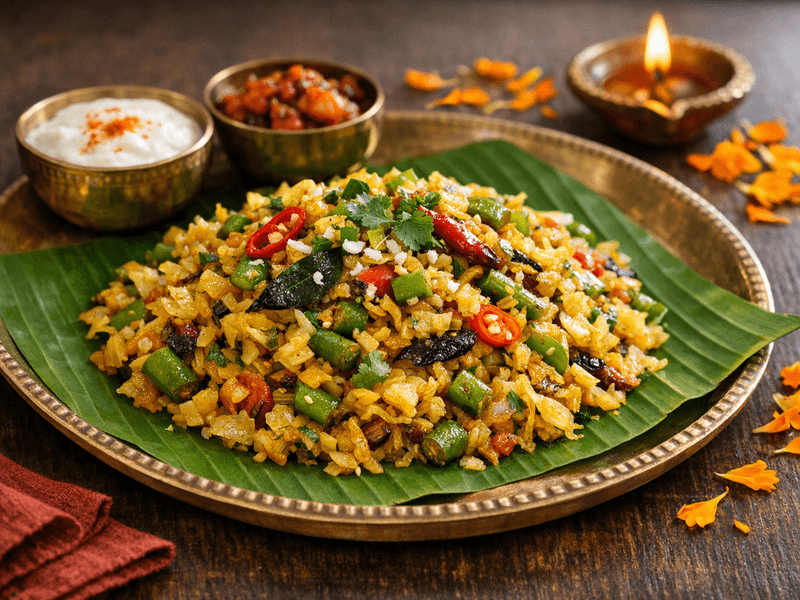
Cabbage Beans Fry is a cherished South Indian sabzi, often enjoyed as part of a wholesome lunch thali. This stir-fried vegetable dish combines finely chopped cabbage (patta gobhi) and fresh green beans (french beans), sautéed with aromatic spices and a tempering of mustard seeds, urad dal, and curry leaves. Its origins trace back to Tamil Nadu and Karnataka, where Cabbage Beans Fry is commonly served during festivals like Pongal and family gatherings. The subtle crunch of beans contrasts beautifully with the tender cabbage, creating a dish that's both nutritious and satisfying. What makes Cabbage Beans Fry stand out is its simplicity and adaptability. It is a staple in South Indian households, particularly during summer months when fresh vegetables are abundant. The dish is often paired with steamed rice, rasam, or sambar, and it can be made mild or spicy depending on taste preferences. Its lightness makes it a perfect lunch choice, especially for those looking for low-calorie, high-fiber meals. With minimal oil and no heavy ingredients, this fry is easy to digest and suitable for all age groups. The recipe is rooted in Indian culinary traditions, utilizing regional spices like haldi (turmeric), hing (asafoetida), and freshly grated coconut, which enhance both flavor and nutrition. Cabbage Beans Fry is not just a dish—it’s a celebration of everyday Indian cooking, offering taste, health, and cultural connection in every bite.
Ingredients(for 1 medium bowl per person)
- 2 cups, finely chopped Cabbage (patta gobhi) (South Indian style)
- 1 cup, finely chopped Green beans (french beans) (known as 'beans' locally)
- 1 small, finely chopped Onion (optional in some regional versions) - optional
- 2, slit Green chilli (mirch)
- 1/2 tsp Mustard seeds (rai)
- 1 tsp Urad dal (split black gram)
- 8-10 Curry leaves (kadi patta)
- 1/4 tsp Turmeric powder (haldi)
- 1 pinch Hing (asafoetida) (for digestive benefits)
- to taste Salt (namak)
- 1 tbsp Cooking oil (preferably coconut or groundnut oil)
- 2 tbsp Fresh grated coconut (optional, for garnish) - optional
Instructions
- 1
Heat oil in a kadhai or tawa over medium flame. Add mustard seeds and allow them to crackle.
2 minutes
Use coconut oil for authentic South Indian flavor.
- 2
Add urad dal and sauté till golden. Add curry leaves and a pinch of hing.
2 minutes
Ensure urad dal doesn't burn for best texture.
- 3
Add green chillies and onions (if using). Sauté until onions turn translucent.
3 minutes
Skip onions for a no-onion version commonly made during festivals.
- 4
Add chopped beans and cabbage. Sprinkle turmeric and salt. Mix well.
2 minutes
Cut veggies finely for faster cooking and uniform texture.
Why This Dish is Healthy
This dish is naturally low in fat and carbs, with a high fiber content that supports digestive health and satiety. The combination of cabbage and beans offers essential vitamins and minerals, while the tempering of dal and spices boosts metabolism. With no heavy gravies or cream, Cabbage Beans Fry is heart-friendly and suitable for diabetic and weight-conscious individuals. It’s also easily adaptable for vegan diets.
Cabbage Beans Fry is low in calories and high in dietary fiber, making it ideal for weight management. Cabbage is a rich source of vitamin C, K, and antioxidants, while green beans supply iron, folate, and protein. The use of minimal oil and the addition of urad dal provide plant-based protein. Turmeric and hing aid digestion, and curry leaves are rich in micronutrients. Fresh coconut adds healthy fats and minerals, making this sabzi a balanced meal for vegetarians.
Pro Tips
- 💡Tip 1: Use fresh vegetables for best taste and nutrition.
- 💡Tip 2: Do not overcook cabbage and beans; retain some crunch.
- 💡Tip 3: Add coconut at the end to preserve freshness and flavor.
Storage & Serving
Store leftovers in an airtight container in the refrigerator for up to 2 days. Reheat on a tawa or kadhai before serving. Avoid freezing to maintain texture.
Best served: Lunch
Nutrition Facts
| Nutrient | Per 100g |
|---|---|
| Energy | 120.0 kcal |