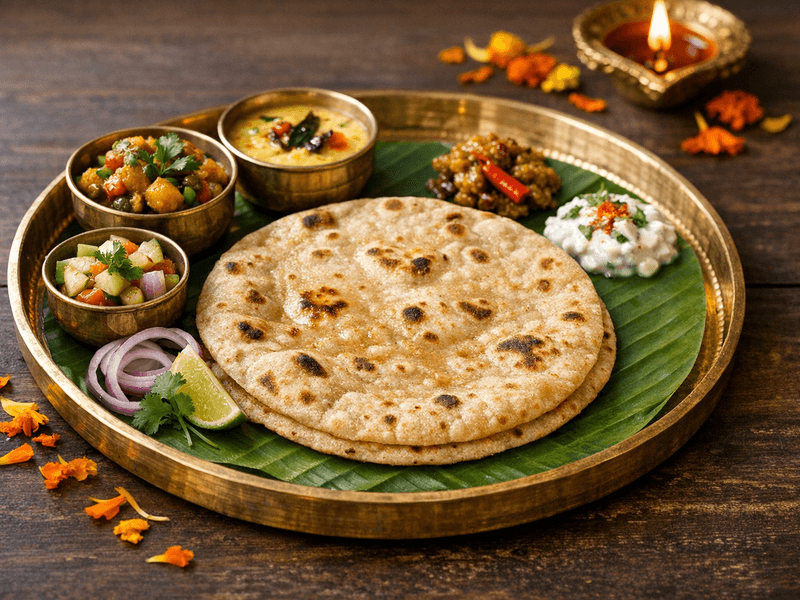
1 Chapati
Lunch • India
How to Make 1 Chapati (Traditional & Healthy Version)
Chapati, also known as roti in many parts of India, is a staple flatbread that graces dining tables across the country every day. Its origins trace back centuries, with each region lending its subtle touch to the preparation and flavor. Made from whole wheat flour or 'atta', chapati is revered for its simplicity, ease of preparation, and adaptability to various Indian curries and sabzis. The soft, warm texture of a freshly made chapati is comforting and nourishing, making it a beloved choice for lunch in Indian households. Chapati is not just food; it is a symbol of Indian hospitality and togetherness, often served during family meals and festive occasions like Holi and Diwali alongside a variety of vegetarian delicacies. Whether enjoyed with a dollop of homemade ghee or paired with a spicy dal, chapati brings a wholesome, earthy flavor that satisfies both heart and palate. Its versatility and quick preparation make it an ideal, health-conscious option for busy lifestyles, while still honoring the authentic taste of Indian cuisine.
Ingredients(for 1 medium chapati per person)
- 1 cup Whole wheat flour (atta)
- 1/2 cup (as needed) Water (pani)
- 1/4 tsp Salt (namak) - optional
- 1 tsp Ghee or oil (optional, for brushing) - optional
- 2 tbsp Flour for dusting (dry atta)
- 1/4 tsp Ajwain seeds (optional, for flavor) - optional
- 1 tbsp Methi leaves (dried) (kasuri methi, optional) - optional
Instructions
- 1
In a large mixing bowl, combine whole wheat flour (atta) and salt. Gradually add water while mixing with your fingers to form a soft, pliable dough.
5 minutes
Add water little by little to avoid making the dough too sticky.
- 2
Knead the dough for 5-6 minutes until smooth and elastic. Cover with a damp cloth and let it rest for 10 minutes.
10 minutes
Resting helps the gluten relax, resulting in softer chapatis.
- 3
Divide the dough into equal-sized balls, dust each ball with dry atta, and flatten slightly.
2 minutes
Keep the dough balls covered to prevent drying.
- 4
Roll each ball into a thin, round disc using a rolling pin. Dust with flour as needed to avoid sticking.
3 minutes
Aim for even thickness to ensure uniform cooking.
Why This Dish is Healthy
This chapati recipe is a heart-healthy, low-fat alternative to refined flour breads. Using whole wheat flour increases fiber and micronutrient content, supporting weight management and digestive health. With no added sugars or preservatives, chapati is ideal for those seeking nutrient-dense, homemade options. Its versatility allows for additional healthful ingredients like methi or ajwain, catering to various dietary needs.
Chapati is rich in complex carbohydrates and dietary fiber, thanks to the use of whole wheat atta. It provides sustained energy, aids digestion, and helps regulate blood sugar due to its low glycemic index. Chapati is also a good source of plant-based protein, B vitamins (especially B1 and B3), iron, magnesium, and phosphorus. It contains minimal fat, especially when prepared without ghee or oil, making it a wholesome addition to any balanced Indian meal.
Pro Tips
- 💡Tip 1: Use warm water for kneading to yield softer chapatis.
- 💡Tip 2: Rest the dough to allow the gluten to develop for better texture.
- 💡Tip 3: Rolling evenly and cooking on high heat helps chapati puff up beautifully.
Storage & Serving
Store cooked chapatis wrapped in a clean cloth inside a closed container to keep them soft for up to 8 hours at room temperature. For longer storage, refrigerate in an airtight container for up to 2 days and reheat on a tawa before serving.
Best served: Breakfast or Lunch
Nutrition Facts
| Nutrient | Per 100g |
|---|---|
| Energy | 250.0 kcal |
| Protein | 5.0 g |
| Carbohydrates | 36.0 g |
| Total Fat | 2.0 g |
| Fiber | 4.0 g |