Bhapa Pitha
Desserts • India
About Bhapa Pitha
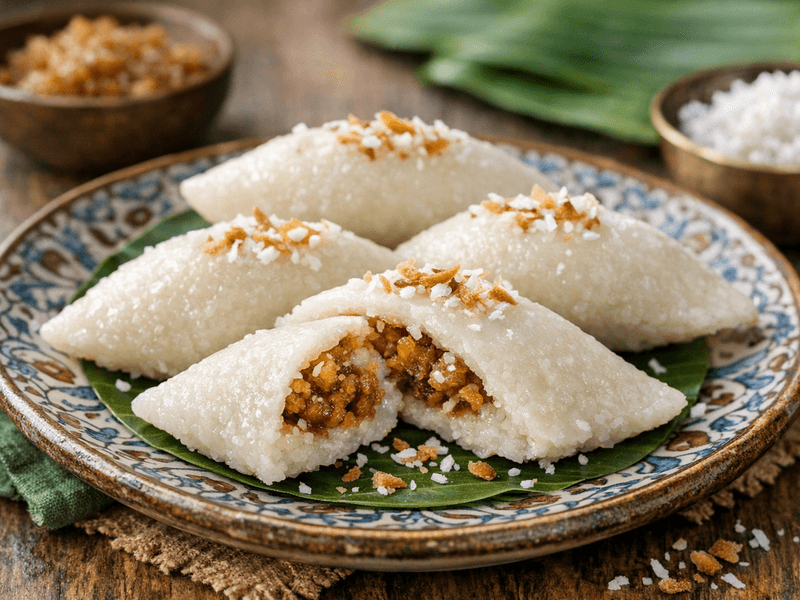
Steamed rice-flour pitha with coconut and jaggery filling. Winter Bengali rice cake eaten warm, especially around harvest season.
How to Make Bhapa Pitha (Traditional & Healthy Version)
Bhapa Pitha is a beloved steamed rice cake originating from East India's rich culinary heritage, particularly Assam, Bengal, and Odisha. Traditionally prepared during winter months and celebrated at festivals like Makar Sankranti and Bihu, Bhapa Pitha is a wholesome, vegetarian dessert that combines the subtle sweetness of jaggery (gur) with the earthy aroma of freshly grated coconut. The dish is crafted from simple, locally sourced ingredients, ensuring its authenticity and nutritional value. Bhapa Pitha is admired for its soft, fluffy texture and gentle sweetness, making it an ideal choice for those seeking a guilt-free Indian dessert. Its preparation involves steaming, which preserves nutrients and reduces the need for added fats, aligning perfectly with health-conscious lifestyles. This dessert is not only a festival favorite but also a comforting breakfast or snack during chilly mornings in East India. Its popularity stems from its delicate flavor profile, ease of preparation, and deep cultural significance, making it an excellent addition to any healthy Indian recipe collection.
Ingredients(for 2 medium-sized pithas per serving)
- 1 cup Chawal ka atta (rice flour) (finely ground)
- 1/2 cup Freshly grated coconut (nariyal)
- 1/4 cup Jaggery (gur, finely chopped or grated)
- 1/2 cup Water (lukewarm for dough)
- a pinch Salt (namak)
- 1 tbsp Sesame seeds (til) - optional
- 1/2 tsp Cardamom powder (elaichi) - optional
- 1 tsp Ghee (for greasing) - optional
- as needed Banana leaf or parchment paper (for lining steamer) - optional
Instructions
- 1
Prepare the filling by mixing grated coconut, jaggery, sesame seeds, and cardamom powder. Mash well until the jaggery dissolves and forms a moist mixture.
5 minutes
Use fresh coconut for best flavor and texture.
- 2
In a bowl, combine chawal ka atta (rice flour) with a pinch of salt and lukewarm water. Knead gently to form a soft, pliable dough.
5 minutes
Add water gradually to avoid making the dough too sticky.
- 3
Divide the dough into small balls. Flatten each ball in your palm to form a shallow disc, about 2 inches wide.
3 minutes
Keep the dough covered to prevent drying.
- 4
Place 1-2 teaspoons of the coconut-jaggery filling in the center of each disc. Fold the edges to enclose the filling and shape into a smooth, oval pitha.
3 minutes
Seal edges tightly so filling doesn’t leak during steaming.
Why This Dish is Healthy
This traditional Bhapa Pitha recipe is naturally low in fat and free from refined sugars, utilizing jaggery for sweetness. Steaming instead of frying keeps the dish light and nutritious. Rice flour is gluten-free (if certified), and coconut supports metabolism and immunity. The recipe is vegetarian and adaptable for vegan diets, making it suitable for a wide range of healthy lifestyles. Incorporating Bhapa Pitha into your diet brings authentic Indian flavors without compromising wellness.
Bhapa Pitha is a nutrient-rich dessert that offers complex carbohydrates from rice flour, healthy fats from coconut, and natural sweetness from jaggery. Jaggery is an excellent source of iron and minerals, while coconut provides dietary fiber and essential fatty acids. The use of steaming preserves nutrients and avoids excess fat, making Bhapa Pitha both heart-friendly and easy to digest. Each serving delivers balanced macros—3g protein, 44g carbohydrates, and 3g fat—with only 210 calories, ideal for calorie-conscious individuals.
Pro Tips
- 💡Tip 1: Use freshly grated coconut for authentic texture and flavor.
- 💡Tip 2: Line the steamer with banana leaf for enhanced aroma and traditional touch.
- 💡Tip 3: Keep the dough covered to prevent it from drying out during preparation.
Storage & Serving
Store Bhapa Pitha in an airtight container for up to 2 days at room temperature. Refrigerate for longer shelf life, and re-steam or microwave before serving to restore softness.
Best served: Breakfast or Lunch
Nutrition Facts
| Nutrient | Per 100g |
|---|---|
| Energy | 210.0 kcal |
| Protein | 3.0 g |
| Carbohydrates | 44.0 g |
| Total Fat | 3.0 g |
| Fiber | 2.0 g |
| Sugars | 12.0 g |
| Sodium | 6.0 mg |
| Potassium | 110.0 mg |
| Cholesterol | 0.0 mg |
| Vitamin A | 0.0 IU |
| Vitamin C | 0.2 mg |
| Calcium | 18.0 mg |
| Iron | 1.2 mg |
| Magnesium | 22.0 mg |
| Zinc | 0.5 mg |
| Phosphorus | 55.0 mg |
| Vitamin D | 0.0 IU |
| Vitamin B1 (Thiamine) | 0.1 mg |
| Vitamin B2 (Riboflavin) | 0.0 mg |
| Vitamin B3 (Niacin) | 0.7 mg |
| Vitamin B6 | 0.1 mg |
| Vitamin B12 | 0.0 µg |
| Folate | 8.0 µg |