Masala Dosa with Sambhar
Breakfast • India
How to Make Masala Dosa with Sambhar (Traditional & Healthy Version)
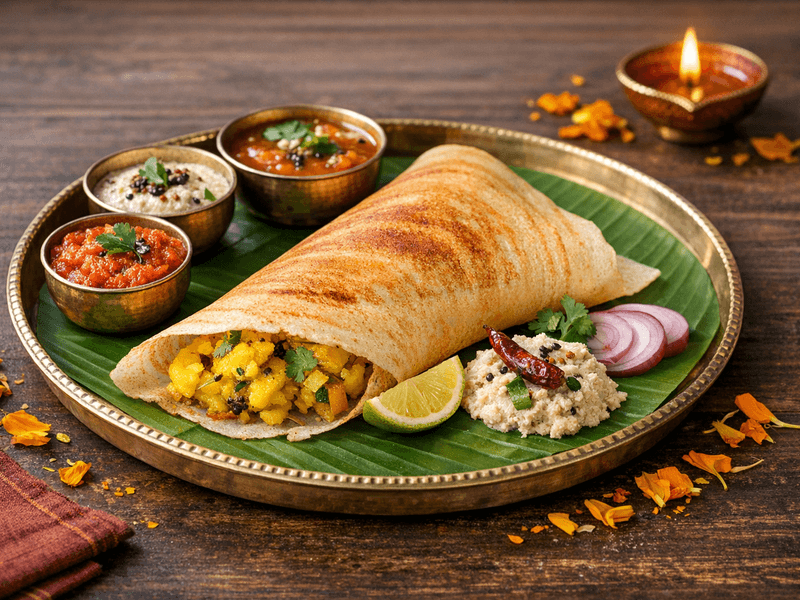
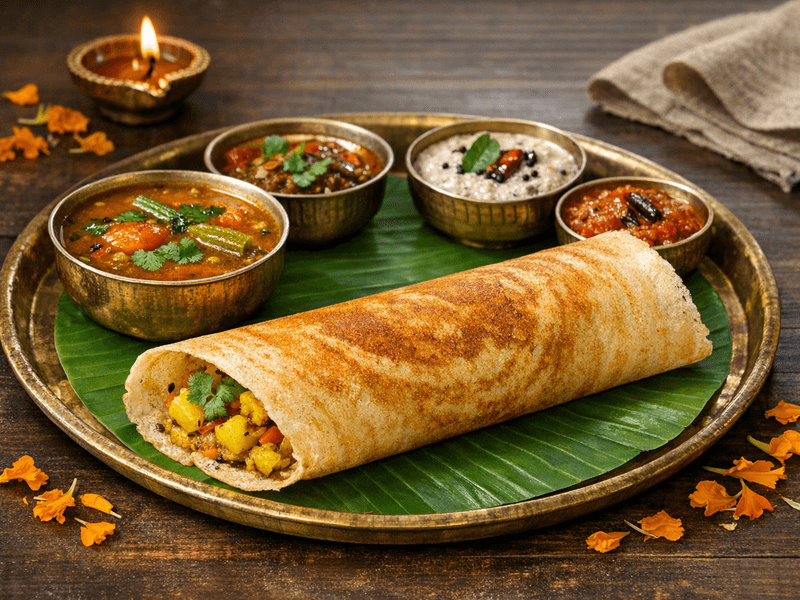
Masala Dosa with Sambhar is an iconic South Indian breakfast staple, loved across India for its crispy texture and rich, aromatic flavors. Originating from Karnataka, this dish has become a symbol of Indian culinary heritage, often relished during festive mornings and family gatherings. The dosa, a fermented rice and urad dal (split black gram) crepe, is filled with a mildly spiced potato (aloo) masala. Paired with tangy, protein-rich sambhar—a warm lentil stew loaded with seasonal vegetables and flavored with tamarind and a fragrant sambar masala—this combination offers a symphony of taste and nutrition. Masala Dosa is a favorite at South Indian weddings, temple festivals, and even as a comforting breakfast on special days like Ugadi or Pongal. Its balanced blend of carbohydrates, proteins, and fibers makes it a wholesome meal to start your day. The crispy dosa enveloping a soft, savory potato filling, dunked in piping hot sambhar, creates a delightful contrast that appeals to all age groups. Regional variations abound: some prefer the Mysore Masala Dosa with a spicy chutney layer, while others opt for a milder, child-friendly version. No matter the style, Masala Dosa with Sambhar remains a cherished dish that brings together tradition, taste, and health in every bite.
Ingredients(for 2 medium dosas with 1 bowl sambhar per serving)
- 1 cup Rice (chawal) (regular or idli rice)
- 1/3 cup Urad dal (split black gram)
- 1/2 tsp Fenugreek seeds (methi dana)
- 2 medium, boiled and peeled Potatoes (aloo)
- 1 medium, thinly sliced Onion (pyaz)
- 1, chopped Green chilies (hari mirch)
- 1/2 tsp Mustard seeds (rai)
- 1/4 tsp Turmeric powder (haldi)
- 6-8 leaves Curry leaves (kadi patta)
- 1 tbsp Chana dal (split Bengal gram) (for tempering)
- 2 tbsp Vegetable oil (preferably cold-pressed)
- to taste Salt
- 1/2 cup Toor dal (split pigeon pea) (for sambhar)
- 1 cup Mixed vegetables (carrot, drumstick, pumpkin, brinjal, or bottle gourd)
- 1 tbsp Tamarind pulp (imli)
- 2 tsp Sambhar powder (homemade or store-bought)
- 2 tbsp, chopped Coriander leaves (dhaniya) - optional
Instructions
- 1
Soak rice, urad dal, and fenugreek seeds in plenty of water for at least 6 hours or overnight. Drain and grind with enough water to a smooth batter. Add salt, mix well, and ferment in a warm place for 8-10 hours until bubbly.
10 minutes (active); 6-10 hours (passive)
Ferment in a warm spot; during winters, keep near the stove or wrap in a shawl.
- 2
Prepare the potato masala: Heat 1 tbsp oil in a kadhai. Add mustard seeds, let them splutter, then add chana dal, curry leaves, onions, and green chili. Sauté until onions are soft. Add turmeric, boiled potatoes, and salt. Mash lightly and cook for 2-3 minutes. Set aside.
7 minutes
Cook on medium flame for best flavor and avoid burning the spices.
- 3
To make sambhar: Pressure cook toor dal with 2 cups water until soft. In a separate pan, add mixed vegetables, tamarind pulp, cooked dal, sambhar powder, salt, and 1 more cup water. Simmer for 10-12 minutes till veggies are tender. Temper with mustard seeds, curry leaves, and chana dal in 1 tsp oil. Garnish with coriander.
15 minutes
Add drumstick for authentic flavor and adjust tamarind to taste.
- 4
Heat a non-stick tawa or iron griddle. Pour a ladleful of dosa batter, spread in a circular motion to make a thin crepe. Drizzle a few drops of oil around the edges. Cook on medium heat until golden and crisp at the bottom.
3 minutes per dosa
Wipe the tawa with a wet cloth between dosas for even browning.
Why This Dish is Healthy
This dish is a healthy choice because it combines complex carbohydrates, lean vegetarian protein, and a spectrum of vitamins and minerals from fresh vegetables. Fermented foods like dosa batter are excellent for digestion and nutrient absorption. By using minimal oil and opting for seasonal vegetables in the sambhar, this meal supports weight management, steady energy release, and overall wellness, making it ideal for those tracking calories or following a balanced Indian diet.
Masala Dosa with Sambhar is a balanced meal, rich in plant-based protein from urad dal and toor dal, and loaded with dietary fiber from rice, dals, and vegetables. The fermentation process enhances gut health by promoting beneficial bacteria. Vitamins like B-complex, iron, and minerals are abundant in the dals and vegetables, while turmeric and curry leaves add antioxidants. The use of minimal oil and abundant vegetables makes this dish heart-healthy and suitable for a calorie-conscious diet.
Pro Tips
- 💡Tip 1: For crispier dosas, add a spoonful of poha (flattened rice) or cooked rice to the batter before grinding.
- 💡Tip 2: Always ferment the batter in a warm, draft-free spot for best results.
- 💡Tip 3: Use a cast-iron tawa for authentic flavor and texture.
Storage & Serving
Dosa batter can be stored in the refrigerator for up to 3 days. Potato masala and sambhar remain fresh for 1-2 days when kept in airtight containers in the fridge. Reheat sambhar before serving; dosas are best made fresh, but leftover ones can be reheated on a tawa.
Best served: Breakfast or Lunch
Nutrition Facts
| Nutrient | Per 100g |
|---|---|
| Energy | 350.0 kcal |
| Protein | 4.0 g |
| Carbohydrates | 22.0 g |
| Total Fat | 3.0 g |
| Fiber | 3.0 g |