Curd Rice
Rice Dishes • India
How to Make Curd Rice (Traditional & Healthy Version)
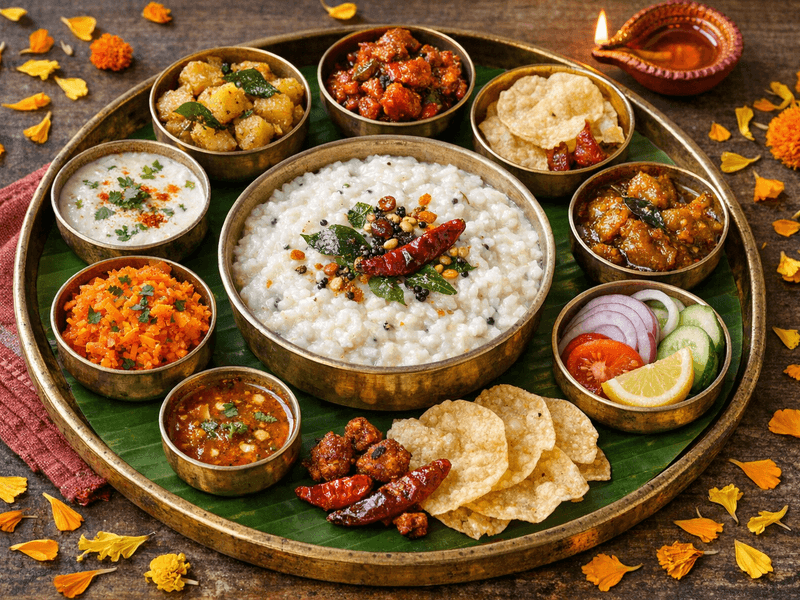
Curd Rice, known as 'Thayir Sadam' in Tamil and 'Daddojanam' in Telugu, is a beloved South Indian comfort food that brings together the creamy richness of homemade dahi (curd) with the subtle flavors of steamed rice and a fragrant tempering. This dish is cherished for its soothing, cooling qualities, making it a staple during the hot Indian summers and a popular addition to festive thalis and temple prasadam. With its origins deeply rooted in Tamil Nadu, Curd Rice has spread across the South, adapting to local palates with variations in tempering and garnishes. The taste of Curd Rice is a harmonious blend of tangy, mildly spicy, and aromatic notes, thanks to the use of fresh curd, ginger, curry leaves, and a tempering of mustard seeds and green chillies. Besides being a delicious standalone meal, it is often served as the final course in traditional South Indian lunches, especially during festivals like Pongal and Ugadi. Its ease of preparation, gentle taste, and digestive benefits make it an ideal choice for both everyday meals and special occasions. Whether enjoyed after a spicy feast or as a quick, nourishing lunch, Curd Rice remains an enduring symbol of South Indian culinary heritage.
Ingredients(for 1 medium bowl per serving)
- 1 cup Cooked rice (short-grain or sona masoori preferred)
- 1 cup Fresh curd (dahi) (homemade or thick store-bought)
- 1/4 cup Low-fat milk (optional, for creaminess) - optional
- to taste Salt
- 1/2 tsp Mustard seeds (rai)
- 8-10 Curry leaves (kadi patta)
- 1 Green chilli (finely chopped)
- 1/2 tsp Grated ginger (adrak)
- a pinch Asafoetida (hing)
- 1 tsp Oil (preferably cold-pressed coconut or groundnut oil)
- 1 tbsp Chopped coriander leaves - optional
- 2 tbsp Pomegranate seeds or grated carrot (for garnish) - optional
Instructions
- 1
Start by cooking the rice until soft. Once done, cool it to room temperature. Mash lightly with a spoon or clean hands for a creamy texture.
10 minutes
Use sona masoori or any short-grain rice for best results. Leftover rice also works well.
- 2
Add the fresh curd (dahi) to the cooled rice. Mix well. If you prefer a creamier consistency, add low-fat milk at this stage.
3 minutes
Ensure the rice is completely cool before adding curd to prevent curdling.
- 3
Season with salt as per taste. Add grated ginger and mix thoroughly.
2 minutes
Fresh ginger adds a gentle heat and aids digestion.
- 4
For tempering (tadka), heat oil in a small pan. Add mustard seeds and let them splutter. Add curry leaves, chopped green chilli, and a pinch of asafoetida (hing). Sauté for a few seconds until fragrant.
3 minutes
Keep flame low to avoid burning the spices.
Why This Dish is Healthy
This Curd Rice recipe uses minimal oil, low-fat dairy, and fresh ingredients, making it a light, nourishing choice for those monitoring calories. Its probiotic content from dahi supports digestive wellness, while the absence of heavy spices makes it gentle on the stomach. The inclusion of herbs and veggies increases the micronutrient profile, making it ideal for a healthy Indian diet.
Curd Rice is naturally rich in probiotics from fresh curd, which promotes gut health and aids digestion. The use of low-fat dairy keeps saturated fat low, while rice offers complex carbohydrates for sustained energy. Ginger and curry leaves add antioxidants and anti-inflammatory properties. Garnishing with pomegranate or carrot boosts vitamin C and fiber. Each serving provides a balanced mix of protein, carbs, and healthy fats, making it suitable for all age groups.
Pro Tips
- 💡Tip 1: Always use completely cooled rice to prevent curdling and maintain a creamy texture.
- 💡Tip 2: For extra creaminess, mash the rice with the back of a spoon before mixing with curd.
- 💡Tip 3: Add a splash of milk if serving later to keep the rice soft and prevent sourness.
Storage & Serving
Store Curd Rice in an airtight container in the refrigerator for up to 1 day. Add a little milk before serving if the rice thickens or turns sour. Best consumed fresh.
Best served: Breakfast or Lunch
Nutrition Facts
| Nutrient | Per 100g |
|---|---|
| Energy | 130.0 kcal |
| Protein | 4.5 g |
| Carbohydrates | 22.0 g |
| Total Fat | 2.5 g |
| Fiber | 0.5 g |