Veg Singapore Rice Noodles
Noodles • India
How to Make Veg Singapore Rice Noodles (Traditional & Healthy Version)
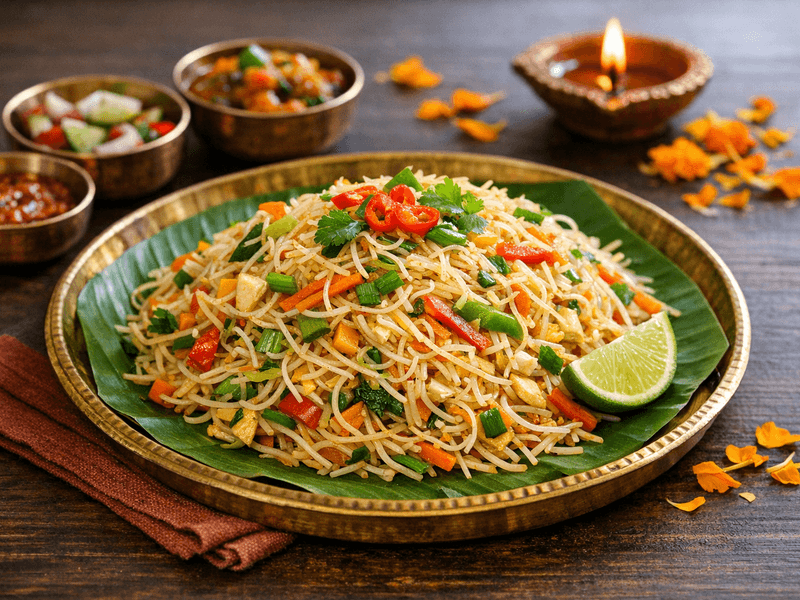
Veg Singapore Rice Noodles are a vibrant and flavorful noodle dish loved across India, especially in metro cities like Mumbai and Delhi, where Indo-Chinese fusion cuisine thrives. This vegetarian recipe is packed with colorful vegetables, aromatic spices, and rice noodles, making it a perfect choice for those seeking a quick, nutritious meal. The dish is popular in Indian restaurants and street food stalls, often enjoyed during family gatherings or festive occasions such as Holi and New Year, thanks to its delicious taste and easy preparation on a tawa or wok. In India, Veg Singapore Rice Noodles have become a staple for people who crave spicy, tangy, and umami flavors in a single bowl. The use of rice noodles (sometimes called 'Chawal ki Noodles') gives this dish a lighter texture, while the addition of seasonal vegetables like capsicum (shimla mirch), carrots (gajar), and cabbage brings both crunch and nutrition. This recipe is designed for calorie-conscious foodies, offering a balanced profile of protein, carbs, and healthy fats. Ideal for vegetarians, it’s easily adaptable for vegans and perfect for lunch or breakfast. The dish suits the Indian palate with its moderate heat and subtle sweetness, making it a great addition to your healthy meal plan.
Ingredients(for 1 medium bowl per person (approx. 250g cooked noodles))
- 100g Rice noodles (Chawal ki Noodles) (thin variety preferred)
- 1/2 cup Carrot (Gajar) (julienned)
- 1/2 cup Capsicum (Shimla Mirch) (sliced)
- 1/2 cup Cabbage (Patta Gobhi) (shredded)
- 1 small Onion (Pyaz) (sliced)
- 1/4 cup Spring onion greens (chopped)
- 1 tsp Ginger (Adrak) (finely chopped)
- 1 tsp Garlic (Lahsun) (finely chopped)
- 1 tbsp Soy sauce (light, Indian brands)
- 1 tsp Red chilli sauce (adjust to taste)
- 1/2 tsp Turmeric powder (Haldi) (for color)
- 1/4 tsp Black pepper powder (Kali Mirch) (freshly ground)
- 2 tsp Oil (Mustard or refined) (for sautéing)
- to taste Salt (as per preference)
Instructions
- 1
Boil rice noodles as per package instructions. Drain and rinse with cold water. Toss with a few drops of oil to prevent sticking.
5 minutes
Do not overcook noodles; they should be just tender.
- 2
Heat oil in a tawa or wok. Add ginger and garlic, sauté until aromatic.
2 minutes
Use high heat for quick cooking and flavor retention.
- 3
Add onions and sauté for a minute. Stir in carrots, capsicum, and cabbage. Cook on high for 3-4 minutes until veggies are crisp-tender.
4 minutes
Keep vegetables crunchy for better texture and nutrition.
- 4
Sprinkle turmeric powder, black pepper, and salt. Mix well.
1 minute
Turmeric adds color and health benefits.
Why This Dish is Healthy
This recipe is a healthy choice because it combines low-fat cooking techniques with nutrient-dense vegetables and rice noodles. It avoids deep-frying and uses minimal oil, making it ideal for calorie-conscious eaters. The fiber-rich vegetables aid digestion and promote satiety, while the balanced macros support weight management and overall wellness. It’s a great way to enjoy a flavorful meal without compromising health.
Veg Singapore Rice Noodles are high in complex carbohydrates from rice noodles, providing sustained energy. The use of fresh vegetables like gajar, shimla mirch, and cabbage boosts fiber, vitamins A and C, and antioxidants. Moderate oil and sauces keep fat content low. The dish is a good source of plant protein and contains minerals such as potassium and iron. It’s gluten-free if you use pure rice noodles, making it suitable for those with wheat allergies.
Pro Tips
- 💡Tip 1: Prep all vegetables ahead for a quick stir-fry.
- 💡Tip 2: Use a large tawa or wok for even mixing and heat distribution.
- 💡Tip 3: Toss noodles gently to prevent breaking and retain texture.
Storage & Serving
Store leftovers in an airtight container in the refrigerator for up to 2 days. Reheat on a tawa or microwave until hot. Avoid freezing as noodles may become mushy.
Best served: Breakfast or Lunch
Nutrition Facts
| Nutrient | Per 100g |
|---|---|
| Energy | 350.0 kcal |
| Protein | 8.0 g |
| Carbohydrates | 54.0 g |
| Total Fat | 11.0 g |