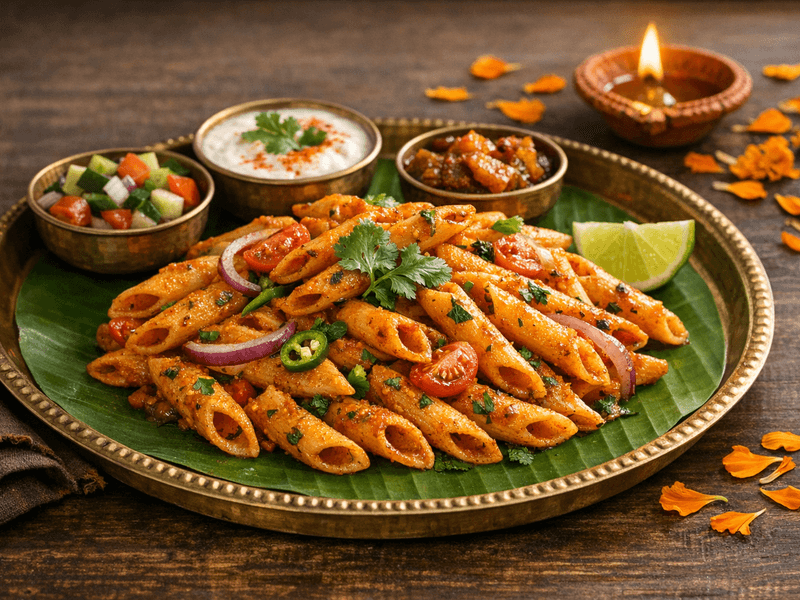
Masala Penne Pasta
Noodles • India
How to Make Masala Penne Pasta (Traditional & Healthy Version)
Masala Penne Pasta is a delightful fusion dish that showcases the vibrant flavors of India, blending the classic Italian-style pasta with robust Indian masalas. This recipe is a favorite in urban Indian households, especially among young adults and children, thanks to its spicy, tangy, and aromatic taste. It’s commonly enjoyed as a quick lunch or evening snack and has become a staple during gatherings, festive celebrations, and even casual family dinners. The Indian adaptation uses locally sourced vegetables, spices, and herbs like dhania (coriander) and garam masala, making it both nutritious and flavorful. The dish’s origins trace back to metropolitan cities such as Mumbai and Delhi, where global influences meet traditional Indian tastes. Masala Penne Pasta is often prepared during festivals like Holi or Diwali, when families seek something exciting yet easy to make. The recipe is highly customizable and caters beautifully to vegetarian diets, making it suitable for a wide range of preferences. Its popularity is marked by its versatility—whether served piping hot from the kadhai or packed in a lunchbox for school or work, this pasta brings comfort and joy to Indian homes. Choosing Masala Penne Pasta is a great option for those seeking a healthy, vegetarian meal that doesn’t compromise on flavor. The combination of whole wheat penne, fresh sabzi (vegetables), and aromatic Indian spices provides a satisfying meal that’s rich in fiber, vitamins, and minerals. The dish is also easy to prepare, making it perfect for busy weekdays or festive feasts.
Ingredients(for 1 bowl (approx. 200g))
- 1 cup Whole wheat penne pasta (atta pasta for extra fiber)
- 1 medium, finely chopped Onion (pyaz)
- 2 medium, finely chopped Tomato (tamatar)
- 1 medium, diced Capsicum (shimla mirch)
- 1 small, grated Carrot (gajar)
- 1/4 cup Green peas (matar)
- 3 cloves, minced Garlic (lehsun)
- 1 inch, grated Ginger (adrak)
- 1/2 tsp Red chilli powder (lal mirch)
- 1/2 tsp Garam masala (Indian spice mix)
- 1/4 tsp Turmeric powder (haldi)
- to taste Salt (namak)
- 1 tbsp Olive oil (or any cold-pressed oil)
- 2 tbsp, chopped Fresh coriander (dhania)
- 1 tsp Lemon juice (nimbu ras) - optional
Instructions
- 1
Boil whole wheat penne pasta in a large patila with salted water until al dente. Drain and set aside.
8 minutes
Add a drop of oil to prevent sticking.
- 2
Heat olive oil in a kadhai. Add finely chopped garlic and ginger; sauté until fragrant.
2 minutes
Do not burn garlic for best flavor.
- 3
Add onions and cook until golden brown. Stir occasionally.
3 minutes
Stir continuously for even browning.
- 4
Add tomatoes, cook until soft and mushy. Add turmeric, red chilli powder, and salt. Mix well.
4 minutes
Cover with a lid for faster cooking.
Why This Dish is Healthy
Choosing Masala Penne Pasta prepared with whole wheat pasta and ample sabzi makes it a healthy meal option for weight watchers and active individuals. It is low in saturated fat, rich in fiber, and offers antioxidants from Indian spices. The recipe avoids processed ingredients, focusing instead on nutritious, fresh produce. It’s suitable for vegetarian diets and can be easily adapted for vegan preferences, making it a wholesome and guilt-free indulgence.
This Masala Penne Pasta is packed with dietary fiber from whole wheat atta pasta and fresh vegetables. It offers a balanced blend of complex carbohydrates, plant-based protein, and healthy fats from olive oil. The inclusion of carrots and peas adds vital vitamins A and C, while tomatoes provide antioxidants like lycopene. Garlic and ginger boost immunity, and coriander offers minerals and fresh flavor. With moderate calories and no heavy cream or cheese, this dish supports heart health and digestion.
Pro Tips
- 💡Tip 1: Use whole wheat or multi-grain pasta for extra nutrients.
- 💡Tip 2: Add seasonal vegetables for variety and nutrition.
- 💡Tip 3: Adjust spice level to suit your family's preference.
Storage & Serving
Store leftovers in an airtight dabba in the refrigerator for up to 2 days. Reheat on a tawa or in a microwave before serving. Best consumed fresh.
Best served: Breakfast or Lunch
Nutrition Facts
| Nutrient | Per 100g |
|---|---|
| Energy | 340.0 kcal |
| Protein | 10.0 g |
| Carbohydrates | 53.0 g |
| Total Fat | 10.0 g |