Desi Chowmein
Noodles • India
How to Make Desi Chowmein (Traditional & Healthy Version)
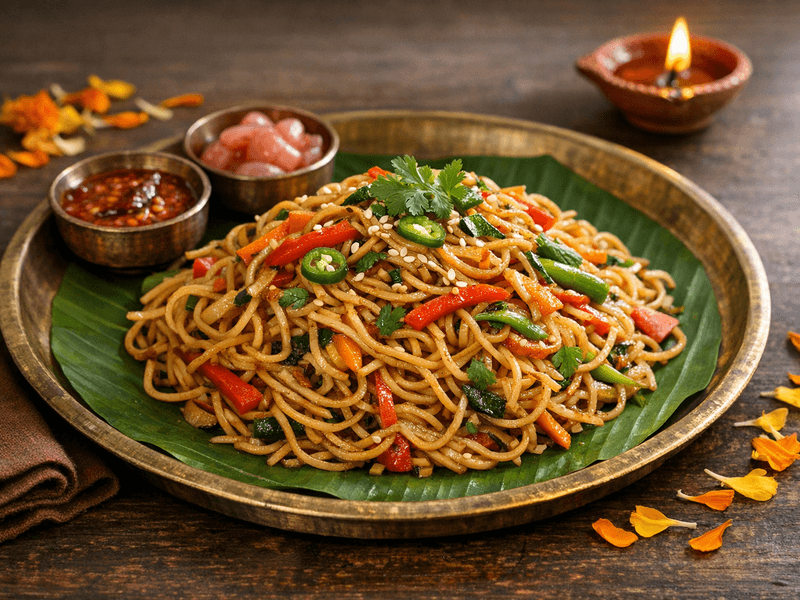
Desi Chowmein is a beloved Indian noodle dish that has found its way into street food stalls, home kitchens, and festive occasions across the nation. Originating from the bustling markets of North India, particularly Delhi and Kolkata, Desi Chowmein is a fusion of Chinese-style stir-fried noodles and the vibrant flavors of Indian spices and vegetables. The dish captures the essence of Indian cuisine by using local ingredients such as atta noodles, fresh vegetables like capsicum (shimla mirch), carrots, and cabbage, and a medley of masalas, making it both flavorful and nutritious. Its popularity surges during festivals like Holi and Diwali, when families seek quick, crowd-pleasing snacks that are both filling and delicious. The taste is a delightful mix of tangy, spicy, and savory notes, offering a satisfying crunch and a rich aroma from the use of garlic (lehsun) and green chilies. Desi Chowmein is perfect for lunch or as a light dinner, providing a healthier alternative to traditional fried snacks. Its versatility allows for regional adaptations, from adding paneer in the North to tossing in coconut and curry leaves in the South. Whether eaten hot off the tawa or packed in tiffin boxes, Desi Chowmein is a testament to India’s ability to embrace and reinvent global flavors with a local twist.
Ingredients(for 1 medium bowl per person)
- 100 grams Atta noodles (whole wheat noodles for healthier option)
- 1/2 cup Capsicum (Shimla mirch) (thinly sliced)
- 1/2 cup Carrot (Gajar) (julienned)
- 1/2 cup Cabbage (Patta gobi) (finely shredded)
- 1/2 cup Onion (Pyaz) (sliced)
- 1 Green chilli (Hari mirch) (finely chopped)
- 3 cloves Garlic (Lehsun) (minced)
- 1 tablespoon Soy sauce (low sodium)
- 1 tablespoon Tomato ketchup (optional for tanginess) - optional
- 1/2 teaspoon Black pepper powder (Kali mirch)
- to taste Salt
- 1 tablespoon Oil (preferably olive or mustard oil (sarson ka tel))
- 2 tablespoons Spring onion greens (for garnish) - optional
Instructions
- 1
Boil atta noodles in ample water with a pinch of salt until just cooked (al dente). Drain and rinse with cold water to stop cooking.
5 minutes
Do not overcook noodles to retain texture.
- 2
Heat oil in a wide tawa or kadhai. Add minced garlic and green chilli, sauté till aromatic.
3 minutes
Use high flame for quick stir-frying and to preserve crunch.
- 3
Add sliced onions and stir-fry until translucent. Then add carrots, capsicum, and cabbage, tossing them for 2-3 minutes.
5 minutes
Keep vegetables crisp for best flavor and nutrition.
- 4
Add boiled noodles to the vegetables. Sprinkle black pepper and salt. Toss well on high heat.
3 minutes
Use two spatulas for even mixing.
Why This Dish is Healthy
This healthy version of Desi Chowmein is ideal for calorie-conscious eaters, as it skips deep-frying and utilizes whole wheat noodles instead of refined flour. The generous vegetable content increases fiber and micronutrients, making it suitable for weight loss and diabetic diets. Minimal oil and low sodium soy sauce ensure heart-friendly, low-calorie results. It’s a wholesome, filling meal without unnecessary calories or unhealthy fats.
Desi Chowmein made with atta noodles is a fiber-rich, low-fat meal that supports digestive health and sustained energy release. Fresh vegetables like capsicum, carrot, and cabbage boost vitamin A, C, and antioxidants, while garlic and onion add immunity-strengthening phytonutrients. Olive or mustard oil contains heart-healthy fats and minimal cholesterol. The dish is a balanced source of carbs, protein (especially if paneer is added), and essential minerals such as potassium and iron.
Pro Tips
- 💡Tip 1: Use atta noodles for extra fiber and lower glycemic index.
- 💡Tip 2: Always stir-fry vegetables on high heat to preserve crunch and nutrients.
- 💡Tip 3: Garnish with fresh spring onion greens for a burst of flavor and color.
Storage & Serving
Store leftover Desi Chowmein in an airtight container in the refrigerator for up to 2 days. Reheat on a tawa or kadhai for best texture. Avoid freezing as noodles may become mushy.
Best served: Breakfast or Lunch
Nutrition Facts
| Nutrient | Per 100g |
|---|---|
| Energy | 350.0 kcal |
| Protein | 8.0 g |
| Carbohydrates | 53.0 g |
| Total Fat | 12.0 g |