Coconut Sevai
Noodles • India
How to Make Coconut Sevai (Traditional & Healthy Version)
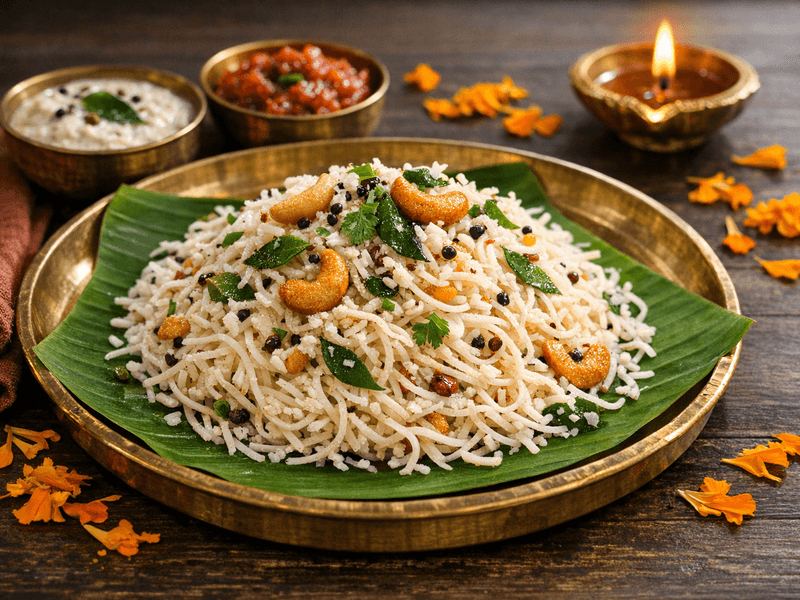
Coconut Sevai, also known as Thengai Sevai in Tamil Nadu, is a beloved Indian noodle dish made from rice sevai (vermicelli) tossed with freshly grated coconut and aromatic tempering. This dish is popular across South India, especially during festivals like Krishna Janmashtami and Ganesh Chaturthi, when simple, sattvic foods are preferred. The natural sweetness of coconut pairs beautifully with the subtle tang of curry leaves and the crunch of roasted peanuts, making it both flavorful and comforting. Coconut Sevai is a perfect choice for breakfast or lunch due to its light yet satisfying nature. Traditionally, sevai is prepared fresh at home, but many now use packaged rice vermicelli for convenience. The recipe is vegetarian and can easily be adapted for vegan diets. With its quick preparation and delicious taste, Coconut Sevai is ideal for busy mornings and festive gatherings alike. Rich in regional flavors and easy on the stomach, it reflects the simplicity and wholesomeness of Indian home cooking. The delicate balance of textures and flavors in Coconut Sevai makes it a favorite among all age groups. Its versatility allows for variations to suit health needs, making it a staple in Indian households. If you are looking for a healthy noodle recipe that is authentically Indian and calorie-conscious, Coconut Sevai is a must-try.
Ingredients(for 1 medium bowl (approx. 200g cooked sevai))
- 1 cup Rice sevai (vermicelli) (चावल सेवई)
- 1/2 cup Fresh grated coconut (नारियल)
- 10-12 Curry leaves (कड़ी पत्ता)
- 1/2 tsp Mustard seeds (राई)
- 1 tsp Urad dal (split black gram) (उड़द दाल)
- 1-2, chopped Green chillies (हरी मिर्च)
- 2 tbsp Roasted peanuts (मूंगफली) - optional
- 1 tbsp Oil (Any cold-pressed oil (e.g., coconut, sesame))
- to taste Salt (नमक)
- pinch Asafoetida (hing) (हींग) - optional
Instructions
- 1
Boil rice sevai in plenty of water until soft (about 3-4 minutes). Drain and rinse under cold water to prevent sticking. Set aside.
5 minutes
Do not overcook sevai; it should be just tender.
- 2
Heat oil in a kadhai or pan. Add mustard seeds and let them splutter. Add urad dal and fry till golden.
3 minutes
Keep the flame medium to avoid burning the dal.
- 3
Add curry leaves, green chillies, and asafoetida. Sauté until fragrant.
2 minutes
Add chillies according to your spice preference.
- 4
Add drained sevai to the tempering. Toss gently to coat sevai evenly with the spices.
3 minutes
Mix using a spatula to avoid breaking the sevai.
Why This Dish is Healthy
This healthy Coconut Sevai recipe uses minimal oil and fresh, natural ingredients. It is high in complex carbohydrates for sustained energy, contains plant-based protein, and the coconut provides good fats essential for brain health. The absence of heavy cream or cheese makes it lighter than many noodle dishes. Its low GI ingredients help balance blood sugar, making it suitable for diabetics and weight watchers.
Coconut Sevai is a balanced dish with moderate calories, making it ideal for calorie tracking. Each serving provides 5g protein, 44g carbohydrates, and 11g fat. Rice sevai is gluten-free and easily digestible, while coconut offers healthy fats and minerals like magnesium, potassium, and iron. Curry leaves and peanuts add antioxidants, fiber, and micronutrients. The dish is naturally vegetarian and can be adapted for vegan diets by using plant-based oil.
Pro Tips
- 💡Tip 1: Always use fresh grated coconut for best flavor.
- 💡Tip 2: Do not overcook sevai; rinse in cold water to avoid stickiness.
- 💡Tip 3: Add peanuts just before serving to retain their crunch.
Storage & Serving
Store Coconut Sevai in an airtight container in the refrigerator for up to 2 days. Reheat on a tawa or microwave before serving. Avoid storing for longer as coconut can spoil.
Best served: Breakfast or Lunch
Nutrition Facts
| Nutrient | Per 100g |
|---|---|
| Energy | 290.0 kcal |
| Protein | 5.0 g |
| Carbohydrates | 44.0 g |
| Total Fat | 11.0 g |