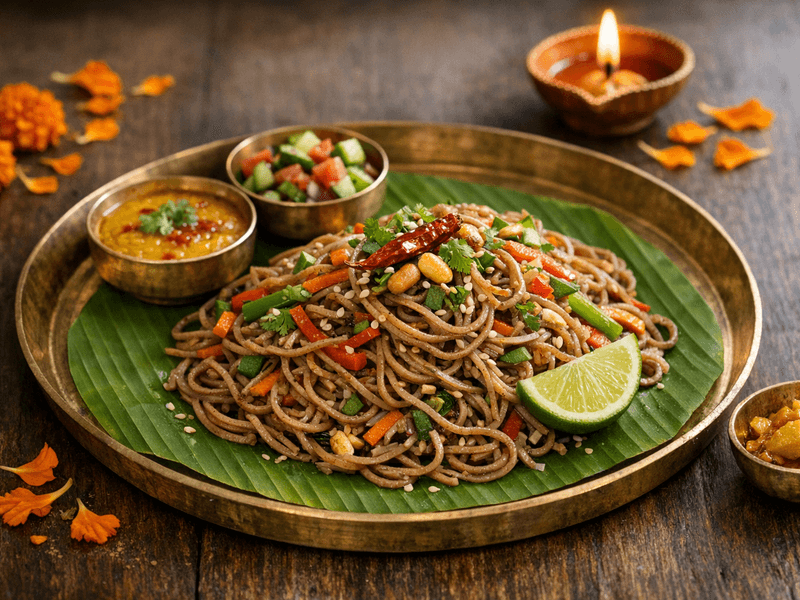
Buckwheat Noodles
Noodles • India
How to Make Buckwheat Noodles (Traditional & Healthy Version)
Buckwheat Noodles, known as 'Kuttu Noodles' in many Indian households, are a wholesome and innovative twist to traditional noodles. Derived from 'kuttu ka atta', commonly used during Navratri fasting, these noodles are gluten-free, making them suitable for those seeking alternative grains in their diet. Buckwheat flour is native to the hilly regions of Himachal Pradesh and Uttarakhand, where it's a staple during festivals and fasting days. The earthy aroma and nutty flavor of buckwheat pair beautifully with vibrant Indian vegetables and spices, creating a dish that’s both comforting and energizing. Embracing Indian culinary roots, Buckwheat Noodles offer a delightful texture—slightly chewy yet soft—making them a great replacement for regular wheat noodles. With rising awareness about healthy eating, especially during festivals like Navratri or Ekadashi, these noodles have found a place not just in fasting menus but also everyday meals. Their versatility allows for regional adaptations, letting you incorporate local produce and masalas to suit your palate. If you’re searching for a light, nutritious, and quick meal, these Indian-style buckwheat noodles are an excellent choice that doesn’t compromise on taste or tradition.
Ingredients(for 1 medium bowl (approx. 150g cooked noodles per serving))
- 1 cup Buckwheat flour (Kuttu ka atta)
- 2 tbsp Whole wheat flour (for binding)
- as needed Water (lukewarm)
- 1 small Carrot (julienned (gajar))
- 1/2 medium Capsicum (julienned (shimla mirch))
- 1/2 cup Cabbage (shredded (patta gobhi))
- 8-10 Green beans (finely sliced (french beans))
- 2 stalks Spring onion (finely chopped (hara pyaaz))
- 1 tsp Ginger (finely grated (adrak))
- 1 Green chilli (finely chopped (hari mirch)) - optional
- 1 tbsp Oil (preferably mustard oil or cold-pressed)
- to taste Salt (sendha namak for fasting)
- 1/4 tsp Black pepper powder
- 1 tsp Lemon juice (nimbu ras) - optional
Instructions
- 1
In a large mixing bowl, combine kuttu ka atta and whole wheat flour. Gradually add lukewarm water and knead into a soft, pliable dough. Rest the dough for 10 minutes under a damp cloth.
10 minutes
Use minimal water at a time to avoid sticky dough.
- 2
Divide the dough into two portions. On a lightly dusted surface, roll out each portion into thin sheets using a belan (rolling pin), then cut into thin strips to form noodles.
5 minutes
Dust with extra flour to prevent sticking.
- 3
Bring water to a boil in a large saucepan. Add a pinch of salt and gently drop in the noodles. Boil for 3-4 minutes or until they float to the top. Drain and rinse under cold water to stop cooking.
5 minutes
Do not overcook; buckwheat noodles cook faster than wheat noodles.
- 4
Heat oil in a kadhai or deep tawa. Add ginger and green chilli, sauté for 30 seconds. Add all vegetables and stir-fry on high flame for 3-4 minutes until just tender.
4 minutes
Keep vegetables crunchy for better nutrition and taste.
Why This Dish is Healthy
This Buckwheat Noodles recipe offers a nutritious alternative to traditional refined flour noodles. Buckwheat (kuttu) is packed with antioxidants, complex carbs, and plant protein, making it ideal for vegetarians and those on a weight loss or diabetic diet. Minimal oil and the use of fresh, seasonal vegetables further reduce calorie density while boosting satiety and micronutrient intake. A perfect meal for anyone seeking healthy Indian recipes without sacrificing flavor.
Buckwheat Noodles are rich in plant-based protein, dietary fiber, and essential minerals like magnesium, manganese, and iron. With only 300 calories per serving, these noodles provide a balanced macro profile—11g protein, 56g carbs, and just 4g fat—making them suitable for weight management and muscle health. Buckwheat is naturally gluten-free and has a low glycemic index, which helps in maintaining stable blood sugar levels. The addition of assorted Indian vegetables enhances the vitamin, antioxidant, and fiber content, supporting heart and digestive health.
Pro Tips
- 💡Tip 1: Knead dough firmly but avoid overworking to prevent tough noodles.
- 💡Tip 2: Always rinse cooked noodles under cold water to stop cooking and prevent stickiness.
- 💡Tip 3: Use a wide kadhai for stir-frying to avoid breaking the delicate noodles.
Storage & Serving
Store cooked noodles in an airtight container in the refrigerator for up to 2 days. Reheat in a pan with a sprinkle of water to revive freshness. Avoid freezing as texture may change.
Best served: Breakfast or Lunch
Nutrition Facts
| Nutrient | Per 100g |
|---|---|
| Energy | 300.0 kcal |
| Protein | 11.0 g |
| Carbohydrates | 56.0 g |
| Total Fat | 4.0 g |
| Fiber | 2.7 g |
| Sugars | 0.5 g |
| Sodium | 3.0 mg |
| Potassium | 110.0 mg |
| Cholesterol | 0.0 mg |
| Vitamin A | 0.0 IU |
| Vitamin C | 0.0 mg |
| Calcium | 7.0 mg |
| Iron | 1.3 mg |
| Magnesium | 48.0 mg |
| Zinc | 0.7 mg |
| Phosphorus | 85.0 mg |
| Vitamin D | 0.0 IU |
| Vitamin B1 (Thiamine) | 0.1 mg |
| Vitamin B2 (Riboflavin) | 0.0 mg |
| Vitamin B3 (Niacin) | 1.1 mg |
| Vitamin B6 | 0.1 mg |
| Vitamin B12 | 0.0 µg |
| Folate | 14.0 µg |