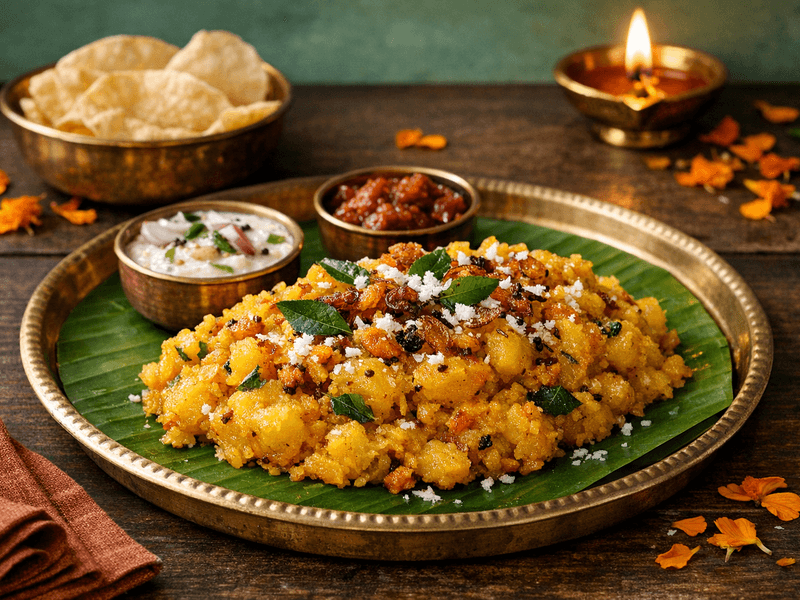
Vegetarian Kappa Biriyani
Lunch • India
How to Make Vegetarian Kappa Biriyani (Traditional & Healthy Version)
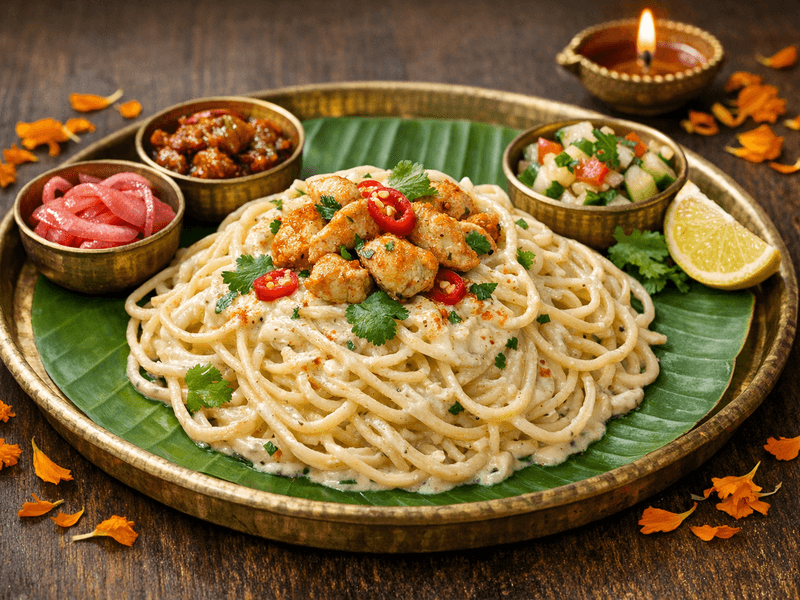
Vegetarian Kappa Biriyani is a unique and wholesome Kerala delicacy, cherished especially in the southern districts of the state. 'Kappa' is the Malayalam term for tapioca, a staple tuber in Kerala cuisine. This biriyani is a flavorful, layered dish that combines steamed kappa with aromatic spices, vegetables, and coconut, reflecting the rich culinary heritage of Kerala. The blend of earthy tapioca, fragrant masalas, and fresh coconut creates a hearty, nutritious meal that is deeply satisfying. Kerala’s Kappa Biriyani is often enjoyed during special occasions and family gatherings, sometimes as a festive lunch during Onam. Its vegetarian version is a health-conscious twist, focusing on clean, plant-based ingredients without sacrificing authenticity. The taste is robust yet comforting, with subtle heat and sweetness from regional spices and coconut. For those tracking calories, this dish offers a filling lunch option that celebrates India’s diverse vegetarian traditions. Whether shared with family or savored solo, Vegetarian Kappa Biriyani brings the flavors of Kerala right to your plate.
Ingredients(for 1 medium bowl (approx. 250g per serving))
- 2 cups Kappa (tapioca) (peeled and cubed, regional name: kappa)
- 1 large Onion (finely sliced)
- 1 medium Tomato (chopped)
- 2 Green chillies (slit, regional: pachamulagu)
- 1 inch Ginger (crushed)
- 3 cloves Garlic (crushed)
- 1/4 cup Coconut (grated, regional: thenga)
- 1/2 tsp Turmeric powder (regional: manjal podi)
- 1/2 tsp Red chilli powder (regional: mulaku podi)
- 1/2 tsp Garam masala (regional: biriyani masala)
- 1/2 tsp Mustard seeds (regional: kaduku)
- 10 leaves Curry leaves (regional: kariveppila)
- 2 tbsp Coconut oil (for authentic flavor)
- to taste Salt (regional: uppu)
Instructions
- 1
Peel and cube the kappa (tapioca). Rinse thoroughly and place in a deep vessel with enough water to cover. Add salt and turmeric powder. Boil until kappa turns soft and translucent.
10 minutes
Do not overcook; kappa should be soft but not mushy.
- 2
Drain the cooked kappa and set aside. Heat coconut oil in a tawa or kadai. Add mustard seeds and let them splutter. Toss in curry leaves for aroma.
2 minutes
Use fresh coconut oil for authentic Kerala flavor.
- 3
Add sliced onion, ginger, and garlic. Sauté until onions turn golden brown. Add green chillies and stir well.
3 minutes
Keep flame medium to prevent burning the aromatics.
- 4
Add chopped tomatoes and cook until soft. Mix in red chilli powder and garam masala. Sauté for a minute until spices release their fragrance.
3 minutes
Add a tablespoon of water if spices stick to the pan.
Why This Dish is Healthy
This biriyani is naturally gluten-free and low in saturated fat, making it a great option for those seeking healthy Indian lunch recipes. The fiber and nutrients from kappa and vegetables promote satiety and digestive wellness. Coconut oil is known for its medium-chain triglycerides, which boost metabolism. Vegetarian Kappa Biriyani is perfect for calorie-conscious eaters looking for flavorful, plant-based meals.
Vegetarian Kappa Biriyani is rich in complex carbohydrates from tapioca, providing sustained energy. The use of coconut oil and grated coconut adds heart-healthy fats, while onions, tomatoes, and green chillies bring antioxidants and vitamins A and C. Curry leaves and spices offer minerals like iron and magnesium. With no refined grains or processed ingredients, this dish supports digestive health and offers a balanced macro profile ideal for vegetarian diets.
Pro Tips
- 💡Tip 1: Use freshly grated coconut for authentic taste.
- 💡Tip 2: Ensure kappa is cooked just right—too mushy will spoil texture.
- 💡Tip 3: Swap coconut oil with olive oil for a lighter version, but coconut oil is preferred for Kerala flavor.
Storage & Serving
Store leftover Kappa Biriyani in an airtight container in the refrigerator for up to 2 days. Reheat on a tawa or in a microwave before serving. Avoid freezing as tapioca may change texture.
Best served: Breakfast or Lunch
Nutrition Facts
| Nutrient | Per 100g |
|---|---|
| Energy | 390.0 kcal |