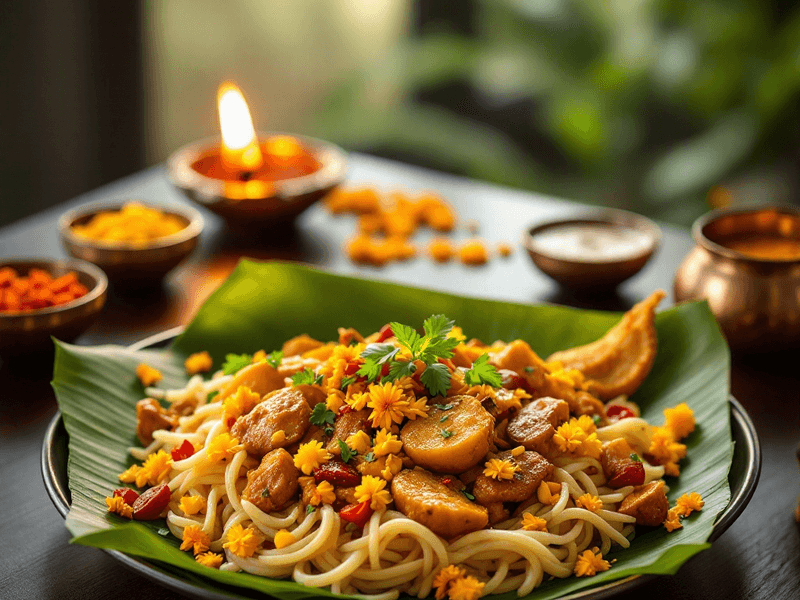
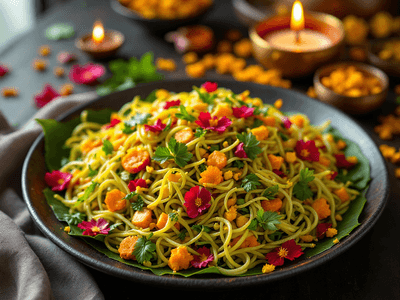
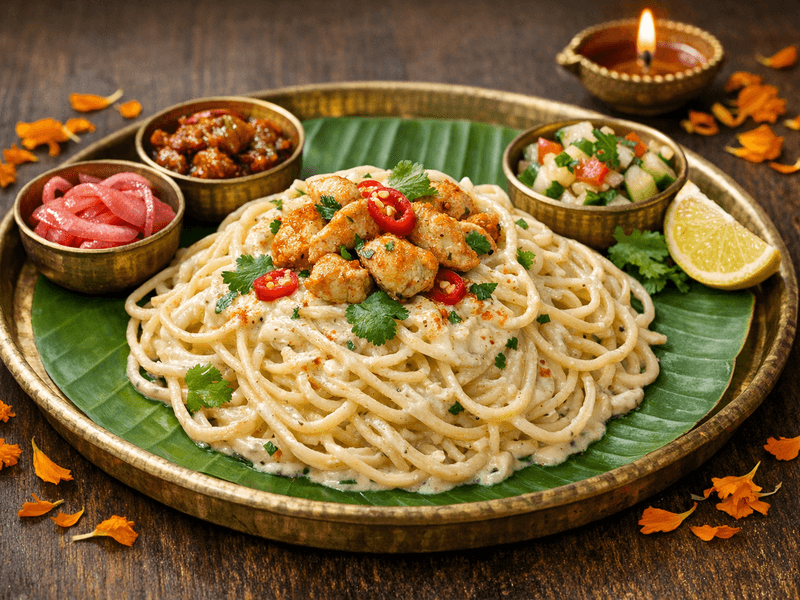
📸 Image coming soon for Vegetarian Assam Laksa
Vegetarian Assam Laksa
Lunch • India
How to Make Vegetarian Assam Laksa (Traditional & Healthy Version)
Vegetarian Assam Laksa is a vibrant noodle soup, inspired by the tangy flavors of Assam and the rich culinary heritage of India's Northeast. This dish harmonizes aromatic spices, fresh vegetables, and rice noodles to create a wholesome meal that is both satisfying and nutritious. Assam Laksa is traditionally served during community gatherings and festive occasions in Assam, where the use of local produce like tamarind (imli), fresh herbs, and seasonal vegetables is celebrated. The soup is known for its tangy, spicy, and mildly sweet taste, making it a popular lunch choice in Assamese households. The vegetarian version is crafted for health-conscious individuals, using minimal oil and plant-based proteins such as tofu or paneer. By choosing rice noodles and eliminating fish, the dish becomes lighter and suitable for a wider range of diets, including vegetarian and vegan. The medley of flavors—sour from imli, heat from green chillies, and depth from spices—reflects the diverse palate of India’s regional cuisines. Vegetarian Assam Laksa is also enjoyed during Bohag Bihu, Assam’s spring festival, as a comforting and nourishing meal. With its rich tradition and fresh ingredients, Assam Laksa is a perfect lunch option that provides energy and satisfaction without feeling heavy. This healthy Indian recipe fits well in modern calorie-conscious diets, blending authenticity with nutritional balance. The use of regional terms and spices makes it a truly Indian adaptation, ideal for those seeking a unique and flavorful vegetarian meal.
Ingredients(for 1 medium bowl per person)
- 100 grams Rice noodles (Laksa noodles or regular rice noodles)
- 2 tablespoons Tamarind pulp (imli) (Fresh imli preferred)
- 75 grams Tofu or paneer (Chopped into cubes)
- 1 medium Onion (pyaz) (Finely sliced)
- 1 large Tomato (tamatar) (Chopped)
- 1/2 cup Cucumber (kheera) (Julienned)
- 2 Green chillies (hari mirch) (Slit)
- 1 teaspoon Ginger (adrak) (Grated)
- 1/4 cup Fresh coriander (dhaniya) (Chopped)
- to taste Salt
- 1 teaspoon Mustard oil (sarson ka tel) (Optional for authentic Assamese flavor) - optional
- 4 cups Water
Instructions
- 1
Soak rice noodles in warm water for 10 minutes until soft. Drain and set aside.
10 minutes
Use thin rice noodles for faster cooking and lighter texture.
- 2
In a large patila (pot), heat mustard oil if using. Add sliced onions, ginger, and green chillies. Sauté until onions turn translucent.
4 minutes
Mustard oil adds authentic Assamese aroma; skip for a milder flavor.
- 3
Add chopped tomatoes and cook until they soften. Stir in tamarind pulp and mix well.
3 minutes
Fresh imli gives a tangier flavor compared to packaged pulp.
- 4
Pour in water, bring to a boil, and add tofu or paneer cubes. Simmer for 5 minutes to infuse flavors.
5 minutes
Paneer makes the dish richer, tofu keeps it lighter and vegan.
Why This Dish is Healthy
This traditional Indian recipe is crafted with wholesome, plant-based ingredients, making it ideal for weight management and maintaining a balanced diet. The use of rice noodles keeps it gluten-free (if not cross-contaminated), and the inclusion of tofu or paneer adds protein without excess fat. Fresh vegetables and spices ensure micronutrient content, supporting immunity and overall wellness.
Vegetarian Assam Laksa is low in saturated fat and high in fiber, thanks to the use of fresh vegetables and rice noodles. Tofu or paneer provides a protein boost, while imli (tamarind) is rich in antioxidants and aids digestion. The dish offers vitamins A, C, and minerals like potassium and magnesium from cucumber, tomatoes, and coriander. Minimal oil and plant-based ingredients make it suitable for calorie-conscious diets and those seeking heart-healthy meals.
Pro Tips
- 💡Tip 1: Use homemade tamarind pulp for authentic tanginess.
- 💡Tip 2: Add fresh herbs like mint (pudina) for extra aroma.
- 💡Tip 3: For gluten-free, ensure rice noodles are not mixed with wheat.
Storage & Serving
Store soup and noodles separately in airtight containers in the refrigerator for up to 2 days. Reheat soup and combine with noodles just before serving for best texture.
Best served: Lunch
Nutrition Facts
| Nutrient | Per 100g |
|---|---|
| Energy | 380.0 kcal |
| Protein | 2.0 g |
| Carbohydrates | 16.0 g |
| Total Fat | 2.0 g |
| Fiber | 2.0 g |