Vegetable Mix with Paneer
Lunch • India
How to Make Vegetable Mix with Paneer (Traditional & Healthy Version)
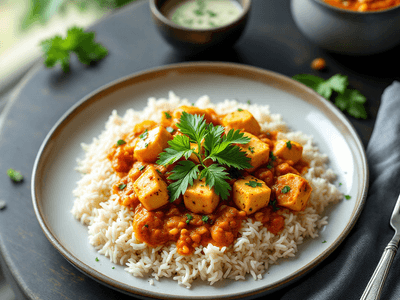
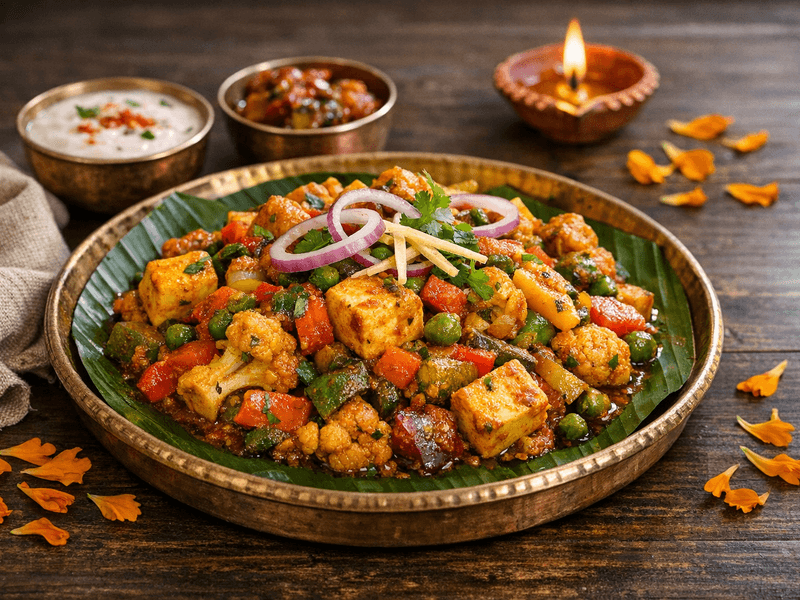
Vegetable Mix with Paneer is a vibrant North Indian dish that brings together the rich flavors of fresh seasonal vegetables and protein-packed paneer. This sabzi is a staple in many Indian households, especially during lunch, and is often enjoyed with phulka (atta roti) or jeera rice. Its origins trace back to Punjabi kitchens, where diverse vegetables are combined with home-made paneer and classic Indian masalas, creating a wholesome dish that’s both nourishing and delicious. The medley of vegetables like carrots, beans, capsicum, and peas not only adds color and crunch but also ensures a balance of nutrients in every bite. Paneer, known for its creamy texture, soaks up the spices and blends beautifully with the veggies, making it a favorite during festivals like Holi and Diwali, or for a comforting weekday meal. The subtle use of garam masala, jeera (cumin), and turmeric imparts an authentic Indian flavor, making this dish a delicious and healthy addition to any lunch thali. Easy to prepare, this Vegetable Mix with Paneer is perfect for busy families looking for a quick, satisfying, and health-conscious meal. Its versatility allows for regional variations—some add methi (fenugreek leaves) or substitute vegetables based on season and availability. Whether served at a festive gathering or as a nutritious weekday lunch, this sabzi is a testament to the diversity and richness of North Indian vegetarian cuisine.
Ingredients(for 1 medium bowl per person)
- 150 grams Paneer (fresh home-made preferred)
- 1/2 cup Carrots (gajar, diced)
- 1/2 cup French Beans (sem, chopped)
- 1/2 cup Green Peas (matar, fresh or frozen)
- 1/2 cup Capsicum (shimla mirch, chopped)
- 1 medium Onion (pyaz, finely chopped)
- 1 large Tomato (tamatar, finely chopped)
- 1 teaspoon Ginger-Garlic Paste (adrak-lehsun paste)
- 1/2 teaspoon Jeera (Cumin Seeds)
- 1/4 teaspoon Turmeric Powder (haldi)
- 1/2 teaspoon Red Chilli Powder (lal mirch)
- 1/2 teaspoon Garam Masala
- to taste Salt (namak)
- 1 tablespoon Oil (use mustard oil or any light oil)
- 2 tablespoons Fresh Coriander Leaves (hara dhaniya, chopped) - optional
Instructions
- 1
Heat oil in a kadhai (deep pan) on medium flame. Add jeera and let it crackle.
2 minutes
Mustard oil gives an authentic Punjabi flavor.
- 2
Add chopped onions and sauté until golden brown.
3 minutes
Stir continuously to avoid burning and ensure even browning.
- 3
Mix in ginger-garlic paste and cook until raw aroma disappears.
1 minute
This enhances the base flavor of the sabzi.
- 4
Add tomatoes, turmeric, red chilli powder, and salt. Cook until tomatoes turn mushy and oil starts separating.
4 minutes
Cover the pan to soften tomatoes faster.
Why This Dish is Healthy
Vegetable Mix with Paneer is a healthy lunch option for anyone watching calories or aiming for balanced nutrition. It’s rich in plant-based nutrients and protein, keeps you full longer, and helps in muscle repair and immune function. By using fresh, seasonal vegetables and minimal oil, this recipe maximizes nutrition while keeping calories in check. It aligns perfectly with a weight management or diabetic-friendly diet, and is suitable for vegetarians seeking protein-rich meals.
This Vegetable Mix with Paneer is packed with high-quality protein from paneer and fiber, vitamins (A, C, K), and minerals from assorted vegetables. Paneer supplies calcium and phosphorus essential for bone health, while vegetables contribute antioxidants and complex carbs. The dish is low in saturated fat and uses minimal oil, making it heart-friendly. It contains no added sugars and is gluten-free (if served without wheat). The combination ensures a balanced intake of macros and micronutrients, supporting overall wellness.
Pro Tips
- 💡Tip 1: Always use fresh paneer for the best taste and texture.
- 💡Tip 2: Add a pinch of kasuri methi (dried fenugreek) for extra aroma.
- 💡Tip 3: Do not overcook vegetables to retain their crunch and nutrients.
Storage & Serving
Store leftovers in an airtight container in the refrigerator for up to 2 days. Reheat on a tawa or microwave before serving. Avoid freezing as paneer may lose its texture.
Best served: Breakfast or Lunch
Nutrition Facts
| Nutrient | Per 100g |
|---|---|
| Energy | 150.0 kcal |