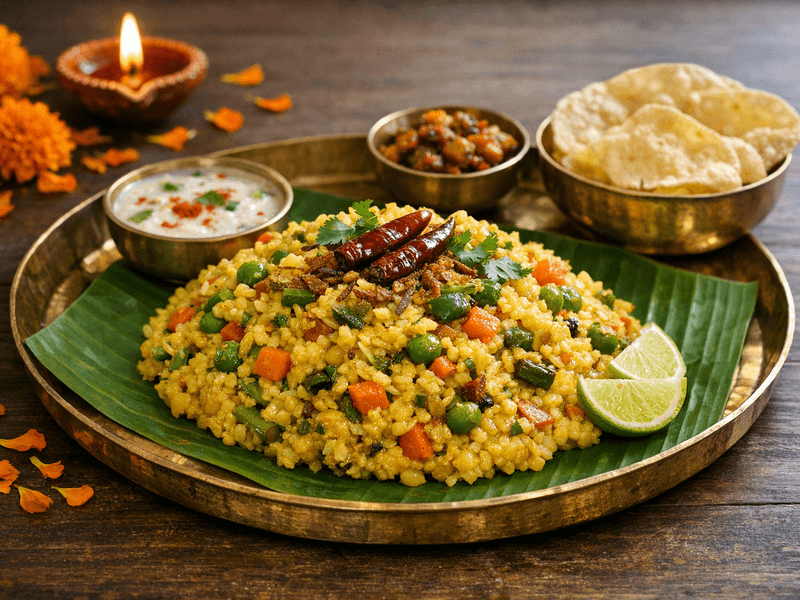
Vegetable Khichadi
Lunch • India
How to Make Vegetable Khichadi (Traditional & Healthy Version)
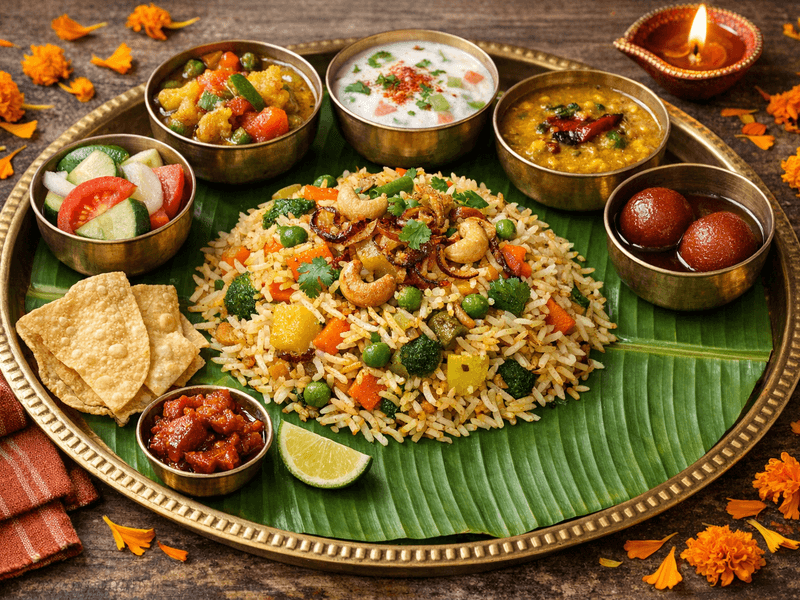
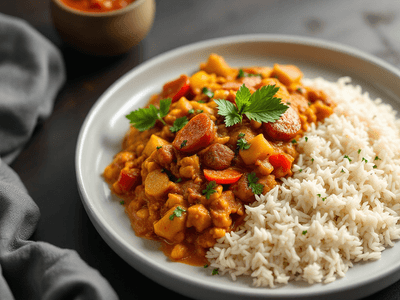
Vegetable Khichadi is a beloved Indian comfort food, celebrated for its simplicity, nourishment, and wholesome flavors. Originating from various regions across India, Khichadi is traditionally prepared by simmering rice (chawal) and lentils (dal) with a medley of seasonal vegetables and gentle spices. It is often regarded as a healing meal, especially during festivals like Makar Sankranti, or when one seeks light and easily digestible food. The dish is a staple in Indian households, prized for its ability to blend nutrition with taste and evoke a sense of home and warmth. Khichadi's taste is subtle yet satisfying, featuring the earthy notes of moong dal and rice, enhanced with cumin (jeera), turmeric (haldi), and an assortment of vegetables. It is commonly served with a dollop of ghee, chutney, or yogurt (dahi), making it a complete meal. Besides its prominence in daily lunches, Vegetable Khichadi is also offered during religious fasts and as prasad in temples. Its versatility and regional variations—from the spicy Gujarati khichadi to the softer Bengali version—make it a cherished dish throughout India. For health-conscious individuals, Vegetable Khichadi stands out as a balanced meal, rich in fiber and protein, and ideal for calorie tracking.
Ingredients(for 1 bowl (approx. 250g))
- 1/2 cup Rice (chawal) (short grain preferred)
- 1/2 cup Moong dal (yellow split lentils) (mung dal)
- 1/4 cup Carrot (finely chopped)
- 1/4 cup Green peas (matar) (fresh or frozen)
- 1/4 cup Potato (aloo) (diced)
- 1/4 cup French beans (chopped)
- 1/2 tsp Turmeric powder (haldi)
- 1/2 tsp Cumin seeds (jeera)
- 1 tsp Ginger (adrak) (grated)
- to taste Salt
- 1 tsp Ghee (for tempering) - optional
- 3 cups Water
- 1 tbsp Coriander leaves (dhaniya) (chopped, for garnish) - optional
Instructions
- 1
Rinse the rice and moong dal thoroughly in water until the water runs clear. Soak for 10 minutes.
10 minutes
Soaking helps reduce cooking time and enhances digestibility.
- 2
Heat ghee in a heavy-bottomed pan or pressure cooker. Add cumin seeds and let them splutter. Add grated ginger and sauté briefly.
2 minutes
Use a kadhai or pressure cooker for authentic taste.
- 3
Add chopped vegetables (carrot, peas, potato, beans) and stir-fry for 2-3 minutes.
3 minutes
Add seasonal veggies for enhanced nutrition and flavor.
- 4
Add soaked rice and moong dal, turmeric powder, and salt. Mix well.
2 minutes
Stir gently to avoid breaking the grains.
Why This Dish is Healthy
This dish is naturally low in calories and saturated fat, making it perfect for those monitoring calorie intake. The use of moong dal ensures a high protein content, while vegetables boost fiber and micronutrients. Vegetable Khichadi is gluten-free (if made without wheat-based ingredients), easy to digest, and suitable for diabetics and those on weight loss diets. It is also adaptable for vegan diets by omitting ghee.
Vegetable Khichadi is packed with fiber, plant-based protein, and complex carbohydrates, making it ideal for balanced nutrition. The combination of moong dal and rice offers essential amino acids, while vegetables provide vitamins A, C, and minerals like potassium and iron. Turmeric adds anti-inflammatory properties, and cumin aids digestion. Low in fat, especially when prepared with minimal ghee, it supports weight management and heart health.
Pro Tips
- 💡Tip 1: Use fresh, seasonal vegetables for the best flavor and nutrition.
- 💡Tip 2: Adjust water for desired consistency—thicker for lunch, thinner for light meals.
- 💡Tip 3: Add a spoonful of ghee while serving for enhanced aroma and taste.
Storage & Serving
Store leftover khichadi in an airtight container in the refrigerator for up to 2 days. Reheat with a splash of water to restore consistency.
Best served: Breakfast or Lunch
Nutrition Facts
| Nutrient | Per 100g |
|---|---|
| Energy | 240.0 kcal |