Vegetable Curry Pasta
Lunch • India
How to Make Vegetable Curry Pasta (Traditional & Healthy Version)
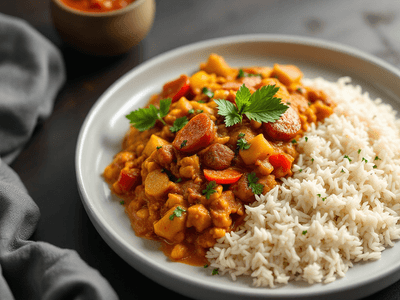
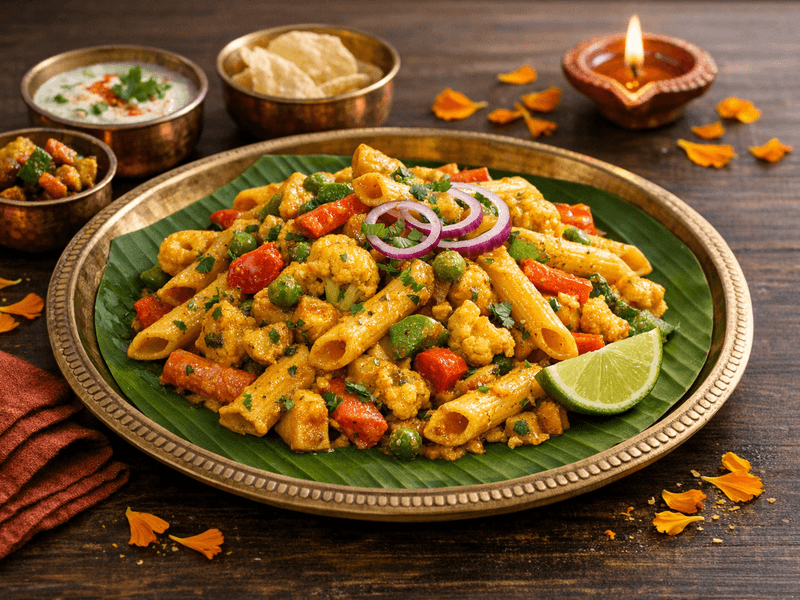
Vegetable Curry Pasta is a vibrant fusion dish that brings together the comfort of pasta with the bold, aromatic flavors of Indian curry. This recipe is a popular choice in urban Indian kitchens, where it is often enjoyed as a wholesome lunch, especially during the monsoon season or festive gatherings like Holi and Diwali. Local vegetables like capsicum (shimla mirch), carrots (gajar), and beans are simmered in a rich, spiced gravy, then tossed with whole wheat pasta for a delightful meal that’s both satisfying and nutritious. The dish’s origins are rooted in India’s love for experimenting with flavors and integrating global elements into traditional cuisine. Vegetable Curry Pasta is particularly favored by families looking for a quick, one-pot lunch that appeals to all ages. Its creamy, mildly spiced curry is balanced by the tender bite of pasta, making it a great introduction to Indian flavors for children and adults alike. The use of common Indian spices like haldi, jeera, and dhania ensures authenticity, while the addition of pasta gives it a modern touch. Enjoyed hot off the tawa, this meal is both comforting and festive, perfect for get-togethers and lazy Sunday afternoons.
Ingredients(for 1 medium bowl per serving)
- 1.5 cups (uncooked) Whole wheat pasta (preferably penne or fusilli)
- 1 cup Mixed vegetables (gajar (carrot), shimla mirch (capsicum), beans, matar (green peas))
- 1 medium Onion (finely chopped (pyaaz))
- 1 large Tomato (finely chopped (tamatar))
- 1 tsp Ginger-garlic paste (adrak-lehsun paste)
- 1 Green chilli (finely chopped (hari mirch)) - optional
- 1/2 tsp Turmeric powder (haldi)
- 1 tsp Coriander powder (dhania powder)
- 1/2 tsp Cumin seeds (jeera)
- 1/2 cup Low-fat milk or coconut milk (for creaminess) - optional
- to taste Salt (namak)
- 1/4 tsp Black pepper powder (kali mirch)
- 1 tbsp Cooking oil (preferably olive or mustard oil)
- 2 tbsp Fresh coriander leaves (hara dhania, chopped)
Instructions
- 1
Boil whole wheat pasta in salted water until al dente. Drain and set aside, reserving 1/4 cup of pasta water.
8 minutes
Add a drop of oil to prevent pasta from sticking.
- 2
Heat oil in a kadhai or deep tawa. Add jeera and let it splutter.
1 minute
Ensure oil is hot before adding cumin for maximum aroma.
- 3
Add chopped onions and sauté till golden brown. Stir in ginger-garlic paste and green chilli, fry till raw smell disappears.
3 minutes
Keep flame medium to avoid burning the masala.
- 4
Add tomatoes, haldi, dhania powder, and salt. Cook until tomatoes are mushy and oil separates.
4 minutes
Mash tomatoes with the back of a spoon for smoother gravy.
Why This Dish is Healthy
This dish is a healthy lunch option because it combines the goodness of seasonal Indian vegetables with the slow-releasing energy of whole wheat pasta. High in fiber, it helps with satiety and digestion, while the use of spices enhances metabolism. The recipe avoids heavy cream and excessive oil, making it ideal for weight management and heart health. Its balanced macros fit well into most vegetarian meal plans.
Vegetable Curry Pasta is packed with dietary fiber, complex carbs, and plant-based protein from whole wheat pasta and assorted vegetables. It provides essential vitamins like A, C, and K, as well as minerals such as potassium and magnesium. The addition of turmeric (haldi) and cumin (jeera) brings anti-inflammatory and digestive benefits. Using minimal oil and low-fat milk keeps the fat content in check, making it suitable for calorie-conscious diets.
Pro Tips
- 💡Tip 1: Always use fresh, seasonal vegetables for the best taste and nutrition.
- 💡Tip 2: Reserve a bit of pasta water to adjust the consistency of the curry.
- 💡Tip 3: For extra flavor, sprinkle some chaat masala just before serving.
Storage & Serving
Cool completely before storing in an airtight dabba (box) in the refrigerator for up to 2 days. Reheat on a tawa with a splash of water to restore texture. Not recommended for freezing.
Best served: Breakfast or Lunch
Nutrition Facts
| Nutrient | Per 100g |
|---|---|
| Energy | 340.0 kcal |