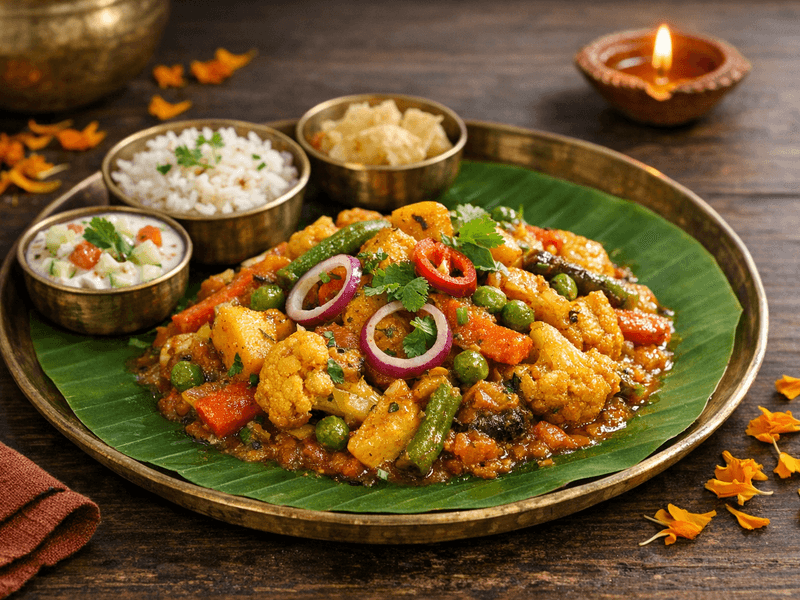
Vegetable Curry
Lunch • India
How to Make Vegetable Curry (Traditional & Healthy Version)
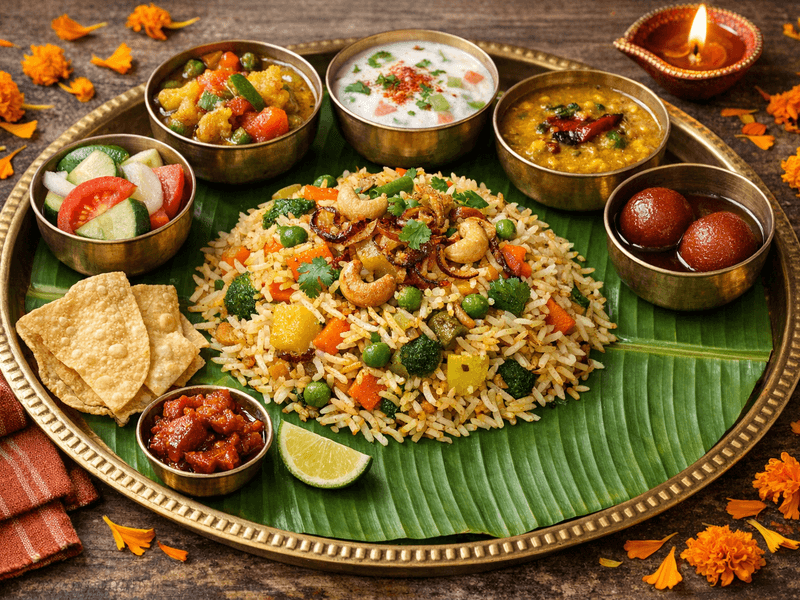
Vegetable Curry, known as 'Sabzi Curry' in many parts of India, is a beloved dish enjoyed across the country for lunch and dinner. This vibrant recipe features a medley of seasonal vegetables simmered in a lightly spiced tomato-onion gravy, offering a comforting and nourishing meal. Vegetable Curry is a staple in Indian households, often served with steamed rice or phulka (whole wheat roti), and is a popular option during festivals like Navratri and Diwali when vegetarian dishes are preferred. The dish beautifully showcases India's rich agricultural diversity, as regional variations incorporate local produce and spices, making it a versatile and adaptable recipe. Its balanced flavors and wholesome ingredients make Vegetable Curry a favorite for both everyday meals and special occasions. With the growing awareness of health and wellness, this version uses minimal oil and fresh vegetables, keeping calorie content in check while ensuring every bite is packed with authentic Indian taste.
Ingredients(for 1 medium bowl of curry with 2 phulkas)
- 2 cups Mixed vegetables (carrot (gajar), beans, peas (matar), potato (aloo), cauliflower (gobhi))
- 1 medium Onion (pyaaz, finely chopped)
- 2 medium Tomato (tamatar, finely chopped)
- 1 teaspoon Ginger-Garlic Paste (adrak-lahsun paste)
- 1 Green chili (hari mirch, slit) - optional
- 1/2 teaspoon Cumin seeds (jeera)
- 1/4 teaspoon Turmeric powder (haldi)
- 1/2 teaspoon Red chili powder (lal mirch)
- 1 teaspoon Coriander powder (dhaniya powder)
- 1/2 teaspoon Garam masala (optional for extra flavor) - optional
- to taste Salt (namak)
- 1 tablespoon Oil (preferably mustard (sarson) or sunflower oil)
- 2 tablespoons Fresh coriander leaves (dhaniya patta, chopped) - optional
Instructions
- 1
Wash and chop all vegetables into bite-sized pieces. Set aside.
5 minutes
Use seasonal veggies for best flavor and nutrition.
- 2
Heat oil in a kadhai (deep pan) on medium flame. Add cumin seeds and let them crackle.
2 minutes
Cumin seeds enhance aroma and aid digestion.
- 3
Add chopped onions and sauté until golden brown. Stir in ginger-garlic paste and green chili, sauté for another minute.
4 minutes
Ensure onions are well-browned for a sweeter curry base.
- 4
Add chopped tomatoes, turmeric, red chili powder, coriander powder, and salt. Cook until tomatoes turn soft and oil separates.
4 minutes
Mash tomatoes with the ladle for a smoother gravy.
Why This Dish is Healthy
This Vegetable Curry is a smart choice for health-conscious eaters. It uses fresh, seasonal vegetables, which are low in calories and high in essential nutrients. Cooking with less oil and skipping cream keeps the fat content controlled, making it ideal for weight management. The dish is free from processed ingredients, ensuring a wholesome and nutritious meal that fits perfectly into a balanced Indian diet.
Vegetable Curry is rich in fiber, vitamins (A, C, K), minerals (potassium, magnesium), and antioxidants from a variety of vegetables. It offers complex carbohydrates for sustained energy and is low in saturated fat when prepared with minimal oil. The inclusion of spices like turmeric and cumin provides anti-inflammatory benefits. Protein content can be enhanced by pairing with dal or adding paneer. This curry is naturally gluten-free if served without wheat-based breads and is suitable for vegetarian diets.
Pro Tips
- 💡Tip 1: Use a mix of colorful vegetables for enhanced nutrition and appeal.
- 💡Tip 2: Sauté spices well to release maximum flavor.
- 💡Tip 3: Make curry ahead for deeper flavors; it tastes even better the next day.
Storage & Serving
Store Vegetable Curry in an airtight container in the refrigerator for up to 2 days. Reheat gently on the stove, adding a splash of water if needed. Avoid freezing, as texture of veggies may change.
Best served: Lunch
Nutrition Facts
| Nutrient | Per 100g |
|---|---|
| Energy | 180.0 kcal |