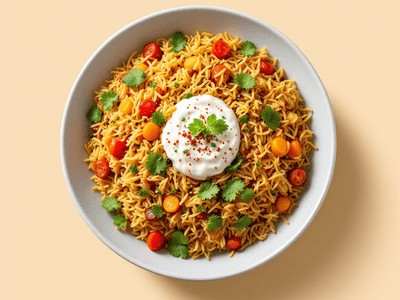
Vegetable Biryani with Raita
lunch • India
How to Make Vegetable Biryani with Raita (Traditional & Healthy Version)
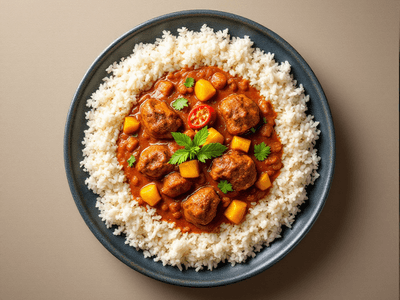
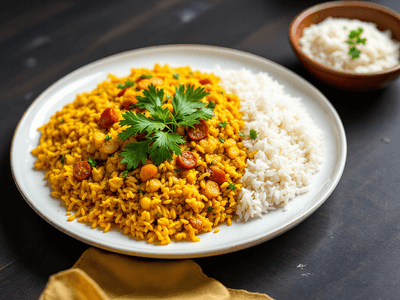
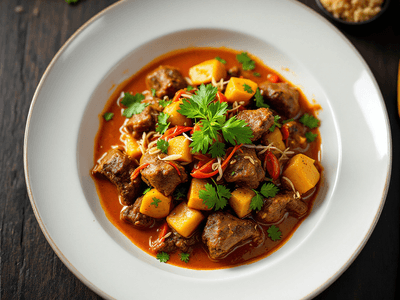
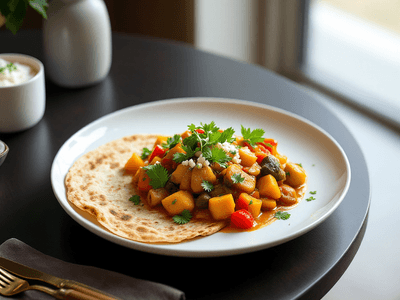
Vegetable Biryani with Raita is an iconic Indian lunch dish that brings together the aromatic flavors of basmati chawal (rice), fresh vegetables, and warming spices, all layered and cooked to perfection. This vegetarian classic is enjoyed across India, from the vibrant kitchens of Hyderabad to the bustling streets of Delhi, and is often a centerpiece at festive gatherings and celebrations like Eid, Diwali, and weddings. The accompanying raita, made with dahi (curd) and crunchy vegetables, helps balance the spices and adds a cooling effect, making it a complete, satisfying meal. The roots of biryani date back centuries, believed to have been introduced by Mughal emperors and adapted regionally—Hyderabadi biryani is known for its robust spices, while Lucknowi (Awadhi) biryani is milder and fragrant. Today, Vegetable Biryani with Raita is a popular choice for health-conscious Indians, offering a wholesome one-pot meal that celebrates the bounty of Indian vegetables and the diversity of Indian cuisine. Its vibrant colors, complex aromas, and hearty taste make it a favorite during family lunches and special occasions. Perfect for lunch, this recipe stands out for being both nutritious and flavorful, making it suitable for all age groups. The combination of rice and vegetables ensures an excellent balance of carbohydrates, vitamins, and minerals, while the raita provides gut-friendly probiotics. Whether served during festivals or weekend gatherings, Vegetable Biryani with Raita is a symbol of Indian hospitality and culinary heritage.
Ingredients(for 1 large bowl biryani with 1 small bowl raita)
- 1 cup Basmati chawal (rice) (long grain)
- 1.5 cups Mixed vegetables (carrots, beans, peas, potatoes)
- 1 large Onion (sliced thin)
- 1 medium Tomato (chopped)
- 1 cup Dahi (curd) (for raita)
- 1 small Cucumber (finely chopped, for raita)
- 1 Green chili (finely chopped) - optional
- 1 tsp Ginger-garlic paste (adrak-lehsun)
- 2 tsp Biryani masala (store-bought or homemade)
- 1/4 tsp Turmeric powder (haldi)
- 1/2 tsp Red chili powder (lal mirch)
- 1 tbsp Oil or ghee (cold-pressed or desi ghee)
- to taste Salt
- 2 tbsp Fresh coriander leaves (dhaniya, chopped)
- 1 tbsp Mint leaves (pudina, chopped) - optional
Instructions
- 1
Wash and soak basmati chawal for 15 minutes. Boil in salted water until 80% cooked, then drain and set aside.
10 minutes
Soaking rice ensures fluffy grains and prevents sticking.
- 2
Heat oil or ghee in a kadhai. Add sliced onions and sauté until golden brown. Add ginger-garlic paste, biryani masala, haldi, and lal mirch. Stir well.
5 minutes
Slowly browning onions adds sweetness and depth of flavor.
- 3
Add chopped tomatoes and mixed vegetables. Sprinkle salt, cover, and cook until vegetables are tender but not mushy.
7 minutes
Cut vegetables evenly for uniform cooking.
- 4
Layer half the cooked rice, then spread the vegetable mixture. Add remaining rice on top. Sprinkle fresh dhaniya and pudina. Cover and cook on dum (low flame) for 10 minutes.
10 minutes
Seal with a tight lid for authentic dum cooking.
Why This Dish is Healthy
This Vegetable Biryani with Raita is a health-conscious choice because it uses less oil, incorporates a variety of seasonal vegetables, and replaces heavy cream or butter with dahi in the raita. The meal is naturally low in saturated fat, high in fiber, and offers a balanced mix of macronutrients. Ideal for calorie tracking and weight management, it supports heart health and immunity while keeping you full and energized.
Vegetable Biryani with Raita is packed with dietary fiber, vitamins (A, C, K), and plant-based proteins from assorted vegetables and dahi. Basmati rice is a source of complex carbohydrates, providing sustained energy. Raita adds probiotics, supporting digestion and gut health. The use of aromatic spices like turmeric and coriander contributes antioxidants and anti-inflammatory properties, making this dish nutritious and balanced.
Pro Tips
- 💡Tip 1: Use aged basmati rice for the best flavor and texture.
- 💡Tip 2: Add a few saffron strands soaked in milk for festive aroma.
- 💡Tip 3: Layer biryani in a thick-bottomed vessel to prevent burning.
Storage & Serving
Store leftover biryani and raita in airtight containers in the refrigerator for up to 2 days. Reheat biryani gently on a tawa or in a microwave. Do not freeze raita as it may separate.
Best served: Lunch
Nutrition Facts
| Nutrient | Per 100g |
|---|---|
| Energy | 420.0 kcal |
| Protein | 11.0 g |
| Carbohydrates | 75.0 g |
| Total Fat | 10.0 g |