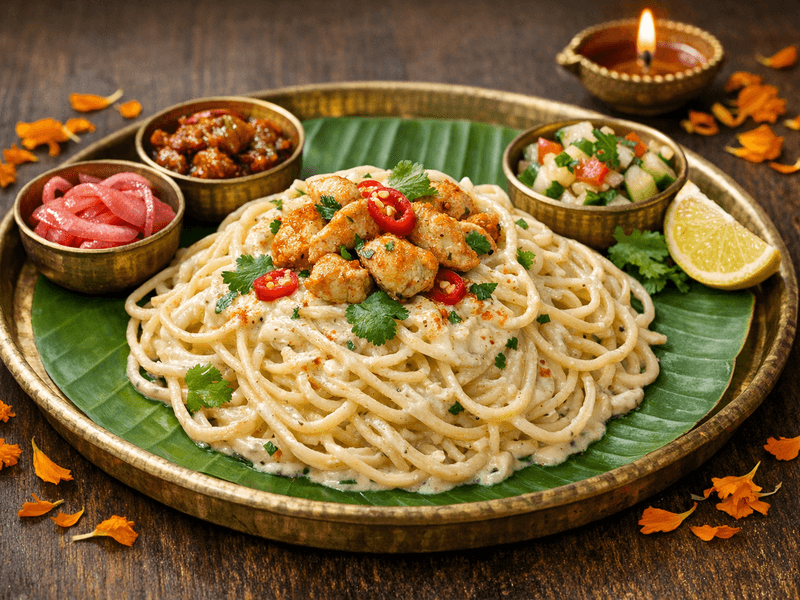
Veg Ragi Noodles
Lunch • India
How to Make Veg Ragi Noodles (Traditional & Healthy Version)
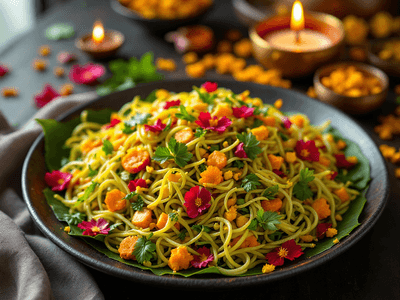
Veg Ragi Noodles is a nutritious and modern twist on classic Indian noodles, made with ragi (finger millet) flour and loaded with colorful vegetables. Ragi, known as 'nachni' in Marathi and 'mandua' in Hindi, is a staple grain in South India, particularly Karnataka and Tamil Nadu. Its earthy flavor pairs beautifully with the vibrant taste of stir-fried veggies and subtle Indian spices, making it both delicious and health-conscious. This dish is increasingly popular in urban Indian households as a wholesome lunch option, especially for those looking to include more millet-based foods in their diet. Veg Ragi Noodles have become a favorite among health enthusiasts and families, thanks to their high fiber and calcium content. The noodles are soft yet slightly chewy, with a nutty undertone from the ragi, complemented by crisp capsicum, carrots, and beans. Unlike traditional maida-based noodles, ragi noodles are gluten-free, making them suitable for those with dietary restrictions. This recipe is vegetarian, easily adaptable to vegan diets, and perfect for lunchboxes, quick meals, and festive gatherings like Diwali or Holi, where nutritious foods are appreciated. If you're searching for a healthy Indian lunch recipe, Veg Ragi Noodles should be at the top of your list.
Ingredients(for 1 medium bowl)
- 150 grams Ragi noodles (nachni/millets noodles)
- 1 medium Carrot (gajar, julienned)
- 1 small Capsicum (shimla mirch, sliced)
- 6-8 French beans (finely sliced)
- 1 small Onion (pyaz, thinly sliced)
- 3 cloves Garlic (lasun, minced)
- 1 Green chili (hari mirch, finely chopped) - optional
- 1 tablespoon Oil (cold-pressed or olive oil)
- 1 teaspoon Soy sauce (optional, for flavor) - optional
- to taste Salt
- 1/4 teaspoon Black pepper (kali mirch)
- 1 teaspoon Lemon juice (nimbu ras) - optional
- 2 tablespoons Coriander leaves (dhania, chopped)
Instructions
- 1
Boil ragi noodles as per package instructions in a large vessel. Add a pinch of salt and a few drops of oil to prevent sticking. Drain and rinse with cold water.
5 minutes
Do not overcook ragi noodles; they become mushy quickly.
- 2
Heat oil in a wide tawa or kadhai over medium flame. Add minced garlic and green chili, sauté until fragrant.
3 minutes
Use cold-pressed oil for better health and flavor.
- 3
Add sliced onions, sauté until translucent. Then add carrots, capsicum, and beans. Stir-fry on high flame for 3-4 minutes until veggies are slightly tender but still crisp.
6 minutes
Keep vegetables crunchy for maximum nutrition and taste.
- 4
Add boiled ragi noodles to the tawa. Toss gently with the veggies.
2 minutes
Use two spatulas to evenly mix without breaking noodles.
Why This Dish is Healthy
This recipe is a healthy choice because ragi is rich in minerals, especially calcium and iron, supporting bone health and hemoglobin production. Vegetables provide essential micronutrients and antioxidants, boosting immunity and promoting digestion. The dish is low in unhealthy fats and free from refined flour, making it ideal for weight loss, diabetic diets, and vegetarian meal plans.
Veg Ragi Noodles are packed with dietary fiber, plant-based protein, calcium, and iron from ragi, while vegetables add vitamins A, C, and antioxidants. Ragi is a low-GI millet, ideal for sustained energy and blood sugar control. This dish is gluten-free (if soy sauce is omitted or replaced), making it suitable for gluten-sensitive individuals. The inclusion of cold-pressed oil and fresh veggies ensures heart-healthy fats and minimal processed ingredients.
Pro Tips
- 💡Tip 1: Use freshly cut vegetables for best crunch and flavor.
- 💡Tip 2: Do not overcook ragi noodles; they cook faster than wheat-based noodles.
- 💡Tip 3: Add a dash of lemon just before serving for a fresh zing.
Storage & Serving
Store leftover Veg Ragi Noodles in an airtight container in the refrigerator for up to 24 hours. Reheat on a tawa or microwave before serving. Avoid freezing as ragi noodles may lose texture.
Best served: Breakfast or Lunch
Nutrition Facts
| Nutrient | Per 100g |
|---|---|
| Energy | 250.0 kcal |