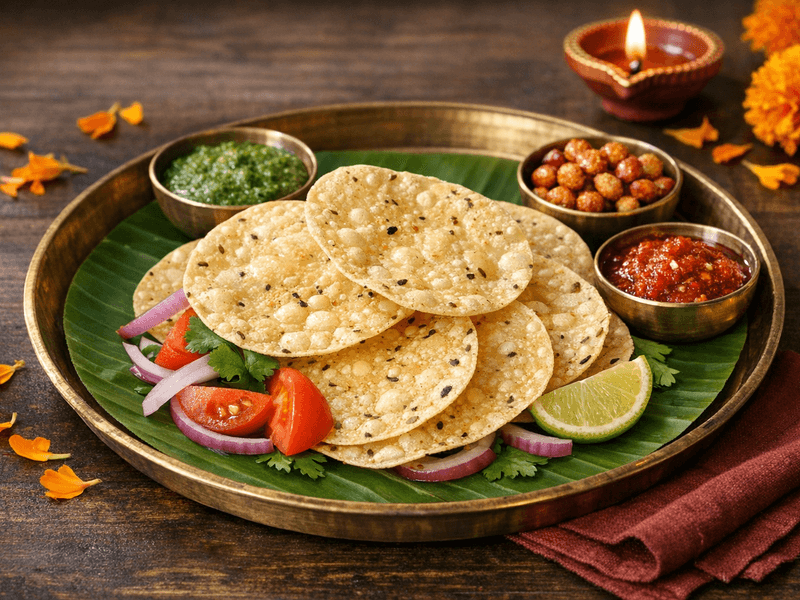
Urad Dal Papad with Least Oil
Lunch • India
How to Make Urad Dal Papad with Least Oil (Traditional & Healthy Version)
Urad Dal Papad is a quintessential Indian delicacy, often served as a crunchy accompaniment during lunch in many South Indian households. Made primarily with urad dal (black gram), papad is a staple on festive thalis and celebratory meals, especially during festivals like Diwali and Ugadi. Its origins can be traced to regions like Tamil Nadu and Andhra Pradesh, where homemade papad (also called 'appalam' or 'vadam') is a tradition passed down through generations. The unique taste of urad dal, combined with aromatic spices like black pepper and hing (asafoetida), creates a papad that is both flavorful and satisfying, yet light on the palate. Choosing a health-conscious way of preparing urad dal papad with least oil not only preserves its authentic flavors but also makes it a guilt-free snack or accompaniment. Traditional papad is usually deep-fried, but this recipe uses minimal oil and opts for roasting on a tawa, making it ideal for those tracking calories or seeking healthier alternatives. The subtle heat from spices, crisp texture, and nutty undertones of urad dal make this papad a favorite during lunch, especially when paired with dal-chawal or sambar-rice. Perfect for health-conscious families, this recipe brings together tradition and wellness in every bite.
Ingredients(for 2 medium papads per serving)
- 1 cup Urad dal (black gram) (soaked overnight)
- 1/2 tsp Black pepper (crushed)
- 1/2 tsp Salt (to taste)
- 1/4 tsp Hing (asafoetida) (for aroma)
- as needed Water (for grinding)
- 1/2 tsp Oil (for greasing)
- 1/4 tsp Cumin seeds (jeera) (optional) - optional
- 1/4 tsp Red chilli powder (optional for heat) - optional
- 1 tbsp Rice flour (for crispiness) - optional
Instructions
- 1
Soak urad dal overnight, then drain and pat dry. This helps soften the dal for smooth grinding.
5 minutes
Soaking overnight is essential for best texture.
- 2
Grind urad dal to a fine, thick paste using minimal water. Add salt, black pepper, hing, and cumin seeds.
5 minutes
Do not add too much water; papad dough should be firm.
- 3
Mix in rice flour and red chilli powder if using. Knead the mixture well to form a smooth dough.
5 minutes
Rice flour ensures extra crispiness and prevents papads from sticking.
- 4
Divide dough into small balls. Roll each ball into thin discs using a rolling pin, dusting with rice flour as needed.
5 minutes
Roll papads as thin as possible for maximum crunch.
Why This Dish is Healthy
This recipe for Urad Dal Papad with Least Oil is perfect for calorie-conscious individuals. By roasting instead of deep frying, it significantly lowers fat content and calories while retaining the authentic taste and crunch. Urad dal is naturally high in plant-based protein and fiber, making this papad a nutritious addition to vegetarian diets. It’s a smart choice for those looking to manage weight, improve digestion, and support overall wellness.
Urad dal is rich in protein, dietary fiber, and essential minerals like magnesium, potassium, and iron. It supports muscle health, aids digestion, and provides sustained energy. Minimal oil and roasting on tawa reduce saturated fat, making this papad heart-friendly. Using rice flour adds some healthy carbohydrates while keeping the papad gluten-free if wheat is avoided. Spices like black pepper and hing aid digestion and enhance antioxidant properties.
Pro Tips
- 💡Tip 1: Roll papads very thin for maximum crispiness.
- 💡Tip 2: Use minimal water while grinding urad dal for firm dough.
- 💡Tip 3: Roast papads on medium heat to avoid burning and ensure even crisping.
Storage & Serving
Store cooled papads in an airtight container in a dry place. They remain crisp for up to 2 weeks. Avoid moisture to prevent sogginess.
Best served: Lunch
Nutrition Facts
| Nutrient | Per 100g |
|---|---|
| Energy | 40.0 kcal |