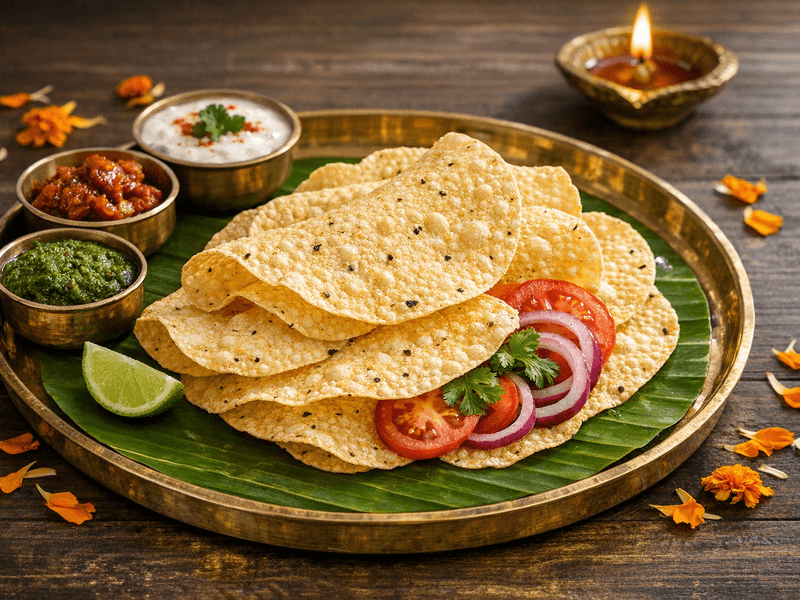
Thin Urad Papad
Lunch • India
How to Make Thin Urad Papad (Traditional & Healthy Version)
Thin Urad Papad is a beloved staple in North Indian cuisine, cherished for its crispy texture and delicate flavors. Crafted mainly from urad dal (black gram), these papads are a common accompaniment to lunch meals, adding crunch and taste to everyday thalis. Traditionally, papads are enjoyed during festive occasions, such as Holi and Diwali, where they are served alongside sabzi, dal, and rice. The art of making papad is often passed down through generations, with home cooks preparing batches for family gatherings and special celebrations. The papad’s light, airy structure makes it an ideal snack for those seeking a guilt-free treat, while its protein-rich base ensures a nutritional boost. What sets Thin Urad Papad apart is its versatility—whether roasted on a tawa or deep-fried, it remains a favorite across households. Its mild yet savory taste pairs well with chutneys, pickles, or yogurt, and its preparation is a simple, rewarding process. The inclusion of regional spices like hing (asafoetida) and kali mirch (black pepper) brings out authentic flavors, making it a must-have with North Indian meals. As health-conscious eating gains popularity, Thin Urad Papad stands out for its wholesome ingredients and the ease with which it can be adapted to various dietary needs.
Ingredients(for 2 papads per serving)
- 1 cup Urad dal flour (black gram flour (उड़द दाल का आटा))
- 1/2 tsp Salt (नमक)
- 1/2 tsp Crushed black pepper (काली मिर्च)
- 1/4 tsp Hing (asafoetida) (हींग)
- 1/8 tsp Baking soda (सोडा)
- as needed Water (पानी)
- 1/2 tsp Cumin seeds (जीरा) - optional
- 1/4 tsp Red chili powder (लाल मिर्च पाउडर) - optional
- 1 tsp Oil (for kneading, optional) - optional
- 1 tbsp Rice flour (for dusting) - optional
Instructions
- 1
In a large bowl, combine urad dal flour, salt, crushed black pepper, hing, and baking soda. Mix thoroughly to distribute spices evenly.
5 minutes
Sift the urad dal flour to avoid lumps and ensure a smooth dough.
- 2
Add water gradually and knead to form a firm yet pliable dough. The dough should not be sticky.
5 minutes
Add water little by little to control the dough consistency.
- 3
Cover the dough and let it rest for 10 minutes. This helps the flavors meld and the dough to soften.
10 minutes
Resting the dough makes rolling easier and prevents tearing.
- 4
Pinch small portions of dough and roll them into thin discs (papad) using a belan (rolling pin), dusting with rice flour as needed.
7 minutes
Roll as thin as possible for crispiness; use rice flour to prevent sticking.
Why This Dish is Healthy
This dish is a healthy choice because it uses urad dal flour, which is high in protein and fiber, and requires little to no oil when roasted instead of fried. The absence of refined flour and the inclusion of spices support digestion and immunity. Thin Urad Papad is easily adaptable to vegan and gluten-free diets, making it suitable for weight loss and diabetic-friendly meal plans.
Thin Urad Papad is a protein-rich snack owing to the urad dal base, which provides essential amino acids. The recipe is low in saturated fat and uses minimal oil, making it heart-friendly. Urad dal also offers dietary fiber, iron, magnesium, and B vitamins, supporting digestive health and energy levels. Spices like hing and cumin are known for aiding digestion and boosting metabolism, making this papad an excellent addition to balanced Indian diets.
Pro Tips
- 💡Tip 1: Roll papad as thin as possible for maximum crispiness.
- 💡Tip 2: Use a clean, dry cloth to air-dry papads before roasting.
- 💡Tip 3: Roast on high heat and flip quickly to avoid burning.
Storage & Serving
Store uncooked papads in an airtight container for up to 3 weeks. Once roasted, keep in a dry container to maintain crispness. Avoid moisture to prevent sogginess.
Best served: Lunch
Nutrition Facts
| Nutrient | Per 100g |
|---|---|
| Energy | 35.0 kcal |