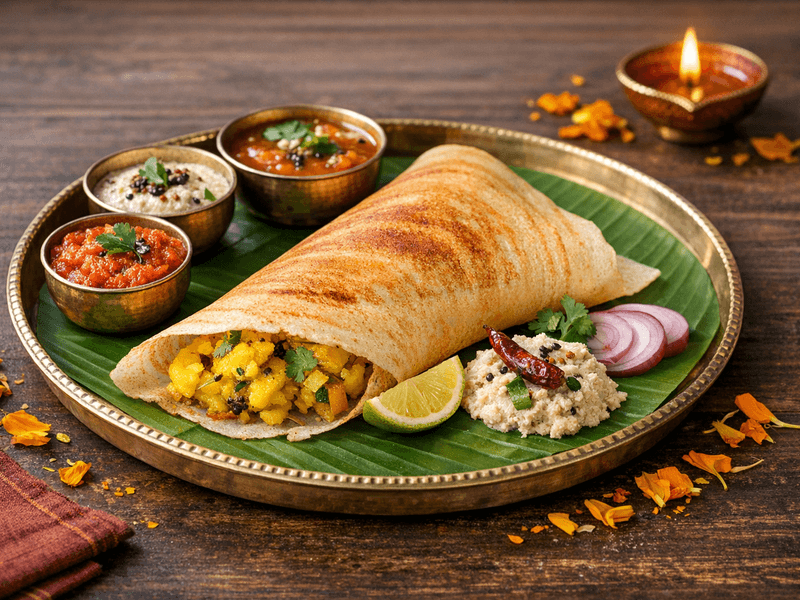
Tamarind Rice with Coconut Chutney
Lunch • India
How to Make Tamarind Rice with Coconut Chutney (Traditional & Healthy Version)
Tamarind Rice, locally known as 'Puliyodarai' or 'Pulihora', is a beloved South Indian dish, celebrated for its tangy flavors and versatility. Traditionally prepared in Tamil Nadu, Andhra Pradesh, and Karnataka, this rice dish is a staple during festivals like Pongal and temple offerings, where its unique taste and aroma symbolize auspicious beginnings. Served alongside fresh Coconut Chutney, this meal offers a delightful contrast of flavors—spicy, tangy rice paired with cool, creamy chutney. Puliyodarai is made by infusing cooked rice with a special tamarind paste, tempered with mustard seeds, curry leaves, and roasted peanuts, creating layers of flavor and texture. The coconut chutney, or 'Thengai Chutney', balances the meal with a mild, nutty taste, enhancing the experience. Both dishes are vegetarian and can be adapted for vegan diets, making them suitable for a wide range of Indian households. Tamarind Rice with Coconut Chutney is a wholesome, easy lunch option, ideal for busy weekdays, festive occasions, or temple prasadam. Its rich cultural roots and health benefits make it a favorite across generations.
Ingredients(for 1 medium bowl of tamarind rice with 2 tablespoons coconut chutney)
- 2 cups Cooked rice (use sona masoori or local rice)
- 2 tablespoons Tamarind pulp (imli)
- 1/4 cup Peanuts (moongphali)
- 1 teaspoon Mustard seeds (rai)
- 10 Curry leaves (kadi patta)
- 1/2 teaspoon Turmeric powder (haldi)
- 1/2 teaspoon Red chili powder (mirch)
- 2 tablespoons Sesame oil (til ka tel)
- 1/2 cup Grated fresh coconut (nariyal)
- 1 Green chilies (hari mirch)
- 2 tablespoons Roasted chana dal (bengal gram dal)
- to taste Salt (namak)
- 2 tablespoons Coriander leaves (dhaniya) - optional
Instructions
- 1
Prepare the tamarind paste by soaking tamarind pulp in warm water for 10 minutes. Squeeze and filter to extract juice.
10 minutes
Use fresh imli for more flavor.
- 2
Heat a kadhai and add sesame oil. Temper mustard seeds, curry leaves, and peanuts till peanuts turn golden.
5 minutes
Roast peanuts separately for extra crunch.
- 3
Add turmeric and red chili powder to the oil. Pour in tamarind juice. Cook till oil separates and mixture thickens.
5 minutes
Cook on medium flame to avoid burning.
- 4
Add cooked rice and salt. Mix gently until rice is evenly coated with tamarind paste.
5 minutes
Use cooled rice to prevent mushiness.
Why This Dish is Healthy
This dish uses minimal oil and natural ingredients, making it low in cholesterol and rich in plant-based nutrients. The inclusion of peanuts and coconut increases healthy fats and protein, supporting sustained energy levels. Tamarind aids gut health while chana dal boosts protein content. By avoiding refined oils and processed foods, Tamarind Rice with Coconut Chutney offers a wholesome, nutritious meal suitable for calorie-conscious eaters.
Tamarind Rice with Coconut Chutney provides balanced macronutrients, with carbohydrates from rice, healthy fats from sesame oil and peanuts, and protein from chana dal and peanuts. Tamarind is rich in antioxidants, vitamin C, and aids digestion. Coconut offers dietary fiber, manganese, and healthy medium-chain fats. Curry leaves and mustard seeds add micronutrients and promote heart health. This vegetarian dish is free from artificial additives, making it suitable for most diets.
Pro Tips
- 💡Tip 1: Use leftover rice for best texture in Puliyodarai.
- 💡Tip 2: Adjust tamarind and chili to suit your taste.
- 💡Tip 3: Blend chutney with ice-cold water for extra creaminess.
Storage & Serving
Store Tamarind Rice in an airtight container for up to 2 days at room temperature. Coconut Chutney should be refrigerated and consumed within 24 hours for freshness.
Best served: Lunch
Nutrition Facts
| Nutrient | Per 100g |
|---|---|
| Energy | 410.0 kcal |