Suki Baji
Lunch • India
How to Make Suki Baji (Traditional & Healthy Version)
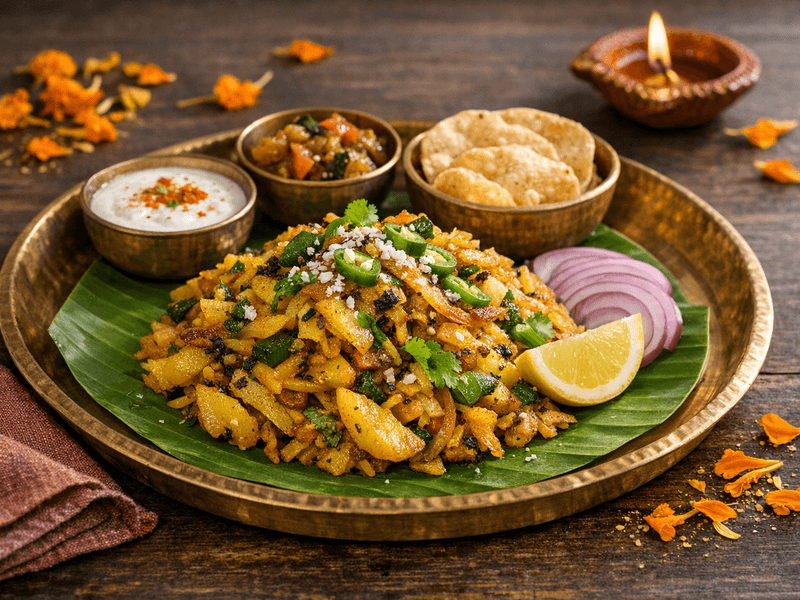
Suki Baji, also known as Sukhi Sabzi in many regions, is a dry vegetable preparation that holds a special place in Indian vegetarian cuisine. Rooted in Maharashtrian and Gujarati households, Suki Baji is a staple for lunchboxes, festive thalis, and everyday meals. The dish is characterized by its dry texture, aromatic spices, and the vibrant colors of seasonal vegetables. Simple yet flavorful, Suki Baji brings together the essence of Indian home cooking, where the focus is on fresh produce and mindful seasoning. Traditionally, Suki Baji is prepared using a medley of local vegetables such as aloo (potato), gajar (carrot), beans, and peas, sautéed with a tadka of jeera (cumin), rai (mustard seeds), haldi (turmeric), and hing (asafoetida). Its mild spice profile makes it suitable for all ages and palates, making it a go-to dish for families across India. Suki Baji is a great choice for those seeking a wholesome, nutritious meal that pairs well with phulka (roti), puri, or even as a side with dal-chawal. Its adaptability for various regional flavors and dietary needs further enhances its popularity. Whether served during everyday lunch or as part of special festival spreads like Diwali or Gudi Padwa, Suki Baji exemplifies Indian culinary wisdom—using simple ingredients to create deeply satisfying, healthful food. Its ease of preparation and minimal oil content make it a favorite among health-conscious individuals and those tracking their calories.
Ingredients(for 1 medium bowl per person)
- 1 medium Potato (aloo)
- 1 medium Carrot (gajar)
- 10-12 French beans
- 1/4 cup Green peas (matar) (fresh or frozen)
- 1 small Onion (pyaz)
- 1/2 tsp Mustard seeds (rai)
- 1/2 tsp Cumin seeds (jeera)
- 1/4 tsp Turmeric powder (haldi)
- 1/4 tsp Red chili powder (lal mirch)
- a pinch Asafoetida (hing) - optional
- to taste Salt
- 1 tsp Oil (preferably cold-pressed or mustard oil)
- 2 tbsp Fresh coriander (dhaniya) (finely chopped) - optional
- 1 tsp Lemon juice (nimbu ras) (freshly squeezed) - optional
Instructions
- 1
Wash, peel, and chop the potato and carrot into small cubes. String and chop the beans. Finely chop the onion and coriander.
5 minutes
Cut vegetables evenly for even cooking and better presentation.
- 2
Heat oil in a kadhai or non-stick pan on medium flame. Add mustard seeds and let them crackle, then add cumin seeds and a pinch of hing.
2 minutes
Add seeds to hot oil for a fragrant tadka (tempering).
- 3
Add chopped onions and sauté until translucent.
3 minutes
Stir occasionally to prevent burning.
- 4
Add all chopped vegetables (potato, carrot, beans, peas). Mix well.
2 minutes
Stir-fry the vegetables briefly to coat them with oil and spices.
Why This Dish is Healthy
This Suki Baji recipe is a healthy choice because it incorporates seasonal vegetables, uses very little oil, and avoids heavy gravies or cream. The dish is high in fiber and micronutrients, which supports gut health and boosts immunity. Its dry preparation makes it ideal for calorie-conscious eaters, and it is easily adaptable for various dietary needs such as vegan and diabetic-friendly versions.
Suki Baji is naturally low in fat and rich in dietary fiber, thanks to the variety of vegetables used. Potatoes and carrots provide complex carbohydrates, while beans and peas boost the protein content. The inclusion of turmeric and cumin adds anti-inflammatory and digestive benefits. Vitamins A, C, and K are present in abundance, along with essential minerals like potassium and magnesium. Minimal oil ensures lower calorie intake, making it a nutritious addition to a balanced diet.
Pro Tips
- 💡Tip 1: Cut vegetables uniformly for even cooking and visual appeal.
- 💡Tip 2: Use a heavy-bottomed kadhai to prevent sticking and burning.
- 💡Tip 3: Always add lemon juice at the end to retain vitamin C and enhance flavor.
Storage & Serving
Store leftovers in an airtight container in the refrigerator for up to 2 days. Reheat on a tawa or pan, sprinkling a few drops of water to refresh the flavors.
Best served: Breakfast or Lunch
Nutrition Facts
| Nutrient | Per 100g |
|---|---|
| Energy | 250.0 kcal |