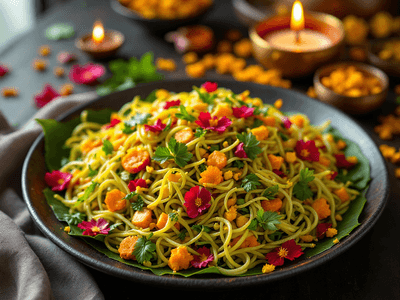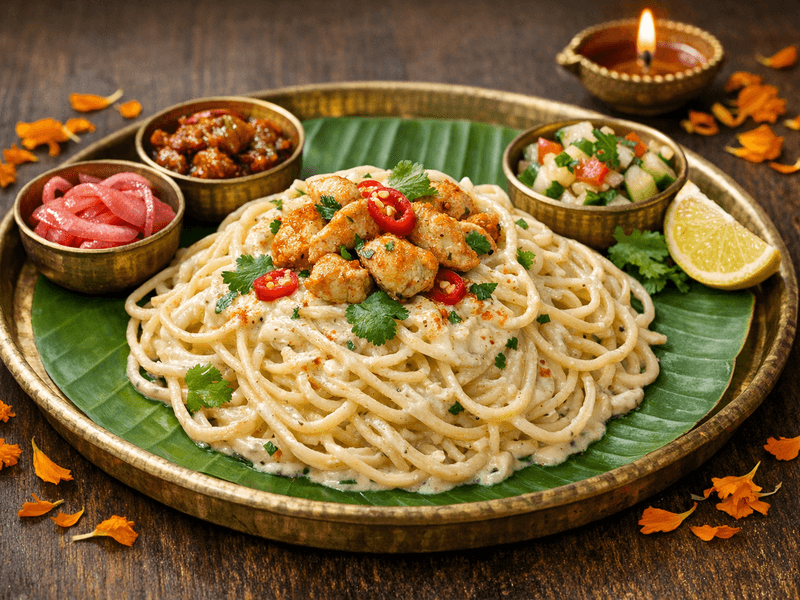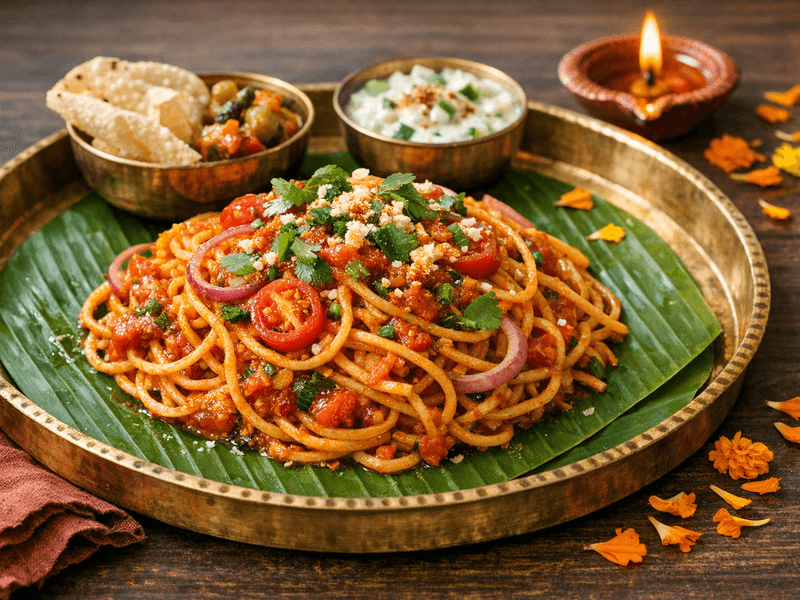
Spaghetti with Tomato Basil Sauce
Lunch • India
How to Make Spaghetti with Tomato Basil Sauce (Traditional & Healthy Version)
Spaghetti with Tomato Basil Sauce may sound global, but it has found a unique place in modern Indian kitchens, especially in metropolitan cities like Mumbai and Bengaluru. This vegetarian dish blends the tangy freshness of ripe tomatoes (tamatar) with fragrant basil (tulsi), creating a sauce that is both light and bursting with flavor. The use of whole wheat spaghetti (atta spaghetti) makes it healthier and more suited to Indian dietary preferences. With the rise of fusion cuisine, this recipe is now a popular lunch item for families seeking nutritious yet quick meals. It is even served during informal gatherings or as a part of festive spreads for occasions like Diwali, where lighter, health-conscious meals are preferred after heavy sweets. The sauce is simmered to bring out the natural sweetness of tomatoes while the basil adds a subtle herbal aroma, making this dish a delightful treat for all age groups. Its simplicity and adaptability have made it a favorite among health-conscious Indians, and with a few tweaks, it can be tailored to suit weight loss, diabetic, or high-protein diets. Whether served in a lunchbox or enjoyed as a weekend family meal, Spaghetti with Tomato Basil Sauce is a testament to India's embrace of global flavors with a regional twist.
Ingredients(for 1 plate (approx. 200g cooked spaghetti with sauce))
- 120g Whole wheat spaghetti (Atta spaghetti)
- 4 medium Ripe tomatoes (Tamatar)
- 1/4 cup Fresh basil leaves (Tulsi or basil)
- 3 Garlic cloves (Lahsun)
- 1 small Onion (Pyaz)
- 1 tbsp Olive oil (Can use mustard oil (sarson ka tel) for Indian touch)
- 1 tsp Salt (Namak)
- 1/2 tsp Black pepper powder (Kali mirch)
- 1/2 tsp Chili flakes (Optional, for extra heat) - optional
- 2 tbsp Grated paneer (Optional, can use for garnish) - optional
Instructions
- 1
Boil water in a large patila (pot). Add a pinch of salt and whole wheat spaghetti. Cook for 8-10 minutes or until al dente. Drain and set aside.
10 minutes
Rinse spaghetti under cold water to prevent sticking.
- 2
Heat olive oil in a kadhai (deep pan). Add chopped garlic and onion. Sauté until golden and aromatic.
5 minutes
Do not over-brown garlic to avoid bitterness.
- 3
Add finely chopped tomatoes. Cook until tomatoes soften and release juices. Mash gently with a spatula.
5 minutes
Use ripe desi tomatoes for best flavor.
- 4
Add salt, black pepper, and chili flakes. Stir well and let the sauce simmer for 5 minutes. Add chopped basil leaves.
5 minutes
Add basil towards the end to preserve aroma.
Why This Dish is Healthy
Spaghetti with Tomato Basil Sauce is a healthy lunch option as it utilizes whole wheat atta spaghetti, reducing refined carb intake. The sauce is made from fresh tomatoes and basil, offering vitamins and antioxidants without any heavy cream or excessive oil. It is low in saturated fat and can easily be adapted for vegan or high-protein needs. The addition of paneer or roasted vegetables increases nutrient density, making it suitable for weight loss and diabetic-friendly diets.
This dish is rich in dietary fiber, thanks to whole wheat spaghetti (atta). Tomatoes provide vitamin C, potassium, and antioxidants like lycopene, supporting immunity and heart health. Basil offers anti-inflammatory properties and micronutrients including vitamin K. The use of minimal oil and fresh vegetables makes it light on calories, while paneer can add protein. Garlic and onions contribute to cardiovascular health. The recipe contains complex carbohydrates, moderate protein (especially with paneer), and low fat, making it balanced for Indian diets.
Pro Tips
- 💡Tip 1: Use whole wheat atta spaghetti for extra fiber and lower GI.
- 💡Tip 2: Always add basil at the end to preserve its aroma.
- 💡Tip 3: Make the sauce ahead and store in fridge for quick assembly.
Storage & Serving
Store leftover spaghetti in an airtight dabba (container) in the refrigerator for up to 2 days. Reheat in a kadhai with a splash of water to restore freshness. Avoid freezing as texture may change.
Best served: Lunch
Nutrition Facts
| Nutrient | Per 100g |
|---|---|
| Energy | 360.0 kcal |