South Indian Vegetable Poriyal
Lunch • India
How to Make South Indian Vegetable Poriyal (Traditional & Healthy Version)
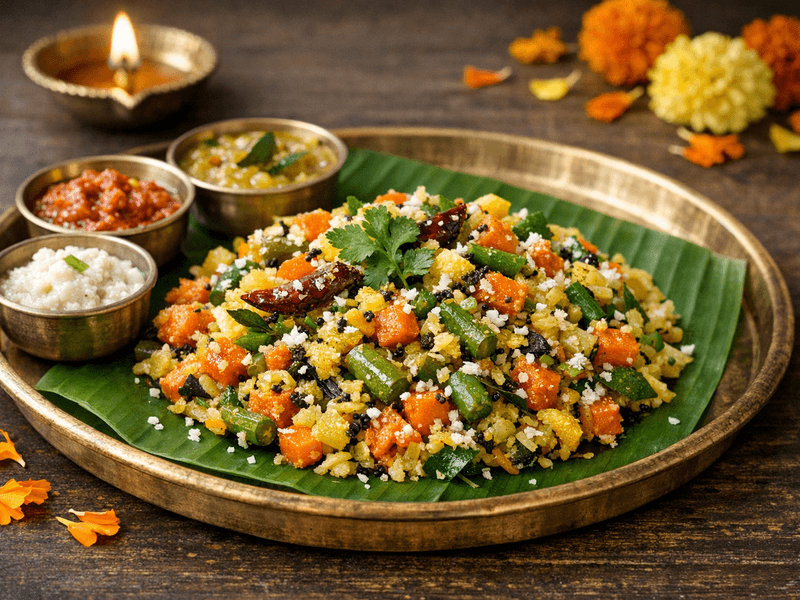
South Indian Vegetable Poriyal, also known as 'Thoran' in Kerala and 'Palya' in Karnataka, is a vibrant, nutritious stir-fried vegetable dish that’s a staple in South Indian households. This dish is characterized by its quick cooking method and the aromatic tempering of mustard seeds, curry leaves, and grated coconut. Poriyal is typically served as a side during lunch, especially with steamed rice and sambar or rasam, making it an integral part of the traditional 'thali' meals enjoyed during festivals like Pongal and Onam. The beauty of Vegetable Poriyal lies in its versatility—almost any vegetable, from carrots and beans to cabbage and beetroot, can be transformed into this delicious, health-conscious preparation. Lightly spiced and bursting with freshness, Poriyal is a celebration of local produce and traditional cooking techniques passed down through generations. Its minimal oil usage and reliance on natural flavors make it a perfect choice for calorie-conscious food lovers, while the coconut and dal tempering add both taste and texture. Whether you are looking for a comforting weekday meal or a festive addition to your lunch spread, South Indian Vegetable Poriyal is a timeless, wholesome choice.
Ingredients(for 1 bowl (approx. 150g) per person)
- 2 cups Mixed vegetables (beans, carrot, cabbage) (finely chopped)
- 1/4 cup Fresh grated coconut (nariyal)
- 1 tablespoon Oil (preferably coconut oil)
- 1/2 teaspoon Mustard seeds (rai)
- 1 teaspoon Split urad dal (white lentils)
- 8-10 Curry leaves (kadi patta)
- 1 Green chili (finely chopped) - optional
- 1/4 teaspoon Turmeric powder (haldi)
- to taste Salt
- a pinch Asafoetida (hing) - optional
Instructions
- 1
Wash and finely chop the mixed vegetables. Set aside.
5 minutes
Uniform chopping ensures even cooking.
- 2
Heat oil in a kadhai or heavy-bottomed pan. Add mustard seeds and let them splutter.
2 minutes
Use coconut oil for authentic flavor.
- 3
Add split urad dal and fry till golden. Add curry leaves, green chili, and a pinch of hing.
2 minutes
Fry on low flame to avoid burning the dal.
- 4
Add the chopped vegetables and turmeric powder. Stir well.
2 minutes
Coat vegetables evenly with tempering for maximum flavor.
Why This Dish is Healthy
This Vegetable Poriyal recipe is low in calories and saturated fat, making it ideal for weight management. The combination of assorted vegetables delivers vitamins A, C, and K, along with vital micronutrients. The absence of deep-frying and use of coconut oil further enhance its heart-healthy profile. High fiber content aids digestion and keeps you satiated for longer. It’s a perfect addition to a balanced Indian vegetarian diet.
South Indian Vegetable Poriyal is a powerhouse of nutrition, offering a high fiber content from fresh vegetables and healthy fats from coconut. The use of minimal oil and absence of heavy spices make it easily digestible. The inclusion of urad dal and coconut adds plant-based protein and essential minerals like magnesium and potassium. Turmeric and curry leaves provide antioxidants and anti-inflammatory benefits. This dish is naturally gluten-free, making it suitable for most diets.
Pro Tips
- 💡Tip 1: Use a mix of colorful vegetables for better nutrition and visual appeal.
- 💡Tip 2: Grate coconut fresh for the best flavor and aroma.
- 💡Tip 3: Don’t overcook the vegetables; they should remain slightly crisp for authentic Poriyal.
Storage & Serving
Store leftover Poriyal in an airtight container in the refrigerator for up to 2 days. Reheat gently on a tawa or in a microwave before serving. Avoid freezing, as the texture of the vegetables may change.
Best served: Breakfast or Lunch
Nutrition Facts
| Nutrient | Per 100g |
|---|---|
| Energy | 120.0 kcal |