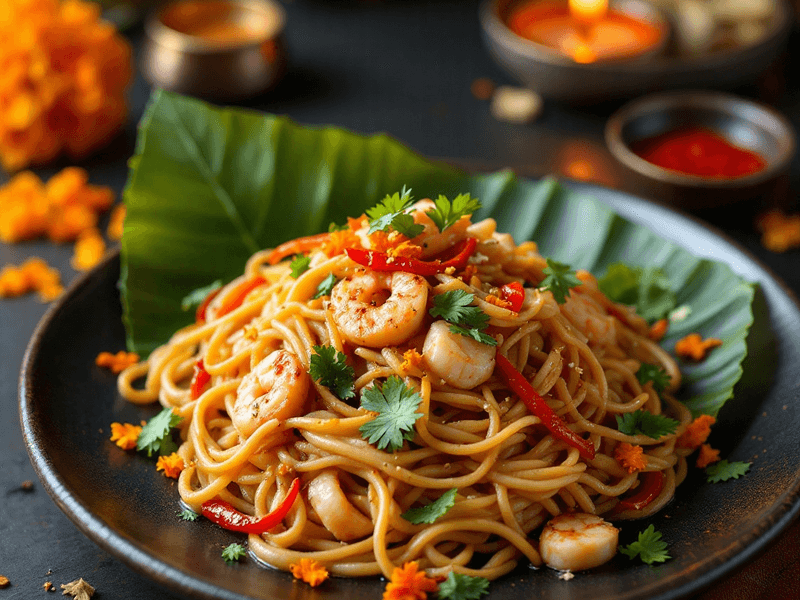
Seafood Char Kway Teow
Lunch • India
How to Make Vegetarian Char Kway Teow (Traditional & Healthy Version)
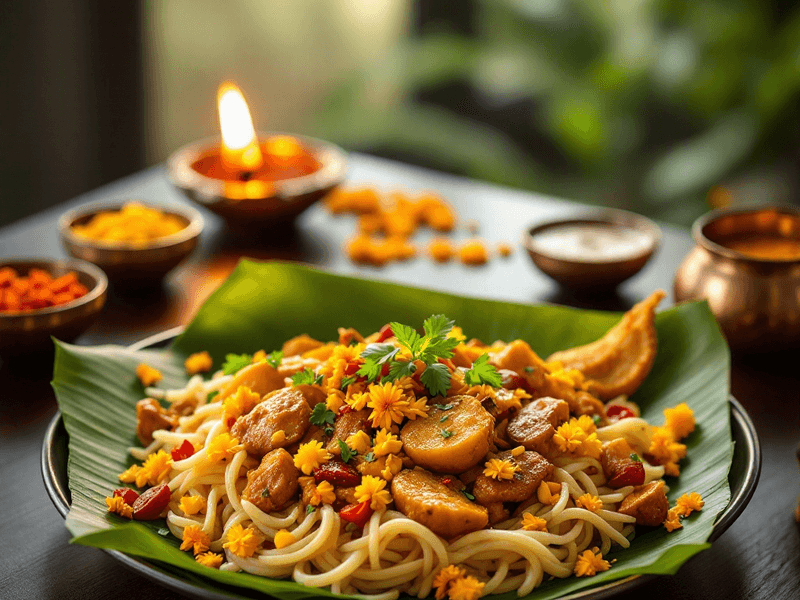
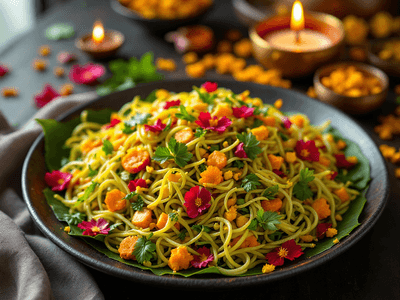
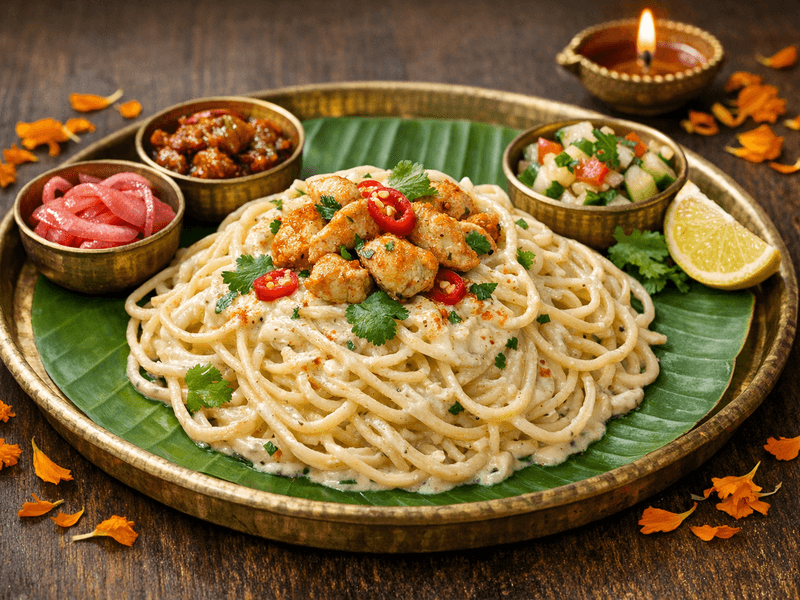
Vegetarian Char Kway Teow is a delightful, stir-fried noodle dish that brings together the vibrant flavors of Indian street food and the rich tradition of tawa cooking. While originally inspired by Southeast Asian cuisine, this Indianized version uses locally sourced vegetables, whole wheat noodles, and a medley of aromatic spices, making it both health-conscious and deeply satisfying. With its smoky undertones and spicy notes, this dish is a favorite during lunchtime, especially in bustling urban areas of India where fusion foods are celebrated. In India, Char Kway Teow has found its place among innovative home cooks and health enthusiasts who love experimenting with Indo-Asian street food. The use of a tawa (griddle) for stir-frying imparts a unique charred flavor, while the inclusion of fresh, seasonal veggies like capsicum (shimla mirch), carrots (gajar), and cabbage (patta gobhi) adds crunch and nutrition. Perfect for lunch, it is quick to prepare and ideal for those seeking a wholesome meal without compromising on authentic taste. This vegetarian version is especially popular during festivals like Navratri (with appropriate substitutions), making it an inclusive dish for various dietary preferences.
Ingredients(for 1 medium bowl per person)
- 120 grams Whole wheat noodles (atta noodles) (boiled)
- 1/2 cup Carrot (gajar) (julienned)
- 1/2 cup Capsicum (shimla mirch) (sliced thin)
- 1/2 cup Cabbage (patta gobhi) (shredded)
- 1/4 cup Spring onion (hara pyaaz) (chopped)
- 100 grams Paneer (Indian cottage cheese) (cubed)
- 1 tablespoon Ginger-garlic paste
- 2 teaspoons Soy sauce (light, low sodium)
- 1 teaspoon Red chili sauce (adjust to taste)
- 1 tablespoon Sesame oil (til ka tel)
- 1/2 teaspoon Black pepper powder (kali mirch)
- to taste Salt
- 1 teaspoon Lemon juice (nimbu ras) (for garnish) - optional
Instructions
- 1
Boil the whole wheat noodles (atta noodles) as per packet instructions. Drain and toss lightly in 1/2 teaspoon sesame oil to prevent sticking.
5 minutes
Avoid overcooking noodles for a firm texture.
- 2
Heat remaining sesame oil on a tawa or large kadhai over high flame. Add ginger-garlic paste; sauté until aromatic.
3 minutes
Use a heavy-bottomed tawa for authentic smoky flavor.
- 3
Add carrots, capsicum, and cabbage. Stir-fry on high heat until vegetables are crisp-tender.
4 minutes
Do not overcook vegetables to retain crunch and nutrients.
- 4
Add paneer cubes and spring onion. Stir gently to combine, ensuring paneer gets lightly browned.
3 minutes
Use fresh paneer for best results and higher protein content.
Why This Dish is Healthy
Using whole wheat noodles and an array of fresh vegetables makes this dish high in fiber and essential micronutrients. The minimal use of oil and the inclusion of paneer ensure it supports weight management and provides sustained energy. The recipe is adaptable for low sodium and low GI diets, making it suitable for people with diabetes or those seeking weight loss.
This vegetarian Char Kway Teow is packed with fiber from whole wheat noodles and a variety of colorful vegetables, providing a good dose of vitamins A, C, and K, as well as minerals like calcium and iron from paneer. The use of sesame oil adds healthy unsaturated fats, while the dish is low in saturated fat and cholesterol-free. Paneer contributes high-quality protein, making it a balanced meal suitable for vegetarians seeking muscle maintenance and energy.
Pro Tips
- 💡Tip 1: Use the highest heat possible for a true smoky flavor.
- 💡Tip 2: Prep all vegetables ahead so stir-frying is quick and efficient.
- 💡Tip 3: Add a sprinkle of roasted sesame seeds for extra crunch and nutrition.
Storage & Serving
Best enjoyed fresh. Store leftovers in an airtight container in the refrigerator for up to 1 day. Reheat on a tawa for best texture.
Best served: Breakfast or Lunch
Nutrition Facts
| Nutrient | Per 100g |
|---|---|
| Energy | 520.0 kcal |
| Protein | 8.0 g |
| Carbohydrates | 25.0 g |
| Total Fat | 4.0 g |
| Fiber | 1.0 g |