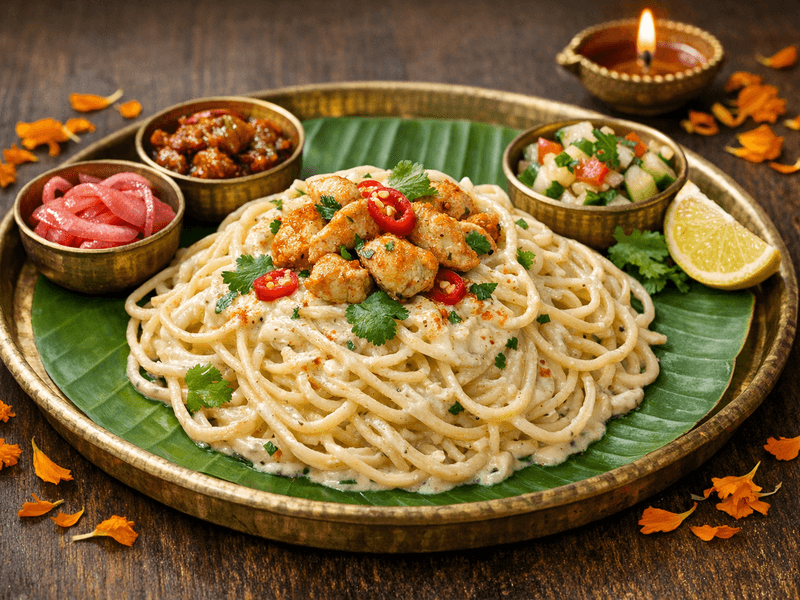
Sabudana Thalipeeth
Lunch • India
How to Make Sabudana Thalipeeth (Traditional & Healthy Version)
Sabudana Thalipeeth is a cherished Maharashtrian delicacy, especially popular during vrat (fasting) days like Navratri and Ekadashi. This traditional Indian flatbread is made with sabudana (sago pearls), mashed aloo (potato), and roasted peanuts, resulting in a soft, chewy texture with a delightful crunch. The subtle aroma of cumin (jeera) and the freshness of coriander leaves make every bite aromatic and satisfying. Known for its gluten-free and vegetarian profile, Sabudana Thalipeeth is a staple in many West Indian households, especially in Maharashtra and Gujarat. It's commonly enjoyed with dahi (curd) or homemade green chutney, making it a wholesome and tasty lunch option. The recipe is not only beloved for its taste but also for its simplicity and versatility. Many families prepare Sabudana Thalipeeth as a healthy lunch or nutritious breakfast, especially during festivals and fasting periods. The combination of sabudana, peanuts, and potatoes provides sustained energy, making it an ideal meal to keep you full for hours. Its comforting flavors and easy preparation make it a popular choice for both everyday meals and special occasions. Sabudana Thalipeeth is a fine example of Indian culinary heritage, where traditional ingredients meet health-conscious cooking.
Ingredients(for 1 medium thalipeeth (approx. 100g))
- 1 cup Sabudana (sago pearls) (soaked overnight)
- 1 medium (mashed) Boiled potato (aloo) (aloo)
- 1/4 cup Roasted peanut powder (moongphali)
- 1-2 (finely chopped) Green chilies (hari mirch) - optional
- 1 tsp Cumin seeds (jeera)
- 2 tbsp (chopped) Coriander leaves (dhaniya) - optional
- to taste Salt (sendha namak (for vrat))
- 1 tsp Lemon juice - optional
- 2-3 tsp Ghee or peanut oil (for shallow frying)
Instructions
- 1
Wash sabudana thoroughly and soak in enough water overnight or for at least 5 hours. Drain any excess water.
5 minutes
Ensure sabudana is not waterlogged to avoid stickiness.
- 2
In a mixing bowl, combine soaked sabudana, mashed aloo, roasted peanut powder, green chilies, jeera, chopped dhaniya, and salt. Mix well to form a soft dough.
5 minutes
Mash sabudana gently to help bind the dough.
- 3
Add lemon juice if desired and mix again. Divide the dough into equal portions and shape into balls.
2 minutes
Lemon juice adds a subtle tang; skip if fasting strictly.
- 4
Place a plastic sheet or banana leaf on the counter. Grease palms, flatten each ball into a round thalipeeth (6-inch diameter) using your hands.
4 minutes
Wet hands prevent sticking while shaping thalipeeth.
Why This Dish is Healthy
This recipe uses wholesome ingredients like sabudana, peanuts, and potatoes, without any refined flours or deep-frying. Shallow frying with ghee or peanut oil keeps the calorie count lower while enhancing absorption of fat-soluble vitamins. The addition of green chilies and coriander boosts metabolism and adds antioxidants, making Sabudana Thalipeeth a smart choice for a balanced Indian lunch.
Sabudana Thalipeeth is naturally gluten-free and provides a good balance of carbohydrates and healthy fats from roasted peanuts and ghee. The dish is rich in energy, making it excellent for fasting days. Coriander leaves add vitamin C, while potatoes contribute potassium and dietary fiber. When cooked with minimal oil, it is a heart-healthy, nutrient-dense option suitable for most vegetarian diets.
Pro Tips
- 💡Tip 1: Soak sabudana properly to ensure soft, non-sticky thalipeeth.
- 💡Tip 2: Add more roasted peanut powder if the dough feels too wet.
- 💡Tip 3: Use a banana leaf for shaping for a traditional aroma and easy transfer.
Storage & Serving
Best served fresh. Store cooled thalipeeth in an airtight container in the refrigerator for up to 1 day. Reheat on tawa before serving for best taste.
Best served: Breakfast or Lunch
Nutrition Facts
| Nutrient | Per 100g |
|---|---|
| Energy | 180.0 kcal |
| Protein | 2.0 g |
| Carbohydrates | 40.0 g |
| Total Fat | 6.0 g |
| Fiber | 2.0 g |