Roti
Lunch • India
How to Make Roti (Traditional & Healthy Version)
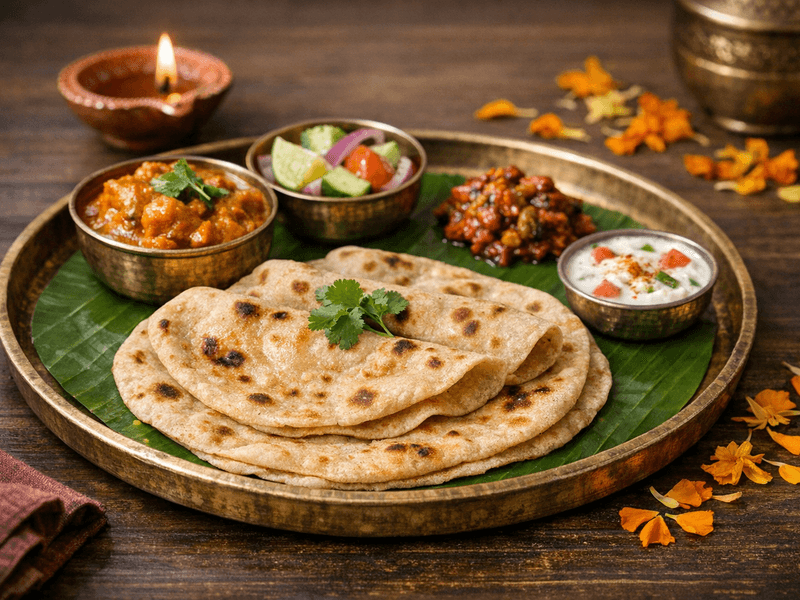
Roti, also known as phulka or chapati, is a beloved Indian flatbread made with whole wheat flour (atta). Rooted in the culinary traditions of North India, roti is a staple in Indian households and is commonly served alongside dals, sabzis, or curries. Its simplicity, soft texture, and earthy aroma make it a comforting addition to any meal. Whether enjoyed for lunch or dinner, roti plays a central role in daily Indian cuisine and is often associated with home-cooked warmth and hospitality. Roti is deeply woven into the fabric of Indian culture, symbolizing nourishment and unity. During festivals such as Holi and Diwali, freshly made rotis are served with special accompaniments. Across diverse regions of India, subtle variations in the recipe reflect local tastes and customs. From the soft, puffed phulkas of Punjab to the slightly crisp rotis of Rajasthan, this flatbread adapts beautifully to every kitchen. Not only is roti quick and easy to prepare, but it also supports a balanced diet, making it a great choice for those seeking healthy, wholesome meals.
Ingredients(for 2 medium rotis (approx. 60g each))
- 1 cup Whole wheat flour (atta)
- 1/3 to 1/2 cup Water (as needed for soft dough)
- 1/4 tsp Salt (namak, optional) - optional
- 1 tsp Ghee (for brushing, optional) - optional
- 1/2 tsp Oil (optional, for dough) - optional
- 2 tbsp Dry flour (for dusting)
Instructions
- 1
In a large parat (mixing bowl), combine atta and salt. Gradually add water and mix with your fingers to form a soft, pliable dough.
5 minutes
The dough should be soft but not sticky for the best rotis.
- 2
Knead the dough for 5-7 minutes until smooth. Add a few drops of oil or ghee if desired, and cover the dough with a damp cloth. Let it rest for 10-15 minutes.
10 minutes
Resting makes rotis softer and easier to roll.
- 3
Divide the dough into equal lemon-sized balls (loyi). Dust each ball lightly with dry flour.
2 minutes
Uniform balls ensure even cooking.
- 4
Roll each ball into a thin, even circle (about 6 inches diameter) using a belan (rolling pin) and chakla (board), dusting with flour as needed.
2 minutes
Keep rotating the dough for a perfect round shape.
Why This Dish is Healthy
This traditional Indian roti recipe uses whole wheat atta, which is unrefined and high in fiber. The absence of refined flour and low fat content make rotis heart-healthy and supportive of weight management. Rotis can easily be adapted for various dietary needs, including vegan and diabetic-friendly versions. Their wholesome ingredients and simple preparation help maintain a healthy lifestyle without sacrificing authentic taste.
Roti is rich in complex carbohydrates and dietary fiber, supporting sustained energy and digestive health. Whole wheat atta provides essential micronutrients such as iron, magnesium, and B vitamins. With minimal fat and no added sugar, rotis are suitable for calorie-conscious diets. When paired with vegetables or dals, they offer a balanced intake of proteins, vitamins, and minerals, making them a smart choice for daily nutrition.
Pro Tips
- 💡Tip 1: Use warm water to make the dough softer and easier to roll.
- 💡Tip 2: Rest the dough for at least 10 minutes before rolling for best results.
- 💡Tip 3: Always cook rotis on a hot tawa to ensure quick puffing and softness.
Storage & Serving
Store rotis wrapped in a clean cotton cloth or foil in a roti box to retain softness. Consume within 6-8 hours for best taste. For longer storage, refrigerate in an airtight container and reheat on a tawa before serving.
Best served: Breakfast or Lunch
Nutrition Facts
| Nutrient | Per 100g |
|---|---|
| Energy | 120.0 kcal |