Ridge Gourd Curry
Lunch • India
How to Make Ridge Gourd Curry (Traditional & Healthy Version)
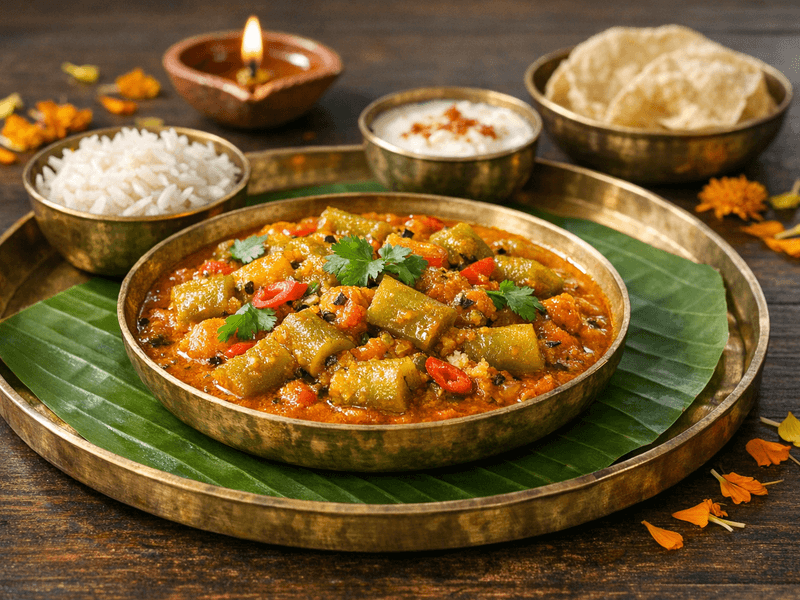
Ridge Gourd Curry, or 'Turai ki Sabzi' in Hindi, is a staple in many South Indian households and is loved for its light, comforting taste and nourishing qualities. Known as 'Beerakaya Kura' in Telugu and 'Peerkangai Curry' in Tamil, this dish celebrates the subtle flavors of the ridge gourd (turai), a vegetable prized across India for its health benefits and delicate sweetness. Traditionally, South Indian homes prepare this curry for lunch alongside steaming hot rice or phulka. Ridge gourd is a monsoon vegetable, making this curry a seasonal favorite in states like Andhra Pradesh, Karnataka, and Tamil Nadu. This healthy curry is an excellent choice for those seeking a low-calorie, high-fiber Indian lunch. The mild flavors are enhanced with fresh coconut, curry leaves, and minimal oil, making it suitable for people watching their weight or looking for diabetic-friendly options. The soft texture of cooked ridge gourd and the aromatic tadka (tempering) make every bite a pleasure, while regional variations allow for tweaks in spices or additional ingredients like lentils. Ideal for everyday meals or during festivals like Ugadi, Ridge Gourd Curry brings together nutrition, tradition, and taste in one simple bowl.
Ingredients(for 1 medium bowl (approx. 200g) per person)
- 2 medium (about 300g) Ridge gourd (turai/beerakaya) (peeled and chopped)
- 1 small Onion (finely chopped)
- 1 medium Tomato (finely chopped)
- 2 Green chilies (slit)
- 8-10 Curry leaves (fresh)
- 1/2 tsp Mustard seeds (rai)
- 1/2 tsp Cumin seeds (jeera)
- 1/4 tsp Turmeric powder (haldi)
- 1/2 tsp Red chili powder
- 2 tbsp Fresh grated coconut (optional, for garnish) - optional
- 1 tsp Oil (preferably cold-pressed)
- to taste Salt
- 1 tbsp Coriander leaves (chopped, for garnish) - optional
Instructions
- 1
Wash, peel, and chop the ridge gourd into small cubes. Finely chop the onion and tomato, and slit the green chilies.
5 minutes
Use the tender peel for chutney to avoid food waste.
- 2
Heat oil in a kadhai or deep pan. Add mustard seeds and let them splutter. Then add cumin seeds and curry leaves.
2 minutes
Ensure oil is hot before adding mustard seeds for perfect tadka.
- 3
Add chopped onions and sauté until translucent. Then add green chilies and sauté for another minute.
3 minutes
Do not brown the onions; keep them soft for a lighter curry.
- 4
Add chopped tomatoes, turmeric powder, and red chili powder. Sauté until tomatoes are soft and oil leaves the sides.
4 minutes
Cover pan for faster cooking and softer tomatoes.
Why This Dish is Healthy
This Ridge Gourd Curry is a healthy lunch choice because it is naturally low in calories, high in fiber, and free from heavy creams or excess oil. The recipe uses fresh vegetables, heart-healthy cold-pressed oil, and avoids refined ingredients. Including this curry in your diet helps improve digestion, supports a healthy gut, and provides essential vitamins and minerals, making it suitable for weight loss, diabetes, and balanced vegetarian nutrition.
Ridge gourd is a low-calorie vegetable rich in dietary fiber, vitamin C, and antioxidants, making it excellent for digestive health and immunity. This curry uses minimal oil and includes protein from lentils if you add toor dal, as commonly done in Andhra style. Fresh coconut adds healthy fats, while the use of turmeric and curry leaves infuses the dish with anti-inflammatory and antioxidant properties. Overall, it's a nutrient-dense, hydrating lunch option that supports weight management and blood sugar control.
Pro Tips
- 💡Tip 1: Select tender ridge gourds for best taste and texture.
- 💡Tip 2: Use the peels to make a nutritious chutney and minimize waste.
- 💡Tip 3: Add a spoon of sambar powder for extra South Indian flavor, if desired.
Storage & Serving
Store leftovers in an airtight container in the refrigerator for up to 2 days. Reheat gently on the stove or in a microwave before serving. Avoid freezing as ridge gourd can become mushy.
Best served: Breakfast or Lunch
Nutrition Facts
| Nutrient | Per 100g |
|---|---|
| Energy | 110.0 kcal |