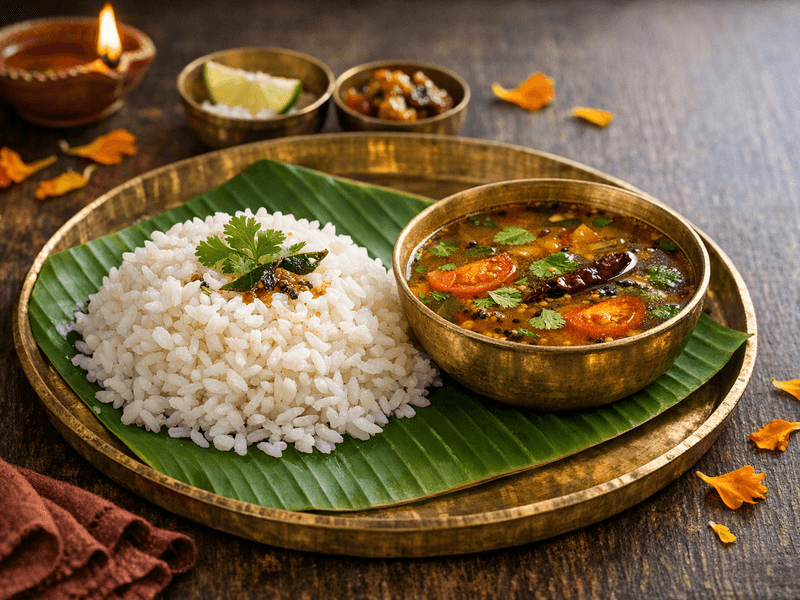
Rice with Rasam
Lunch • India
How to Make Rice with Rasam (Traditional & Healthy Version)
Rice with Rasam is a staple lunch dish from South India, especially beloved in Tamil Nadu, Andhra Pradesh, Karnataka, and Kerala households. Rasam, also called 'charu' or 'saaru', is a tangy, spiced broth made with tomatoes, tamarind, and aromatic spices, often enjoyed over steamed rice. This comforting combination is known for its light, digestive properties and is frequently served during festivals like Pongal and Ugadi, as well as daily meals. The dish’s origins trace back centuries, reflecting South India's agricultural roots and its emphasis on simple, wholesome food. The interplay of rice ('chawal' or 'annam') with rasam creates a harmony of flavors—sour, spicy, and mildly sweet—which makes it a favorite for both adults and children. Ideal for health-conscious eaters, Rice with Rasam is vegetarian, low in fat, and easy on the stomach, making it perfect for balanced diets or calorie tracking. The rasam’s spices, such as cumin, black pepper, and mustard seeds, not only boost flavor but also aid digestion and immunity. This dish offers a comforting warmth, often associated with home-cooked meals and festive occasions, making it a great choice for anyone seeking authentic Indian cuisine that’s both nutritious and delicious.
Ingredients(for 1 medium bowl rice with 1 cup rasam)
- 1 cup Rice (chawal/annam)
- 2 medium Tomato (tamatar)
- 1 tablespoon Tamarind (imli pulp)
- 2 tablespoons Toor dal (arhar dal)
- 1 tablespoon Rasam powder (regional blend)
- 1/2 teaspoon Mustard seeds (rai)
- 1/2 teaspoon Cumin seeds (jeera)
- 1/4 teaspoon Black pepper (kali mirch)
- 8-10 Curry leaves (kadi patta)
- 2 cloves Garlic (optional, for flavor) - optional
- 1/4 teaspoon Turmeric powder (haldi)
- to taste Salt (namak)
- 1 teaspoon Oil (preferably sesame or sunflower)
- 1 tablespoon Coriander leaves (dhaniya patta, chopped)
Instructions
- 1
Wash the rice thoroughly in water and cook it in a pressure cooker or saucepan with 2 cups water until soft and fluffy.
15 minutes
Use aged rice for better texture and flavor.
- 2
Soak tamarind (imli) in 1/2 cup warm water for 10 minutes. Extract the pulp and set aside.
10 minutes
Strain the pulp to remove seeds and fiber for a smooth rasam.
- 3
Cook toor dal (arhar dal) in 1 cup water until soft. Mash and keep aside.
10 minutes
Adding a pinch of turmeric while cooking dal enhances color and nutrition.
- 4
Heat oil in a kadhai or pan. Add mustard seeds (rai), cumin seeds (jeera), and curry leaves (kadi patta). Allow them to splutter.
2 minutes
Ensure oil is hot before adding spices for maximum aroma.
Why This Dish is Healthy
This dish is a healthy lunch choice because it uses whole ingredients, minimal oil, and plenty of spices known for their digestive and immune-boosting properties. The combination of rice and lentils ensures sustained energy and balanced nutrition, suitable for calorie tracking and weight management. Its low-calorie, high-fiber nature makes it ideal for a light and satisfying meal.
Rice with Rasam is rich in complex carbohydrates from rice and plant protein from toor dal. The spices in rasam, such as cumin, black pepper, and turmeric, offer antioxidant and anti-inflammatory benefits. Tomatoes provide vitamin C and lycopene, while curry leaves add iron and fiber. Tamarind aids digestion, and the minimal oil used keeps the dish low in fat. This recipe is naturally gluten-free and can be adapted for vegan diets by omitting ghee or butter.
Pro Tips
- 💡Tip 1: Use freshly ground rasam powder for authentic flavor.
- 💡Tip 2: Add a pinch of asafoetida (hing) to the tempering for digestive benefits.
- 💡Tip 3: If making ahead, store rasam separately and combine with rice just before serving.
Storage & Serving
Rice and rasam can be stored separately in airtight containers in the refrigerator for up to 2 days. Reheat rasam gently on the stove to preserve flavor. Rice can be steamed or microwaved before serving.
Best served: Lunch
Nutrition Facts
| Nutrient | Per 100g |
|---|---|
| Energy | 210.0 kcal |