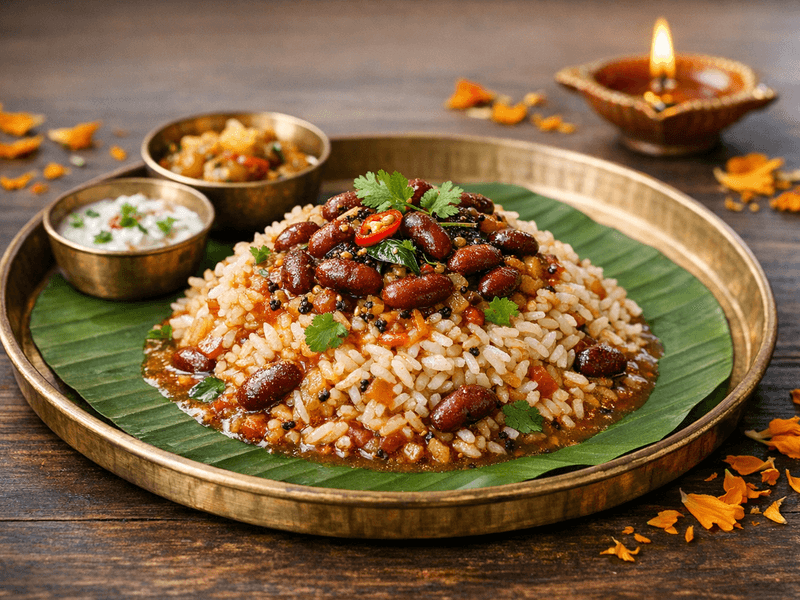
Rasam Rice with Kidney Beans
Lunch • India
How to Make Rasam Rice with Kidney Beans (Traditional & Healthy Version)
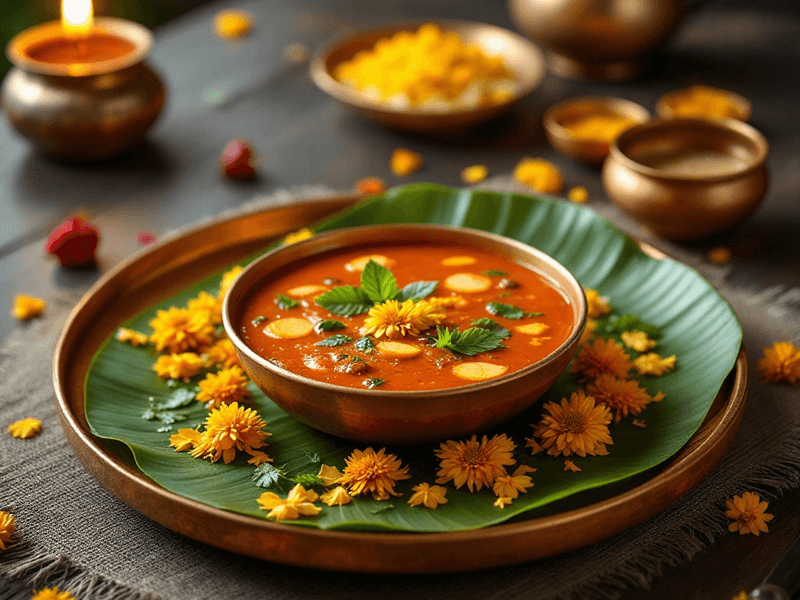
Rasam Rice with Kidney Beans is a nourishing and flavorful South Indian lunch dish that brings together the tangy-sour taste of rasam with the wholesome goodness of rajma (kidney beans) and steamed rice. Rasam, a spiced lentil-tomato broth, is a staple in Tamil Nadu, Andhra Pradesh, and Karnataka households, often enjoyed during festivals like Pongal, Ugadi, and Onam. The addition of protein-rich kidney beans elevates this classic, making it a balanced meal suitable for modern, health-conscious lifestyles. This dish is beloved for its comforting warmth, aromatic spices like cumin (jeera), mustard seeds (rai), and black pepper, and the satisfying texture of cooked rajma. It’s light, easy to digest, and packed with nutrients, making it ideal for lunch or even a light dinner. Rasam rice is also a go-to meal during monsoon and winter, believed to boost immunity and aid digestion. By adding kidney beans, you enhance the protein content, making it perfect for vegetarians seeking a hearty, protein-rich Indian meal. Enjoyed across generations, this dish connects tradition with nutrition, offering a delightful burst of South Indian flavors in every bite.
Ingredients(for 1 medium bowl per person)
- 2 cups Cooked rice (steamed, use sona masoori or any short-grain rice)
- 1/2 cup Rajma (kidney beans) (soaked overnight & boiled)
- 1/4 cup Toor dal (pigeon pea lentils) (pressure cooked)
- 1 medium Tomato (chopped)
- 1 tablespoon Tamarind pulp (imli)
- 2 teaspoons Rasam powder (homemade or store-bought)
- 1/2 teaspoon Mustard seeds (rai)
- 1/2 teaspoon Cumin seeds (jeera)
- 8-10 Curry leaves (kadi patta)
- a pinch Asafoetida (hing) - optional
- 1/4 teaspoon Black pepper powder
- 1/4 teaspoon Turmeric powder (haldi)
- to taste Salt
- 1 teaspoon Ghee or oil (use coconut oil for vegan version)
- 2 tablespoons Fresh coriander leaves (chopped, dhania) - optional
Instructions
- 1
Rinse and soak rajma (kidney beans) overnight. Pressure cook until soft. Also cook toor dal until mushy and set both aside.
8 minutes
Cooking rajma with a pinch of salt enhances flavor and digestion.
- 2
In a pan, heat ghee or oil. Add mustard seeds; when they splutter, add cumin seeds, curry leaves, and a pinch of asafoetida.
2 minutes
Do not burn the spices; keep flame medium for best aroma.
- 3
Add chopped tomatoes and sauté until they turn soft. Add turmeric powder and mash the tomatoes gently.
3 minutes
Sautéing tomatoes releases their natural sweetness.
- 4
Pour in the cooked toor dal and tamarind pulp. Mix well. Add 1.5 cups water and bring to a gentle boil.
3 minutes
Adjust water for desired rasam consistency.
Why This Dish is Healthy
Rasam Rice with Kidney Beans is a healthy Indian lunch choice because it balances macronutrients—protein, carbs, and minimal fat—while using whole, natural ingredients. The use of minimal oil, plenty of lentils, and kidney beans make it heart-healthy and filling without excessive calories. The spices support metabolism and digestion, while the high fiber content aids gut health. This dish provides sustained energy, making it perfect for weight management and vegetarian diets.
This Rasam Rice with Kidney Beans dish is packed with plant-based protein from rajma and toor dal, making it excellent for muscle repair and satiety. Rice provides complex carbohydrates for energy while tomatoes and tamarind bring vitamin C and antioxidants, helping boost immunity. Traditional South Indian spices like cumin, black pepper, and turmeric are known for their anti-inflammatory and digestive benefits. Overall, the meal is low in fat, high in fiber, and rich in micronutrients like iron, folate, and potassium.
Pro Tips
- 💡Tip 1: For a smoky flavor, temper spices in coconut oil.
- 💡Tip 2: Always soak rajma overnight for better digestion and faster cooking.
- 💡Tip 3: Use fresh, homemade rasam powder for the most authentic taste.
Storage & Serving
Store leftover rasam and rice separately in airtight containers in the refrigerator for up to 2 days. Reheat gently before serving. Avoid mixing rice and rasam in advance to prevent sogginess.
Best served: Lunch
Nutrition Facts
| Nutrient | Per 100g |
|---|---|
| Energy | 340.0 kcal |
| Protein | 4.0 g |
| Carbohydrates | 20.0 g |
| Total Fat | 1.0 g |
| Fiber | 2.0 g |