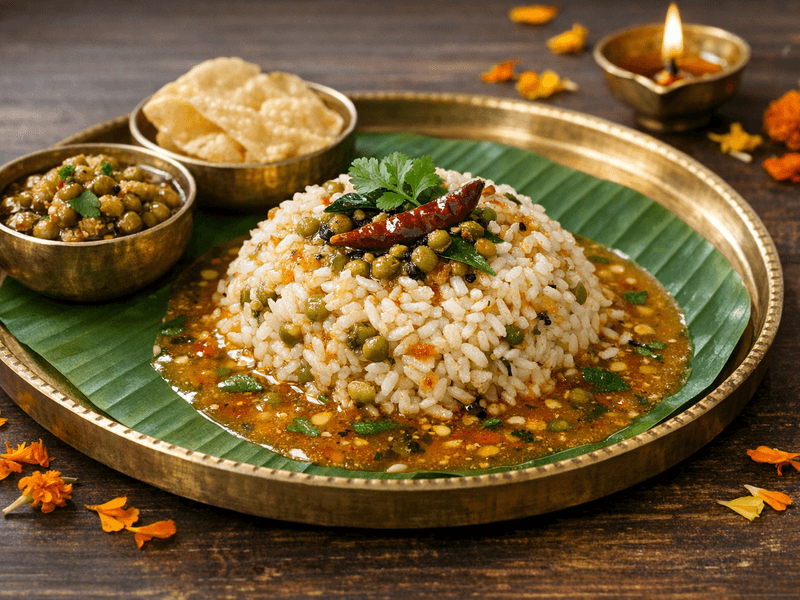
Rasam Rice with Green Gram
Lunch • India
How to Make Rasam Rice with Green Gram (Traditional & Healthy Version)
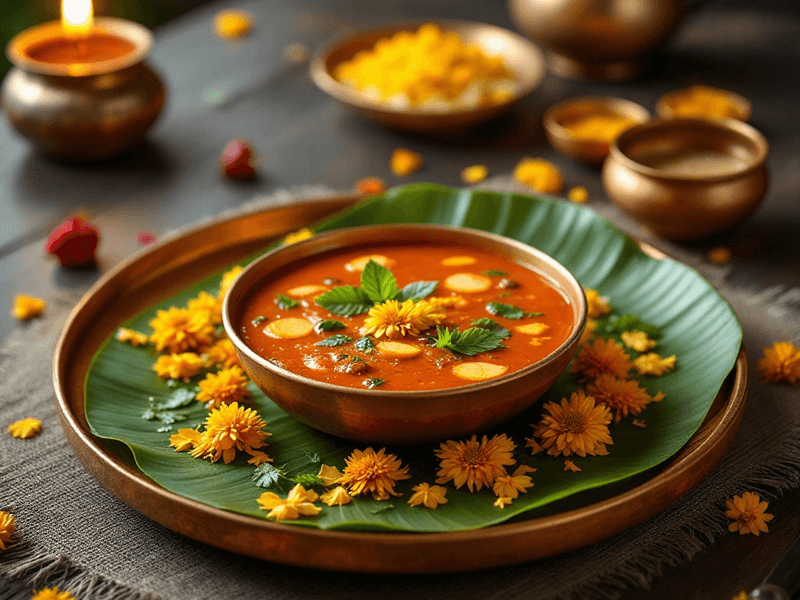
Rasam Rice with Green Gram is a beloved South Indian lunch dish that combines the zesty flavors of rasam with the wholesome goodness of whole green gram (moong dal). This classic recipe hails from Tamil Nadu and Andhra Pradesh kitchens, where rasam (a tangy, spiced tomato broth) is often enjoyed with steamed rice. By adding green gram, known as 'pesara pappu' or 'sabut moong', the dish gets a protein boost, making it a nutritious vegetarian option. The combination of aromatic spices, curry leaves, and freshly ground pepper creates a comforting meal that is light on the stomach but full of flavor. Rasam Rice with Green Gram is traditionally served during daily lunches, festive occasions, and as a restorative meal during monsoon or winter seasons. The dish is gentle yet satisfying, making it a favorite for all ages. Its tangy, spicy, and earthy notes blend perfectly with the soft texture of rice and green gram, offering a truly authentic South Indian culinary experience. Easy to digest and quick to prepare, it has become a staple in many Indian households, ideal for those seeking healthy, home-cooked comfort food.
Ingredients(for 1 medium bowl (about 300g) per serving)
- 2 cups Cooked rice (use short-grain rice like sona masoori or ponni)
- 1/2 cup Whole green gram (sabut moong) (soaked for 3-4 hours)
- 1 medium Tomato (finely chopped)
- 2 tbsp Tamarind pulp (imli)
- 1.5 tsp Rasam powder (homemade or store-bought)
- 1/4 tsp Turmeric powder (haldi)
- 1/2 tsp Mustard seeds (rai)
- 8-10 Curry leaves (kadi patta)
- a pinch Asafoetida (hing)
- 1/4 tsp Black pepper (coarsely crushed)
- 1 tsp Ghee or cold-pressed oil (use coconut oil or sesame oil for vegan)
- to taste Salt
- 2 tbsp Coriander leaves (chopped, dhania patta) - optional
Instructions
- 1
Rinse and soak whole green gram (sabut moong) for 3-4 hours. Pressure cook with a pinch of turmeric, salt, and 1 cup water for 2 whistles until just cooked but not mushy.
10 minutes
Do not overcook moong to retain texture and nutrients.
- 2
In a vessel, add chopped tomato, tamarind pulp, rasam powder, turmeric, salt, and 1.5 cups water. Simmer for 5-6 minutes until tomatoes soften and raw smell disappears.
7 minutes
Mash tomatoes well for a smooth rasam base.
- 3
Add cooked green gram to the rasam mixture. Simmer for 4-5 minutes on low flame so flavors infuse. Adjust salt as needed.
5 minutes
Stir gently to keep moong grains intact.
- 4
In a small tadka pan, heat ghee or oil. Add mustard seeds; when they splutter, add curry leaves, asafoetida, and crushed black pepper. Sauté for 30 seconds.
2 minutes
Tempering (tadka) enhances aroma and flavor.
Why This Dish is Healthy
This recipe is an excellent healthy lunch option because it combines whole grains, pulses, and a variety of Indian spices with minimal oil and no processed ingredients. The high fiber content aids in satiety and stable blood sugar, while the protein from green gram makes it ideal for vegetarians. The tangy rasam broth is light on the stomach and can boost immunity during seasonal changes.
Rasam Rice with Green Gram is high in plant-based protein from moong, complex carbohydrates from rice, and packed with antioxidants from tomatoes, black pepper, and turmeric. Green gram is rich in dietary fiber, B vitamins, potassium, magnesium, and iron, supporting heart health and digestion. The dish is low in fat and cholesterol-free, especially when made with minimal oil. Spices like turmeric and black pepper provide anti-inflammatory benefits.
Pro Tips
- 💡Tip 1: Soak green gram well to reduce cooking time and improve digestibility.
- 💡Tip 2: Always add fresh curry leaves to tadka for authentic flavor.
- 💡Tip 3: Adjust rasam consistency by adding more water if you prefer a thinner broth.
Storage & Serving
Rasam and green gram can be stored separately in airtight containers in the refrigerator for up to 2 days. Reheat gently before serving. Combine with fresh rice just before eating.
Best served: Lunch
Nutrition Facts
| Nutrient | Per 100g |
|---|---|
| Energy | 310.0 kcal |