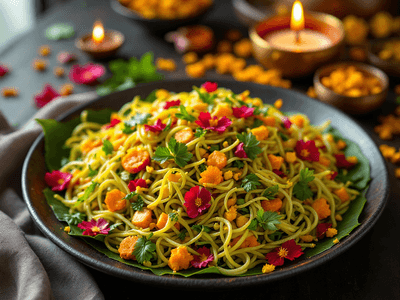
Ragi Noodles with Tempeh
Lunch • India
How to Make Ragi Noodles with Tempeh (Traditional & Healthy Version)
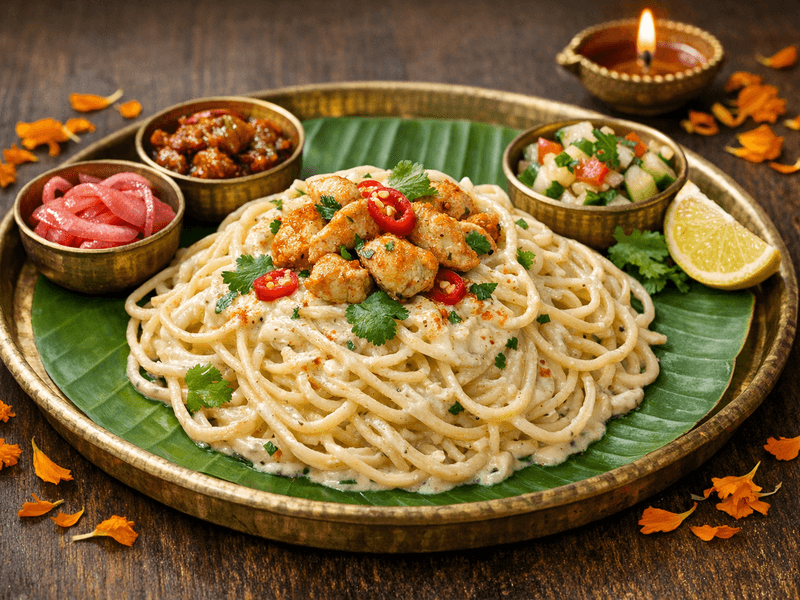
Ragi Noodles with Tempeh is a modern twist on a beloved South Indian staple, combining the ancient grain ragi (finger millet) with nutrient-rich tempeh for a wholesome, protein-packed meal. Ragi, known for its high calcium and fiber content, has been a cornerstone of South Indian cuisine for centuries, especially in Karnataka and Tamil Nadu. The earthy flavor of ragi pairs beautifully with the tender, nutty tempeh and an assortment of fresh vegetables, making this dish both hearty and satisfying. This vegetarian noodle recipe is ideal for those seeking Indian healthy lunch options that do not compromise on taste. The use of ragi in noodles has gained popularity due to its health benefits and gluten-free nature, making it a favorite during health-focused festivals like Sankranti, when millets are celebrated. Tempeh adds a unique texture and boosts the protein content, making it perfect for modern Indian families. The mélange of Indian spices, curry leaves, and mustard seeds brings authentic South Indian flavors to every bite, ensuring this fusion dish remains rooted in tradition while catering to new-age health goals.
Ingredients(for 1 medium bowl per serving)
- 120 grams Ragi noodles (uncooked) (Finger millet noodles)
- 100 grams Tempeh (Cut into cubes)
- 1 small Onion (Sliced (pyaaz))
- 1 small Carrot (Julienned (gajar))
- 1/2 medium Capsicum (Sliced (shimla mirch))
- 8-10 Green beans (Chopped (phali))
- 8-10 Curry leaves (Kadi patta)
- 1/2 tsp Mustard seeds (Rai)
- 1 tsp Ginger garlic paste (Adrak lahsun ka paste)
- 1 Green chilli (Slit, hari mirch) - optional
- 1/4 tsp Turmeric powder (Haldi)
- 1/4 tsp Black pepper powder (Kali mirch)
- 1.5 tbsp Cold-pressed groundnut oil (or coconut oil)
- to taste Salt (Namak)
- 1 tsp Lemon juice (Nimbu ras) - optional
- 2 tbsp Coriander leaves (Chopped (dhaniya)) - optional
Instructions
- 1
Boil water in a large vessel. Add ragi noodles and cook as per packet instructions (usually 4-5 minutes). Drain and rinse with cold water. Set aside.
7 minutes
Rinsing with cold water prevents noodles from sticking.
- 2
Heat 1/2 tbsp oil in a tawa or kadhai. Add tempeh cubes and sauté until golden on all sides. Remove and keep aside.
5 minutes
Ensure tempeh is evenly browned for best texture.
- 3
In the same kadhai, add remaining oil. Temper with mustard seeds. Once they splutter, add curry leaves, sliced onion, and green chilli. Sauté till onion is translucent.
3 minutes
Tempering releases essential South Indian aromas.
- 4
Add ginger garlic paste and sauté for 1 minute. Stir in turmeric and black pepper powder.
2 minutes
Do not burn spices; stir continuously.
Why This Dish is Healthy
This dish is a healthy choice due to its use of whole grains, high-fiber ragi, and protein-rich tempeh, all cooked with minimal oil and lots of vegetables. It is low in saturated fat and free from refined flours, making it suitable for weight management and diabetes control. The dish is naturally gluten-free (if using certified ragi noodles) and can be adapted for vegan or kid-friendly diets, making it inclusive and nourishing for all.
Ragi Noodles with Tempeh is a powerhouse of nutrition, rich in complex carbohydrates, dietary fiber, and plant-based protein. Ragi (finger millet) is an excellent source of calcium, iron, and magnesium, supporting bone health and energy levels. Tempeh adds complete protein, essential amino acids, and gut-friendly probiotics. The inclusion of colorful vegetables enhances the antioxidant, vitamin A, vitamin C, and mineral content, making this a well-rounded, low-glycemic meal that supports sustained energy.
Pro Tips
- 💡Tip 1: Always rinse ragi noodles after boiling to prevent stickiness.
- 💡Tip 2: Sauté tempeh until golden for best flavor and texture.
- 💡Tip 3: Add veggies in stages to maintain crunch and color.
Storage & Serving
Store cooled noodles in an airtight container in the refrigerator for up to 2 days. Reheat on a tawa or in a microwave, sprinkling a little water to retain softness.
Best served: Breakfast or Lunch
Nutrition Facts
| Nutrient | Per 100g |
|---|---|
| Energy | 350.0 kcal |
| Protein | 7.0 g |
| Carbohydrates | 25.0 g |
| Total Fat | 3.0 g |
| Fiber | 3.0 g |