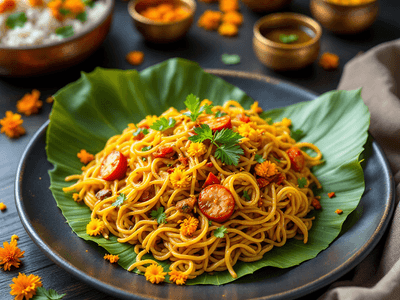
Ragi Noodles Stir Fry
Lunch • India
How to Make Ragi Noodles Stir Fry (Traditional & Healthy Version)
Ragi Noodles Stir Fry is a wholesome and flavorful lunch dish rooted in South Indian cuisine, especially Karnataka and Tamil Nadu where ragi (finger millet) is a staple grain. Traditionally, ragi is used in making rotis, mudde, and porridges, but modern variations like noodles have gained popularity among health-conscious families. This dish combines the earthy flavor of ragi with vibrant Indian vegetables and spices, creating a meal that's not just nutritious but also full of taste and texture. The stir fry is quick to prepare, making it perfect for busy weekdays or festive occasions like Ugadi, when millet dishes are enjoyed for their auspiciousness and health benefits. Ragi Noodles Stir Fry offers a delicious way to incorporate millets into your diet, especially for those seeking alternatives to refined flour. The nutty taste of ragi pairs beautifully with the crunch of carrots, capsicum, and beans, seasoned with aromatic jeera (cumin), mustard seeds, and a hint of green chillies. It's a vegetarian, high-fiber dish that can be customized for different dietary needs, including diabetic-friendly and weight-loss versions. Whether served for lunch or packed in a tiffin, this South Indian recipe is a celebration of local grains and seasonal produce.
Ingredients(for 1 medium bowl per person)
- 150 grams Ragi noodles (finger millet noodles)
- 1 medium, julienned Carrot (gajar)
- 1 small, sliced Capsicum (shimla mirch)
- 8-10, chopped French beans (phalli)
- 1 small, sliced Onion (pyaaz)
- 1, slit Green chilli (hari mirch)
- 1/2 teaspoon Mustard seeds (rai)
- 1/2 teaspoon Cumin seeds (jeera)
- 8-10 Curry leaves (kadi patta)
- 1 tablespoon Oil (cold-pressed coconut or groundnut oil preferred)
- to taste Salt (namak)
- 1 teaspoon Lemon juice (nimbu ras) - optional
- 1 tablespoon, chopped Coriander leaves (dhaniya) - optional
Instructions
- 1
Boil water in a deep vessel and add ragi noodles. Cook as per packet instructions (usually 5-6 minutes), then drain and rinse under cold water to prevent sticking.
6 minutes
Add a few drops of oil to boiling water to keep noodles separate.
- 2
Heat oil in a kadhai or tawa. Add mustard seeds and cumin seeds; let them crackle. Add curry leaves and green chilli, sauté for 30 seconds.
2 minutes
Use fresh curry leaves for authentic aroma.
- 3
Add sliced onions and sauté till translucent. Next, add carrots, capsicum, and beans. Stir fry on medium flame until vegetables are tender but retain crunch.
5 minutes
Do not overcook veggies to preserve nutrients and texture.
- 4
Add boiled ragi noodles to the kadhai. Toss gently with the vegetables to combine evenly.
2 minutes
Use two spatulas to toss noodles without breaking.
Why This Dish is Healthy
Ragi Noodles Stir Fry is an ideal choice for a healthy lunch because it combines low-GI millet with fresh vegetables, making it rich in fiber and nutrients. It keeps you full longer, supports diabetes control, and is lower in calories compared to regular noodles. Its plant-based ingredients make it suitable for vegetarians and vegans, while the absence of refined flour aids weight loss and digestive health. This recipe is a perfect blend of traditional Indian grains and modern wellness.
Ragi (finger millet) is a powerhouse of nutrition, offering high fiber, calcium, iron, and important amino acids. The noodles provide slow-releasing energy and help manage blood sugar levels. The addition of assorted vegetables boosts vitamin A, C, potassium, and antioxidants. Using minimal oil and whole ingredients ensures a balanced meal with protein from vegetables and complex carbs from ragi. This dish is naturally gluten-free if the noodles are pure ragi, and supports bone health, digestion, and weight management.
Pro Tips
- 💡Tip 1: Use only pure ragi noodles for maximum nutrition and gluten-free benefits.
- 💡Tip 2: Cut vegetables in uniform sizes for even cooking and better presentation.
- 💡Tip 3: Always rinse noodles in cold water after boiling to keep them non-sticky.
Storage & Serving
Store leftovers in an airtight container in the refrigerator for up to 24 hours. Reheat on a tawa or in a microwave; add a splash of water to refresh noodles. Avoid freezing as texture may change.
Best served: Breakfast or Lunch
Nutrition Facts
| Nutrient | Per 100g |
|---|---|
| Energy | 280.0 kcal |