Ragi Hakka Noodles
Lunch • India
How to Make Ragi Hakka Noodles (Traditional & Healthy Version)
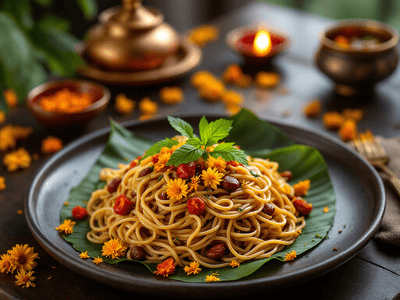
Ragi Hakka Noodles is a unique and nutritious twist on the classic Hakka noodles, integrating the wholesome goodness of ragi (finger millet) into a beloved Indian street-style dish. Originating from the fusion of Indo-Chinese flavors that have become a staple in Indian households and restaurants, this dish brings together vibrant vegetables, aromatic spices, and the nutty flavor of ragi. Ragi, or nachni, is revered across southern India, especially in Karnataka, for its health benefits and versatility. This dish is especially popular among health-conscious urban families and is perfect for lunch, tiffin boxes, and festive gatherings like Ganesh Chaturthi and Navratri when people look for healthy yet flavorful recipes. The taste is a delightful balance of earthy ragi, crunchy vegetables, and umami sauces, making it appealing to all age groups. Ragi Hakka Noodles is a wonderful way to incorporate ancient grains into modern Indian cuisine, offering both nostalgia and novelty in every bite.
Ingredients(for 1 medium bowl per person)
- 150 grams Ragi noodles (nachni noodles, available in Indian stores)
- 1/2 cup Carrot (julienned (gajar))
- 1/2 cup Capsicum (julienned (shimla mirch), mixed colors preferred)
- 1/2 cup Cabbage (shredded (patta gobhi))
- 1 small Onion (thinly sliced (pyaz))
- 2 tbsp Spring onions (finely chopped (hara pyaz), for garnish) - optional
- 1 tsp Ginger-garlic paste (adrak-lehsun paste)
- 1 Green chilli (finely chopped (hari mirch)) - optional
- 1 tbsp Soy sauce (low sodium preferred)
- 1 tsp Vinegar (white vinegar or apple cider)
- 1/4 tsp Black pepper powder (kali mirch)
- to taste Salt (namak)
- 1 tbsp Sesame oil (til ka tel, or any vegetable oil)
Instructions
- 1
Bring 1.5 liters of water to a boil in a large patila. Add a pinch of salt and a few drops of oil. Add ragi noodles and cook for 3-4 minutes until al dente. Drain immediately and rinse under cold water to prevent sticking.
5 minutes
Do not overcook ragi noodles, as they soften quickly.
- 2
Heat sesame oil in a large kadhai or wok on high flame. Add ginger-garlic paste and green chilli. Sauté for 1 minute until aromatic.
2 minutes
Keep the flame high for authentic street-style flavor.
- 3
Add sliced onions and sauté for 1-2 minutes until they turn translucent. Toss in carrots, capsicum, and cabbage. Stir-fry on high heat for 3-4 minutes, keeping the vegetables crunchy.
5 minutes
Do not overcook the vegetables to preserve their crunch and nutrients.
- 4
Lower the flame. Add soy sauce, vinegar, and black pepper powder. Mix well to coat the vegetables evenly.
2 minutes
Adjust sauces according to your taste preference.
Why This Dish is Healthy
This recipe replaces refined wheat noodles with ragi, significantly increasing its fiber, protein, and mineral content while reducing the glycemic load. The dish uses very little oil and is packed with fresh vegetables, making it low in calories and high in nutrients. Ragi supports weight management, digestive health, and provides long-lasting energy—perfect for busy days or after-school meals. Its wholesome ingredients make it an excellent choice for those seeking healthier Indian lunch options.
Ragi Hakka Noodles is a powerhouse of nutrition, thanks to ragi (finger millet), which is high in dietary fiber, calcium, and iron. Ragi is gluten-free, supports bone health, and helps manage blood sugar levels due to its low glycemic index. The colorful vegetables add vitamins A, C, and K, antioxidants, and minerals. The use of minimal oil and inclusion of protein-rich veggies make this dish suitable for a balanced Indian vegetarian diet. It’s a great source of complex carbs and plant-based micronutrients.
Pro Tips
- 💡Tip 1: Always rinse ragi noodles with cold water after boiling to prevent them from sticking.
- 💡Tip 2: Cut vegetables evenly for uniform cooking and appealing presentation.
- 💡Tip 3: Cook on high flame to retain the crunch and color of the veggies.
Storage & Serving
Store leftover noodles in an airtight dabba in the refrigerator for up to 24 hours. Reheat in a kadhai on low flame, sprinkling a little water to retain softness. Avoid freezing for best texture.
Best served: Breakfast or Lunch
Nutrition Facts
| Nutrient | Per 100g |
|---|---|
| Energy | 250.0 kcal |