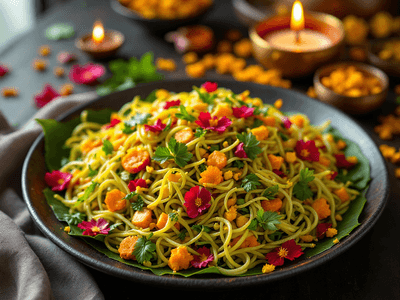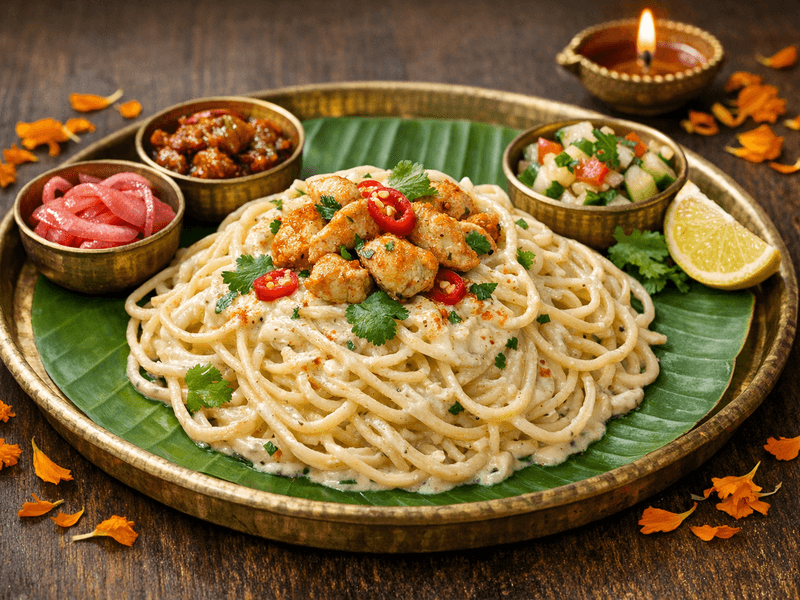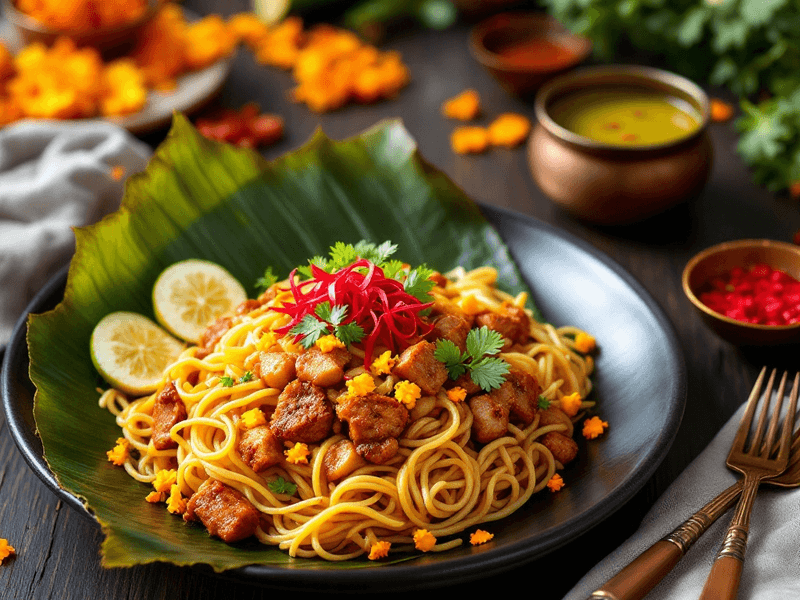
Pork Tonkotsu Ramen
Lunch • India
How to Make Vegetarian Ramen (Traditional & Healthy Version)
Vegetarian Ramen is a soulful, aromatic noodle soup that beautifully blends the essence of Indian flavors with the classic richness of ramen. While traditionally known as 'Tonkotsu Ramen' with pork broth in Japan, our India-inspired vegetarian ramen offers a delicious, wholesome, and plant-based alternative. This healthy lunch dish features hearty atta (whole wheat) noodles, a medley of seasonal vegetables, and a flavorful broth simmered with ginger, garlic, and Indian spices like jeera (cumin) and kali mirch (black pepper). Ramen is gaining popularity across Indian cities for its comforting warmth and its adaptability to local tastes. Many home cooks now tailor ramen recipes to suit vegetarian diets and incorporate regional produce, making it a favorite during winter months or festive family lunches. This version is perfect for those seeking a delicious, nutritious, and easy-to-digest meal that fits into calorie-conscious meal plans. The creamy texture of the broth, enhanced with coconut milk and a hint of soy sauce, ensures that each bowl is brimming with taste and nourishment. Whether enjoyed solo or served to guests during festivals like Holi or Lohri, this vegetarian ramen is guaranteed to impress.
Ingredients(for 1 large bowl (approx. 350 ml broth with noodles and toppings))
- 120g Whole wheat noodles (atta noodles, or soba if available)
- 1 medium Carrot (julienned (gajar))
- 1/2 cup Broccoli florets (fresh or steamed)
- 1/2 cup Mushrooms (button or oyster, sliced)
- 1 cup Spinach (palak, washed)
- 2 stalks Spring onion (chopped (hara pyaaz))
- 1 inch Ginger (grated (adrak))
- 3 cloves Garlic (minced (lahsun))
- 2 tbsp Soy sauce (low sodium preferred)
- 1/3 cup Coconut milk (for creaminess)
- 1/2 tsp Black pepper (kali mirch)
- 1/2 tsp Cumin seeds (jeera)
- to taste Salt (sendha namak for vrat)
- 100g Tofu (cubed, optional for protein) - optional
- 1 tbsp Oil (cold-pressed or olive oil)
Instructions
- 1
Boil atta noodles in salted water till al dente. Drain, rinse with cold water, and set aside.
7 minutes
Avoid overcooking noodles to maintain texture.
- 2
In a large kadhai (wok), heat oil. Add cumin seeds, followed by ginger and garlic. Sauté till aromatic.
3 minutes
Freshly grated ginger enhances flavor and digestion.
- 3
Add mushrooms, carrots, and broccoli. Stir-fry on medium heat until slightly tender.
4 minutes
Do not overcook veggies; retain some crunch for nutrition.
- 4
Pour in 3 cups of water. Bring to a gentle simmer. Add soy sauce, coconut milk, salt, and black pepper.
3 minutes
Mix coconut milk well for a creamy, hearty broth.
Why This Dish is Healthy
By replacing traditional fatty broths with a light, coconut milk-based broth and using atta noodles, this ramen reduces unhealthy fats and increases complex carbohydrates. The use of fresh, locally available vegetables ensures a nutrient-dense meal, while the absence of deep-frying or excessive oil keeps the calorie count in check. This balanced combination of protein, fiber, and essential micronutrients makes it an ideal choice for a healthy lunch.
This vegetarian ramen is high in dietary fiber from whole wheat noodles and fresh vegetables, which support digestive health and satiety. The inclusion of tofu boosts protein content, making it suitable for vegetarians seeking muscle repair and maintenance. Vitamins A and C from carrots, broccoli, and spinach enhance immunity, while coconut milk provides healthy fats for energy. The broth is rich in minerals like magnesium and potassium, and ginger-garlic acts as natural immunity boosters.
Pro Tips
- 💡Tip 1: Always add spinach at the end to preserve its nutrients and vibrant color.
- 💡Tip 2: Use homemade atta noodles for a wholesome, rustic touch.
- 💡Tip 3: Garnish with roasted sesame seeds or fresh coriander for extra flavor and aroma.
Storage & Serving
Store broth and noodles separately in airtight containers in the refrigerator. Consume within 2 days. Reheat broth and assemble before serving to retain freshness.
Best served: Breakfast or Lunch
Nutrition Facts
| Nutrient | Per 100g |
|---|---|
| Energy | 580.0 kcal |
| Protein | 8.0 g |
| Carbohydrates | 22.0 g |
| Total Fat | 6.0 g |
| Fiber | 1.0 g |