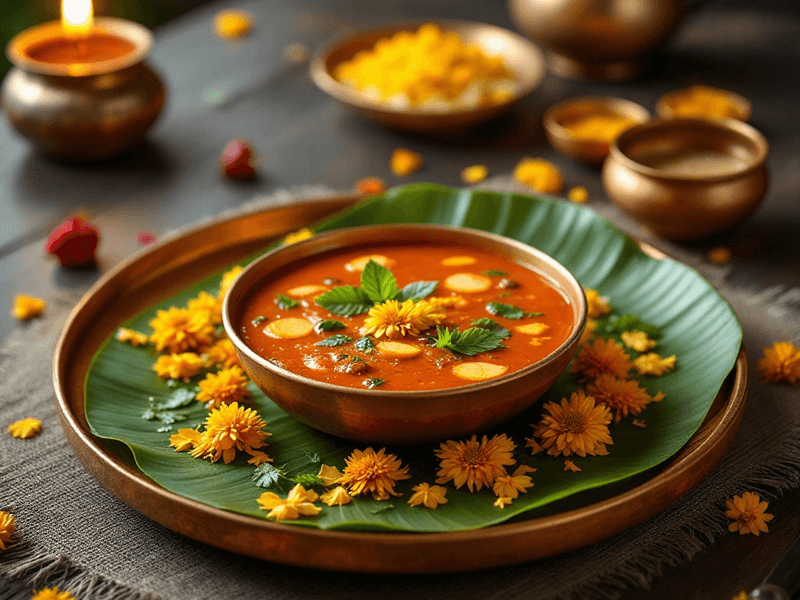
📸 Image coming soon for Poori with Mixed Vegetable Curry
Poori with Mixed Vegetable Curry
Lunch • India
How to Make Poori with Mixed Vegetable Curry (Traditional & Healthy Version)
Poori with Mixed Vegetable Curry is a classic South Indian lunch that brings together the soft, puffed wheat bread known as poori and a flavorful medley of vegetables simmered in a mildly spiced curry. This comforting Indian dish is a staple in many households, often prepared during festivals like Pongal or special occasions such as family gatherings and weddings. The poori, made from whole wheat atta, is deep-fried until golden and puffy, while the accompanying mixed vegetable curry (sabzi) is rich with seasonal produce and aromatic spices. The dish’s roots are deeply embedded in South Indian culinary traditions, especially in states like Tamil Nadu, Andhra Pradesh, and Karnataka, where poori-sabzi is a popular breakfast and lunch choice. The taste is a delightful combination of soft and crispy poori paired with a mildly spicy, tangy, and aromatic curry, making it a favorite among people of all ages. Its versatility allows for numerous variations using locally available vegetables and spices, ensuring it can be adapted for health-conscious eaters without losing its authentic flavor. Poori with Mixed Vegetable Curry is not only satisfying and delicious but also evokes the warmth of Indian hospitality, making it a cherished dish during festive occasions and everyday meals alike.
Ingredients(for 2 medium pooris with 1 cup mixed vegetable curry)
- 1 cup Whole wheat atta (flour) (for poori)
- as needed Water (to knead the dough)
- 1/2 tsp Salt (for dough and curry)
- 2 tbsp + for deep frying Oil (use cold-pressed or sunflower oil)
- 1 medium Potato (cubed, aloo)
- 1 small Carrot (diced, gajar)
- 8-10 French beans (chopped, sem)
- 1/4 cup Green peas (fresh or frozen, matar)
- 1 small Onion (finely chopped, pyaaz)
- 1 medium Tomato (chopped, tamatar)
- 1 tsp Ginger-garlic paste (adrak-lehsun)
- 1/2 tsp Mustard seeds (rai)
- 1/4 tsp Turmeric powder (haldi)
- 1/2 tsp Red chilli powder (mirch)
- 1 tsp Coriander powder (dhaniya powder)
- 8-10 Curry leaves (kadi patta) - optional
- 2 tbsp Fresh coriander leaves (chopped, for garnish) - optional
Instructions
- 1
In a mixing bowl, combine whole wheat atta and a pinch of salt. Gradually add water and knead into a smooth, firm dough. Cover and set aside for 10 minutes.
10 minutes
Use just enough water for a stiff dough; soft dough will make pooris absorb more oil.
- 2
While the dough rests, heat 2 tbsp oil in a kadhai. Add mustard seeds; when they splutter, add curry leaves (if using), chopped onion, and sauté until translucent.
3 minutes
Sauté onions until just golden for a sweeter, richer flavor.
- 3
Add ginger-garlic paste and sauté until raw smell disappears. Add chopped tomato, turmeric, red chilli, and coriander powder. Cook until tomatoes turn soft.
3 minutes
Add a pinch of salt to help tomatoes cook faster.
- 4
Add diced potato, carrot, beans, and green peas. Mix well. Pour in 1 cup water, cover, and cook until vegetables are tender.
8 minutes
Cut vegetables uniformly for even cooking.
Why This Dish is Healthy
Choosing whole wheat atta instead of refined flour increases the fiber and nutrient content, supporting weight management and heart health. The mixed vegetable curry uses a rainbow of vegetables, ensuring a variety of phytonutrients and vitamins. Cooking with minimal oil and fresh ingredients makes this dish a nutritious, wholesome, and satisfying option for lunch, especially for those tracking calories or following a health-conscious Indian diet.
This Poori with Mixed Vegetable Curry recipe is rich in dietary fiber from whole wheat atta and a variety of seasonal vegetables, supporting digestive health. The vegetables provide essential vitamins like A, C, and K, along with minerals such as potassium and folate. Using minimal oil and opting for cold-pressed oils helps reduce unhealthy fats. The curry contains plant-based protein from peas and beans, making it a balanced vegetarian meal. Garnishing with fresh coriander adds antioxidants and micro-nutrients.
Pro Tips
- 💡Tip 1: Rest the dough for at least 10 minutes to make rolling easier and improve poori puffing.
- 💡Tip 2: Always fry pooris in hot oil; if the oil is not hot enough, pooris will absorb excess oil.
- 💡Tip 3: Add a squeeze of lemon to the curry before serving for extra freshness and tang.
Storage & Serving
Pooris are best enjoyed fresh but can be stored in an airtight container for up to 8 hours. The vegetable curry can be refrigerated for up to 2 days; reheat gently before serving. Avoid freezing as textures may change.
Best served: Breakfast or Lunch
Nutrition Facts
| Nutrient | Per 100g |
|---|---|
| Energy | 310.0 kcal |
| Protein | 4.0 g |
| Carbohydrates | 27.0 g |
| Total Fat | 6.0 g |
| Fiber | 3.0 g |