Plain Parantha
Lunch • India
How to Make Plain Parantha (Traditional & Healthy Version)
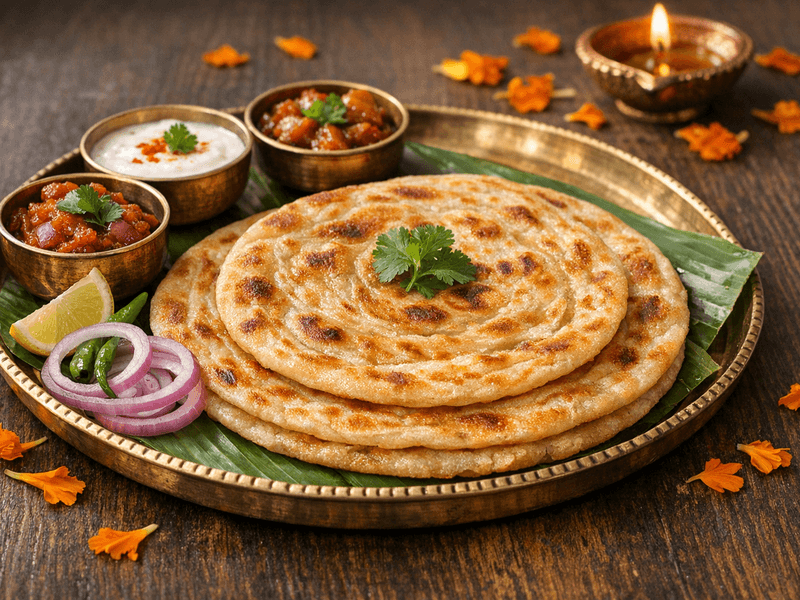
Plain Parantha is a beloved flatbread from North India, cherished for its crisp exterior and soft, flaky layers. Made with whole wheat flour (atta), water, and a touch of ghee or oil, this classic Indian bread is a staple in Punjabi households and is enjoyed across the nation. Its rustic aroma and comforting taste make it an essential part of daily meals, especially during breakfast or lunch. In Indian culture, plain paranthas are more than just food—they represent family gatherings and the warmth of home-cooked meals. They are often served with curd (dahi), pickles (achar), or simple sabzi, making them a wholesome and satisfying choice. During festivals like Lohri or Baisakhi, paranthas are prepared with extra love and shared among friends and family. Their simplicity allows for countless variations, but the plain version holds a timeless appeal. The beauty of plain parantha lies in its versatility and ability to fit into a health-conscious diet. With minimal ingredients and the option to use less oil, it provides a nourishing, fiber-rich base for any meal. Its easy preparation and comforting taste have made it a favorite dish across generations, perfectly blending tradition and health.
Ingredients(for 2 medium paranthas)
- 2 cups Whole wheat flour (atta)
- 3/4 cup (as needed) Water
- 1/2 tsp Salt (namak)
- 2 tsp Ghee or oil (ghee for authentic taste)
- 1/4 cup Dry whole wheat flour (for dusting)
- 1/4 tsp Ajwain (carom seeds) (optional for flavor) - optional
- 1 tbsp Coriander leaves (finely chopped, optional) - optional
Instructions
- 1
In a large mixing bowl, combine atta and salt. Add ajwain if using. Gradually add water and knead to form a smooth, soft dough.
5 minutes
Knead well for soft, pliable dough; rest for 10 minutes.
- 2
Cover the dough with a damp cloth and let it rest for 10 minutes to ensure softness.
10 minutes
Resting makes rolling easier and paranthas softer.
- 3
Divide the dough into equal portions, rolling each into a smooth ball. Flatten slightly.
2 minutes
Apply a few drops of oil to your palms for smoother dough balls.
- 4
Dust a dough ball with dry flour. Roll out into a 5-6 inch round disc using a belan (rolling pin).
2 minutes
Roll evenly for uniform cooking.
Why This Dish is Healthy
This plain parantha recipe uses whole wheat flour, which is packed with fiber, vitamins, and minerals. By limiting the amount of ghee or oil, it becomes a lower-calorie option compared to deep-fried breads. Whole wheat helps manage blood sugar levels and keeps you fuller for longer, making it ideal for weight management and diabetic diets. It is a nutritious, energy-boosting addition to any vegetarian meal plan.
Plain parantha made with whole wheat flour (atta) is rich in dietary fiber, aiding digestion and supporting gut health. It provides complex carbohydrates for sustained energy, and contains essential minerals like iron, magnesium, and phosphorus. The use of minimal ghee or oil keeps the fat content moderate, while whole wheat offers a moderate amount of protein. Homemade paranthas have no preservatives or artificial additives, making them a wholesome choice for everyday meals.
Pro Tips
- 💡Tip 1: Resting the dough is key for soft, flaky layers.
- 💡Tip 2: Use a hot tawa for crispier paranthas.
- 💡Tip 3: Roll evenly and avoid overusing dry flour to prevent hard texture.
Storage & Serving
Store cooled paranthas in an airtight container for up to 24 hours at room temperature. For longer storage, wrap in foil and refrigerate for 2-3 days. Reheat on a tawa before serving for best taste.
Best served: Breakfast or Lunch
Nutrition Facts
| Nutrient | Per 100g |
|---|---|
| Energy | 180.0 kcal |
| Protein | 6.0 g |
| Carbohydrates | 38.0 g |
| Total Fat | 9.0 g |
| Fiber | 3.0 g |