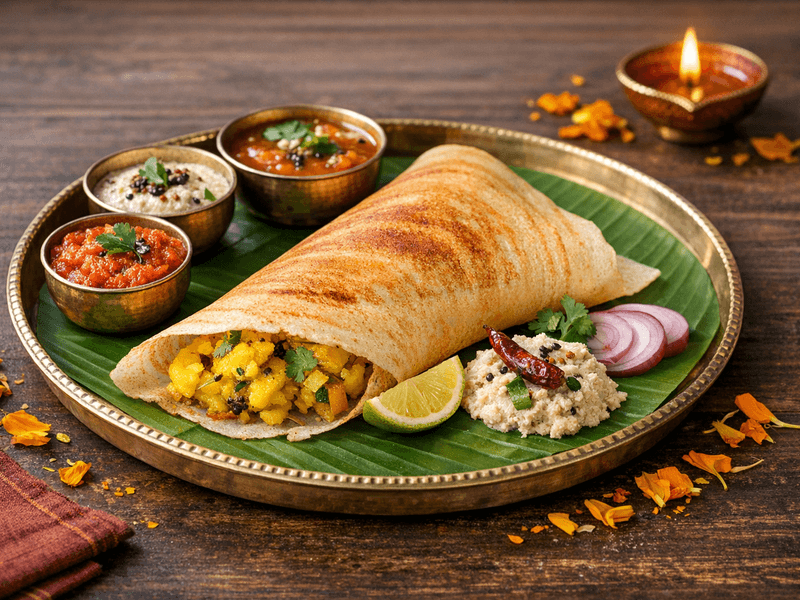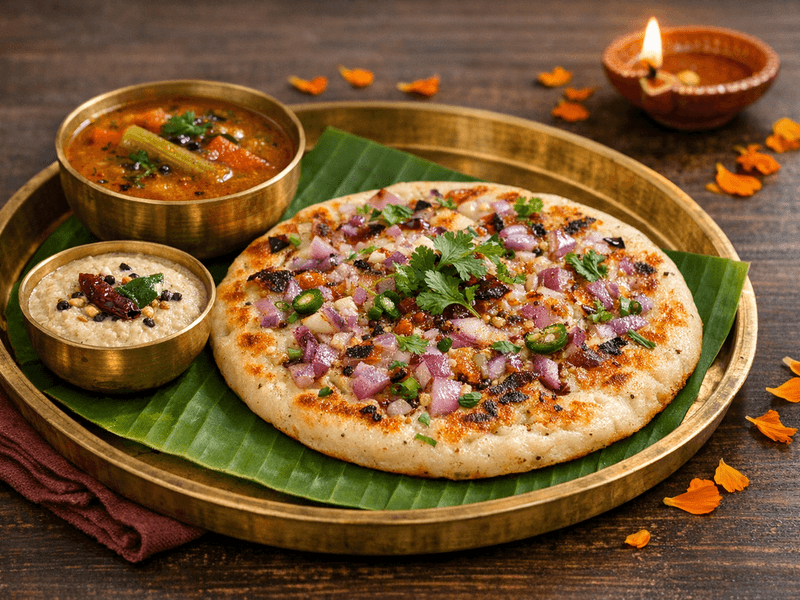
Onion Uttapam with Sambhar and Chutney
Lunch • India
How to Make Onion Uttapam with Sambhar and Chutney (Traditional & Healthy Version)
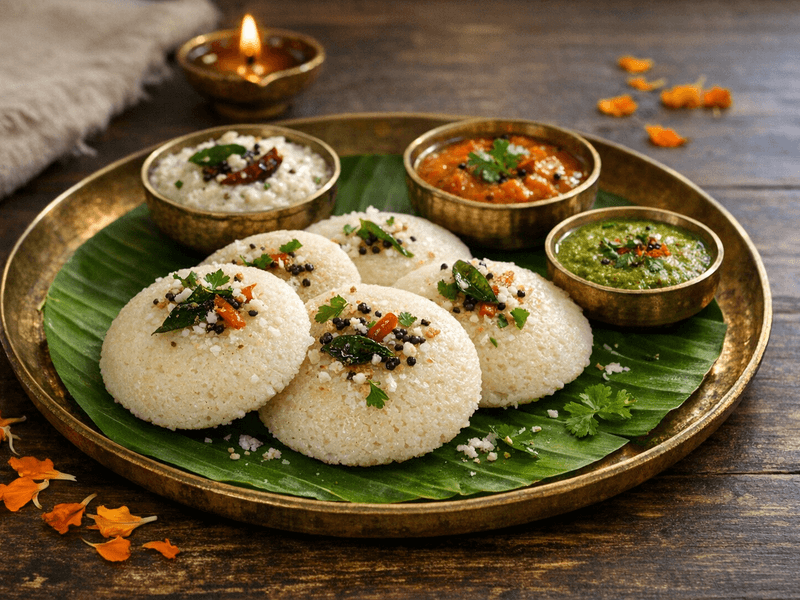
Onion Uttapam with Sambhar and Chutney is a celebrated South Indian breakfast and lunch dish, loved for its crispy edges, soft center, and aromatic toppings. Uttapam, often referred to as a thick dosa, is made from a fermented batter of rice and urad dal, topped generously with onions, tomatoes, and spices. Served alongside tangy sambhar and refreshing coconut chutney, this dish brings together a medley of flavors and textures that represent the heart of South Indian cooking. This recipe is deeply rooted in Tamil Nadu and Karnataka households, where families gather around the 'tawa' for a wholesome meal. Onion Uttapam is not just a daily staple but also finds its place during festivals like Pongal, when families seek comforting and nourishing foods. Its blend of wholesome ingredients, probiotics from fermentation, and the use of minimal oil make it a great choice for health-conscious individuals. The dish is both filling and light, making it suitable for all ages, and the accompaniments of sambhar and chutney boost its nutrient profile while enhancing the taste.
Ingredients(for 2 medium-sized uttapams with sambhar and chutney)
- 1 cup Rice (chawal) (Short grain preferred)
- 1/4 cup Split urad dal (Washed)
- 1 large Onion (Finely chopped)
- 1 small Tomato (Finely chopped) - optional
- 1 Green chilli (Finely chopped) - optional
- 2 tbsp Coriander leaves (dhaniya) (Finely chopped)
- to taste Salt
- 2 tsp Oil (Preferably cold-pressed or gingelly)
- 1 cup Sambhar (Homemade or store-bought)
- 1/2 cup Coconut chutney (Freshly made)
Instructions
- 1
Wash rice and urad dal separately. Soak them for 4-6 hours, then grind to a smooth batter using minimal water. Combine, add salt, and let ferment overnight.
10 minutes (excluding soaking/fermentation)
Fermentation time may vary with weather; batter should double in volume.
- 2
Finely chop onions, tomatoes, green chillies, and coriander leaves. Mix together in a bowl and set aside.
5 minutes
Add a pinch of salt to the onion mix for extra flavor.
- 3
Heat a tawa (griddle) and lightly grease with oil. Pour a ladleful of batter, spreading gently to form a thick circle.
2 minutes
Do not spread too thin; uttapams should be fluffy.
- 4
Sprinkle the onion-tomato mixture evenly on top. Gently press the toppings so they stick to the batter.
2 minutes
Press lightly to avoid batter tearing.
Why This Dish is Healthy
This dish is ideal for calorie-conscious eaters as it provides satiety without excess calories. The fermentation process boosts digestibility and nutrient absorption. Using minimal oil and plenty of vegetables makes it suitable for weight management. Sambhar and chutney add antioxidants and dietary fiber, promoting gut health and aiding in digestion. Overall, this makes Onion Uttapam with Sambhar and Chutney a smart choice for a healthy, balanced meal.
Onion Uttapam with Sambhar and Chutney offers a balanced meal with complex carbohydrates from rice, protein from urad dal, and dietary fiber from vegetables. Fermentation enhances B vitamins and gut-friendly probiotics. Sambhar supplies additional plant protein and micronutrients from lentils and vegetables, while coconut chutney provides healthy fats and minerals like magnesium. The dish is low in saturated fat and can be made with minimal oil, making it heart-healthy. Together, these elements make this traditional dish a powerhouse of nutrition.
Pro Tips
- 💡Ferment the batter overnight for the best flavor and texture.
- 💡Use a cast iron tawa for authentic crispiness.
- 💡Add a dash of asafoetida (hing) to the batter for improved aroma and digestion.
Storage & Serving
Leftover batter can be refrigerated for up to 2 days. Cooked uttapams are best eaten fresh but can be stored in an airtight container in the refrigerator for up to 24 hours. Reheat on tawa before serving. Sambhar and chutney should be stored separately in airtight containers in the fridge and consumed within 2 days.
Best served: Breakfast or Lunch
Nutrition Facts
| Nutrient | Per 100g |
|---|---|
| Energy | 390.0 kcal |