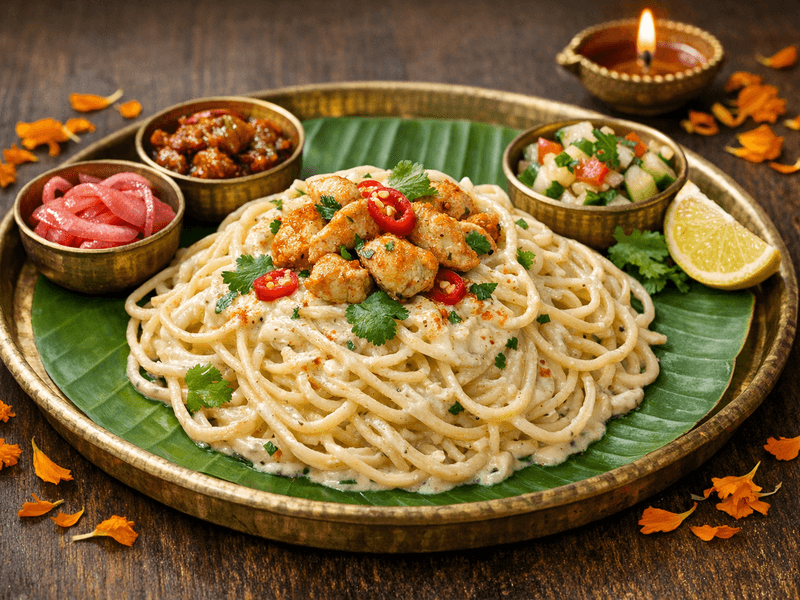
📸 Image coming soon for Natto with Rice
Natto with Rice
Lunch • India
How to Make Natto with Rice (Traditional & Healthy Version)
Natto with Rice is an innovative fusion dish that brings together the wholesome goodness of steamed rice (chawal) and protein-rich fermented soybeans (natto). While natto is traditionally a Japanese ingredient, its use with rice resonates well with Indian culinary practices, where rice is a staple across regions like West Bengal, Kerala, and Tamil Nadu. The sticky, umami-laden natto pairs beautifully with the subtle flavors of steamed chawal, creating a unique vegetarian lunch option. This dish is especially suited for those looking for high-protein, gut-friendly meals that are both light and satisfying. With India's growing focus on health and nutrition, Natto with Rice can be adapted using locally available ingredients and flavors. The dish can be enhanced with a tempering of mustard seeds (rai), curry leaves (kadi patta), and a dash of green chili for a spicy Indian twist. Light, nutritious, and easy to digest, this meal is perfect for those who appreciate the benefits of fermented foods and are eager to try something new on their lunch table. The combination of natto's probiotic benefits with the comfort of rice makes it a great choice for health-conscious individuals and families.
Ingredients(for 1 medium bowl per serving)
- 2 cups Steamed rice (chawal) (Use hand-pounded or brown rice for extra fiber)
- 100 grams Natto (fermented soybeans) (Can be homemade with Indian soybeans (bhat ki dal))
- 1/2 teaspoon Mustard seeds (rai)
- 6-8 leaves Curry leaves (kadi patta) (Fresh)
- 1 Green chili (Finely chopped; adjust to taste) - optional
- 1 teaspoon Sesame oil (til ka tel) (Cold-pressed preferred)
- to taste Salt
- 1 tablespoon Finely chopped coriander (hara dhania) - optional
- 1 teaspoon Lemon juice (Freshly squeezed) - optional
- 1 teaspoon Roasted sesame seeds (til) (For garnish) - optional
Instructions
- 1
Wash the rice thoroughly and soak for 15 minutes. Cook the rice in a pressure cooker or on a gas stove until soft but not mushy.
20 minutes
Use hand-pounded or brown rice for added nutrition and fiber.
- 2
While the rice cooks, prepare the natto. If using homemade natto from bhat ki dal, ensure it is well-fermented and sticky.
5 minutes
For best flavor, use natto that has fermented for at least 24 hours.
- 3
Heat sesame oil (til ka tel) in a small tadka pan. Add mustard seeds; when they splutter, add curry leaves and green chili. Sauté briefly.
3 minutes
Do not overheat the oil to preserve its nutrients.
- 4
Fluff the cooked rice with a fork and transfer to a large mixing bowl.
2 minutes
Let the rice cool slightly before adding natto to avoid breaking the grains.
Why This Dish is Healthy
This dish is a healthy choice because it combines the nutritional benefits of fermented foods, which improve digestion, with whole grains and minimal oil. The use of local spices enhances flavor without excess calories or sodium. Natto with Rice is suitable for lunch, especially for those managing weight, blood sugar, or aiming for a balanced vegetarian diet. Its high protein and fiber content promote satiety, making it ideal for calorie-conscious individuals.
Natto with Rice is rich in plant-based protein, dietary fiber, and essential amino acids. Natto provides probiotics that support gut health, while hand-pounded or brown rice offers complex carbohydrates for sustained energy. The addition of sesame oil, curry leaves, and coriander supplies healthy fats, vitamins A, C, and K, as well as antioxidants. This dish is low in saturated fat, free from added sugars, and suitable for vegetarians.
Pro Tips
- 💡Tip 1: Use freshly cooked rice for the best texture and flavor.
- 💡Tip 2: For extra probiotics, ferment soybeans at home using traditional methods.
- 💡Tip 3: Add finely chopped vegetables like carrots or spinach for added nutrition and color.
Storage & Serving
Store leftover Natto with Rice in an airtight container in the refrigerator for up to 1 day. Reheat gently before serving to preserve texture. Avoid freezing as it affects natto’s texture.
Best served: Breakfast or Lunch
Nutrition Facts
| Nutrient | Per 100g |
|---|---|
| Energy | 250.0 kcal |