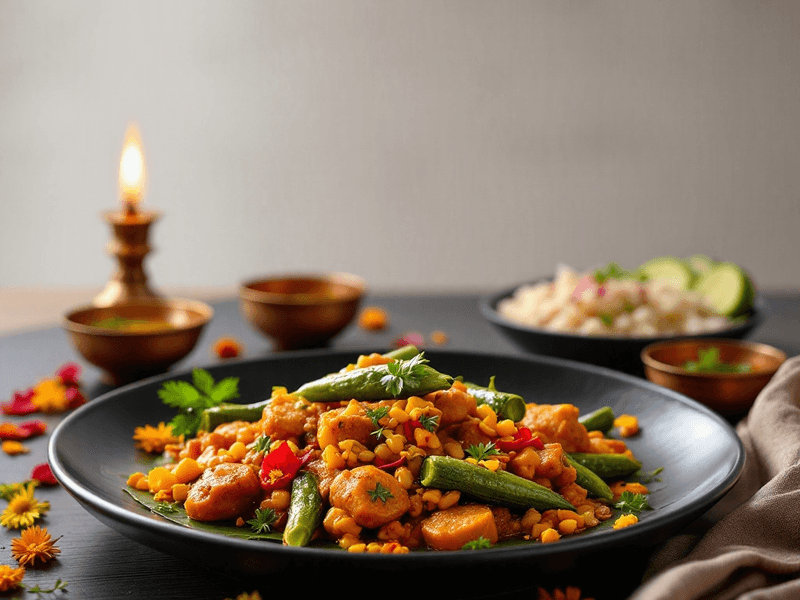
More Kulambu with Okra
Lunch • India
How to Make More Kulambu with Okra (Traditional & Healthy Version)
More Kulambu with Okra, also known as Vendakkai More Kuzhambu, is a classic South Indian yogurt-based curry that hails from Tamil Nadu. Celebrated for its tangy, mildly spicy, and aromatic flavors, this dish brings together thick curd (dahi), coconut, and a harmonious blend of regional spices. Okra (bhindi or vendakkai) adds a unique, tender texture and natural sweetness, perfectly complementing the creamy curry base. Traditionally enjoyed during festivals like Tamil New Year (Puthandu) and on auspicious days, More Kulambu is a staple in many South Indian households, especially during the hot summer months when yogurt-based dishes help cool the body. With its roots deeply embedded in the temples and kitchens of Tamil Nadu and Kerala, this dish is often served as part of a festive 'sappadu' (meal) or a simple lunch. Its comforting taste, probiotic-rich ingredients, and use of local produce make it both soul-satisfying and health-conscious. This version is made with minimal oil and fresh ground masalas, ensuring a lighter yet authentic experience. Perfect for lunch, it pairs beautifully with steaming rice, making it a beloved choice during family gatherings and special occasions.
Ingredients(for 1 medium bowl with rice)
- 1 cup (chopped) Okra (Vendakkai/Bhindi) (fresh, tender)
- 1.5 cups Curd (Dahi/Thick Yogurt) (slightly sour, whisked)
- 1/4 cup (grated) Fresh Coconut (Nariyal)
- 1/4 tsp Turmeric Powder (Haldi)
- 2 Green Chilies (slit)
- 1 tsp Cumin Seeds (Jeera)
- 1/2 inch piece Ginger (optional, chopped) - optional
- 1 tbsp Toor Dal (Arhar Dal) (soaked for 10 mins)
- 1 sprig Curry Leaves (Kadi Patta) (fresh)
- 1/2 tsp Mustard Seeds (Rai)
- 2 tsp Coconut Oil (for tempering)
- to taste Salt
Instructions
- 1
Wash and pat dry the okra. Slice into 1-inch pieces. Heat 1 tsp coconut oil in a kadhai, add chopped okra, and sauté on medium heat till slightly crisp and no longer slimy (about 6-7 minutes). Remove and set aside.
7 minutes
Ensure okra is completely dry to avoid stickiness.
- 2
Soak toor dal in warm water for 10 minutes. Drain. In a mixie jar, grind soaked toor dal, grated coconut, cumin seeds, green chilies, and ginger (if using) with a little water to form a smooth paste.
5 minutes
Use fresh coconut for best flavor.
- 3
In a saucepan, whisk curd until smooth. Add turmeric powder and salt. Stir in the ground coconut-dal paste. Mix well to combine.
3 minutes
Do not boil curd on high heat to prevent curdling.
- 4
Gently heat the yogurt mixture on low flame, stirring constantly for 3-4 minutes. Once hot (do not boil), add sautéed okra and cook for another 2-3 minutes, allowing flavors to meld.
6 minutes
Stir gently to keep yogurt from splitting.
Why This Dish is Healthy
This dish is a healthy choice because it uses minimal oil and relies on fresh, natural ingredients. The probiotic-rich curd aids in gut health and digestion. Okra is high in fiber and low in calories, making the dish filling and suitable for weight management. The addition of dal increases protein content, while coconut provides good fats. Its balanced flavors mean less need for excess salt or oil, making it suitable for most diet plans.
More Kulambu with Okra is a nutrient-dense, vegetarian dish packed with probiotics from curd, fiber and vitamins from okra, and healthy fats from coconut oil. Okra is a good source of folate, vitamin C, and antioxidants, while the use of coconut and dal adds healthy medium-chain triglycerides and plant protein. The moderate use of spices supports digestion, and the absence of heavy cream or butter lowers saturated fat. This dish is naturally gluten-free and can be made vegan by substituting plant-based yogurt.
Pro Tips
- 💡Tip 1: Use slightly sour curd for authentic tanginess.
- 💡Tip 2: Always dry okra thoroughly before chopping to reduce stickiness.
- 💡Tip 3: Add tempering (tadka) just before serving for maximum flavor.
Storage & Serving
Store in an airtight container in the refrigerator for up to 2 days. Reheat gently on low flame; avoid boiling to prevent curdling.
Best served: Breakfast or Lunch
Nutrition Facts
| Nutrient | Per 100g |
|---|---|
| Energy | 210.0 kcal |