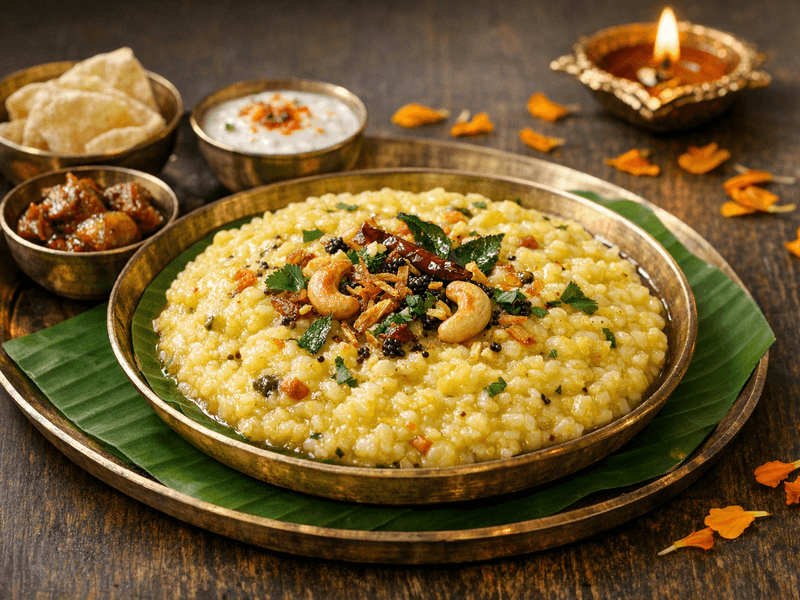
Moong Dal Rice Porridge
Lunch • India
How to Make Moong Dal Rice Porridge (Traditional & Healthy Version)
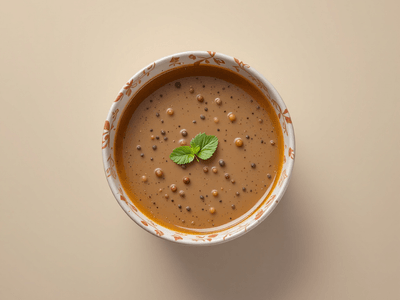
Moong Dal Rice Porridge, known as 'Pasi Paruppu Arisi Kanji' in Tamil, is a nourishing and comforting dish originating from South India. This vegetarian porridge is a staple in many households, especially during monsoon and winter months when families seek warmth and nutrition in their meals. The combination of moong dal (yellow split gram) and rice creates a creamy, protein-rich base, gently seasoned with subtle spices and fresh vegetables, making it ideal for lunch. Traditionally, this porridge is served during festivals like Pongal, where simple dal-rice preparations symbolize prosperity and health. Its mild flavor appeals to all age groups, from toddlers to elders, and is often recommended for those recovering from illness due to its easy digestibility. Moong Dal Rice Porridge is a perfect blend of taste and health, offering a light yet filling meal packed with essential nutrients. The dish is often prepared in South Indian homes as a daily lunch option or as a nourishing meal during fasting days. Its versatility shines through regional variations—sometimes infused with coconut milk in Kerala or garnished with ghee and fried curry leaves in Tamil Nadu. The soft texture and gentle seasoning make it comforting and suitable for the Indian palate, especially when paired with pickle or papad. This porridge is not just a meal; it's a tradition passed down generations, embodying the values of wellness and simplicity in Indian cuisine.
Ingredients(for 1 medium bowl (approx. 250ml) per serving)
- 1/2 cup Moong dal (yellow split gram) (Pasi Paruppu)
- 1/2 cup Rice (preferred sona masuri or local variety)
- 4 cups Water (for cooking)
- 1 small, grated Carrot (Gajar)
- 1/4 cup Peas (Matar) - optional
- 1/4 tsp Turmeric powder (Haldi)
- 1/2 tsp Cumin seeds (Jeera)
- 1 tsp Ghee (for tempering, replace with oil for vegan)
- to taste Salt (Namak)
- 6-8 Curry leaves (optional, Kadi Patta) - optional
- 1/4 tsp, crushed Black pepper (Kali Mirch) - optional
Instructions
- 1
Wash the moong dal and rice thoroughly in fresh water. Soak both for 10 minutes to soften and ensure easy cooking.
10 minutes
Soaking helps reduce cooking time and improves digestibility.
- 2
Drain and transfer moong dal and rice to a pressure cooker or heavy-bottomed saucepan. Add 4 cups water, turmeric powder, and salt.
2 minutes
Use filtered water for the best taste and texture.
- 3
Add grated carrot and peas to the cooker. Mix gently. Pressure cook for 3 whistles or simmer covered for 20-25 minutes till soft and creamy.
20 minutes
Do not overcook to retain vegetable nutrients.
- 4
Prepare tempering: Heat ghee in a small 'tadka pan' (tempering pan). Add cumin seeds and curry leaves. Let them splutter. Optionally add crushed black pepper.
2 minutes
Tempering enhances aroma and flavor. Use coconut oil for a Kerala variation.
Why This Dish is Healthy
This porridge is a balanced meal with protein, carbs, and minimal healthy fat. Moong dal is known for its low glycemic index and high protein content, making it ideal for weight management and diabetes. Vegetables increase micronutrient intake, and the simple tempering avoids excess oil or spice. It's a wholesome, nourishing Indian lunch that fits perfectly into calorie-conscious and health-focused diets.
Moong Dal Rice Porridge is packed with plant-based protein from moong dal and complex carbohydrates from rice. It is low in fat, especially if made with minimal ghee. Carrots and peas add vitamins like A and C, along with dietary fiber. Turmeric provides anti-inflammatory benefits, and cumin aids digestion. This dish is gluten-free and easily digestible, making it suitable for all age groups, especially those with sensitive stomachs or recovering from illness.
Pro Tips
- 💡Tip 1: Use sona masuri rice for the most authentic texture.
- 💡Tip 2: Add a handful of spinach or bottle gourd for extra nutrition.
- 💡Tip 3: For vegan adaptation, replace ghee with cold-pressed coconut oil.
Storage & Serving
Store leftovers in an airtight container in the refrigerator for up to 2 days. Reheat with a splash of water to restore creamy consistency. Avoid freezing, as texture may change.
Best served: Breakfast or Lunch
Nutrition Facts
| Nutrient | Per 100g |
|---|---|
| Energy | 130.0 kcal |