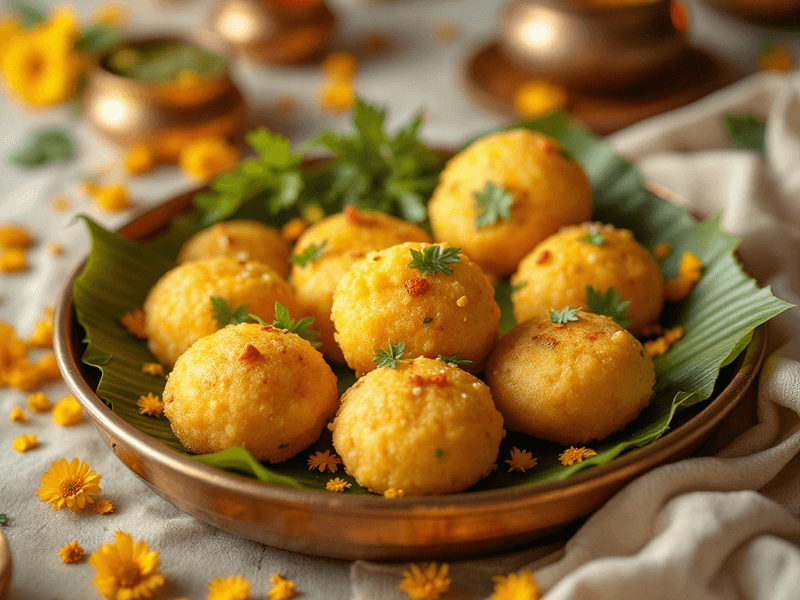
Mixed Vegetable Pakoda
Lunch • India
How to Make Mixed Vegetable Pakoda (Traditional & Healthy Version)
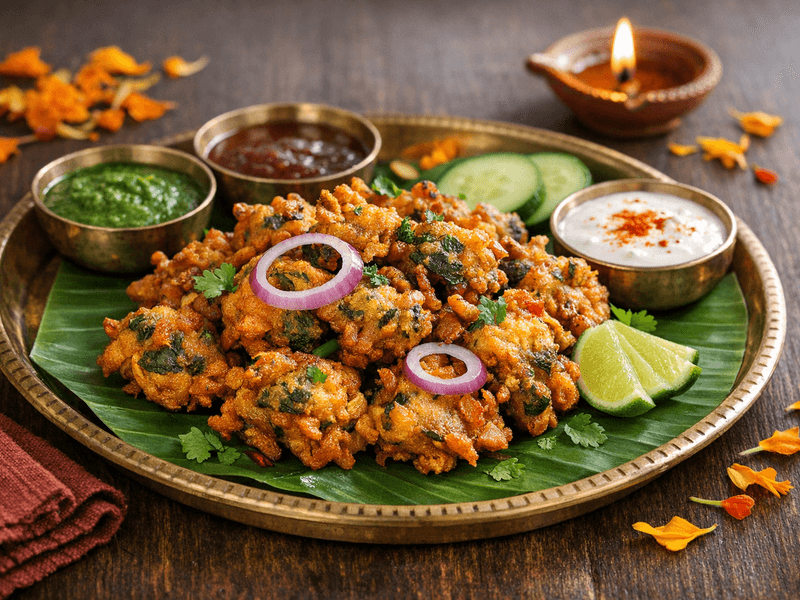
Mixed Vegetable Pakoda is a cherished South Indian snack, often relished during monsoon rains or festive occasions like Diwali and Ugadi. This spicy, crispy fritter combines various fresh vegetables coated in a lightly spiced besan (gram flour) batter, then shallow-fried or air-fried for a healthier touch. The dish is loved for its irresistible crunch and the harmonious blend of flavors that only Indian spices can offer. Served with green chutney or tangy tamarind chutney, Mixed Vegetable Pakoda is a lunch-time favorite and a staple in many South Indian households. Pakodas have a long history in Indian cuisine and are prepared across the country, each region adding its unique twist. In the South, curry leaves and green chilies are added for an aromatic and sharp flavor profile, setting them apart from North Indian versions. The use of local vegetables like carrot, beans, and raw banana brings both nutrition and authentic taste. This health-conscious version of Mixed Vegetable Pakoda uses minimal oil, so you can indulge guilt-free. Perfect as a side for sambar rice or as a standalone snack, these pakodas are sure to bring warmth and joy to your table.
Ingredients(for 5-6 medium pakodas per serving)
- 1 cup Besan (gram flour) (chickpea flour)
- 1 medium, grated Carrot (gajar)
- 1/2 cup, finely shredded Cabbage (patta gobhi)
- 1 small, thinly sliced Onion (pyaaz)
- 1/4 cup, finely chopped French beans (sem)
- 1, finely chopped Green chilli (hari mirch)
- 8-10 leaves, chopped Curry leaves (kari patta)
- 1/4 tsp Turmeric powder (haldi)
- 1/2 tsp Red chilli powder (lal mirch)
- 1/2 tsp Ajwain (carom seeds) (optional for flavor) - optional
- to taste Salt (namak)
- 2 tbsp Oil (for shallow frying)
- as needed Water (to make batter)
Instructions
- 1
Wash and finely chop all vegetables. Grate carrot and slice onion thinly for even frying.
5 minutes
Pat dry vegetables to avoid soggy batter.
- 2
In a large mixing bowl, add besan, all vegetables, green chilli, curry leaves, turmeric, red chilli powder, ajwain (if using), and salt. Mix well.
3 minutes
Mix with hands to release vegetable moisture for binding.
- 3
Gradually add water, a tablespoon at a time, to make a thick batter. The pakoda mixture should just hold together.
2 minutes
Do not add too much water; keep batter thick for crispy texture.
- 4
Heat oil in a heavy-bottomed kadhai or non-stick tawa on medium flame. Use only enough oil to cover the base for shallow frying.
3 minutes
Check oil temperature by dropping a little batter; it should sizzle instantly.
Why This Dish is Healthy
This healthier version of Mixed Vegetable Pakoda is perfect for weight-watchers and fitness enthusiasts. By shallow frying instead of deep frying, oil intake is cut down significantly without compromising taste or texture. The combination of multiple vegetables increases the fiber and vitamin content, while besan is low in glycemic index, making it suitable for controlled blood sugar levels. Including this pakoda in your meal plan is a smart way to satisfy snack cravings without excess calories.
Mixed Vegetable Pakoda is rich in dietary fiber from a variety of vegetables like carrot, beans, and cabbage, promoting digestive health. The besan (gram flour) provides plant-based protein, iron, and essential B vitamins. Using minimal oil and shallow frying reduces overall fat content compared to traditional deep-fried versions. The presence of natural spices like turmeric adds anti-inflammatory benefits, while curry leaves offer antioxidants. This dish is free from dairy, can be gluten-free if prepared with pure besan, and is an excellent source of micronutrients, supporting a well-balanced vegetarian diet.
Pro Tips
- 💡Tip 1: Squeeze out excess moisture from vegetables to keep pakodas crispy.
- 💡Tip 2: Add a pinch of hing (asafoetida) for enhanced flavor and digestion.
- 💡Tip 3: For extra crunch, mix in a tablespoon of rice flour with besan.
Storage & Serving
Store leftover pakodas in an airtight container for up to 1 day. Reheat in an oven or tawa to regain crispness. Avoid microwaving to prevent sogginess.
Best served: Lunch
Nutrition Facts
| Nutrient | Per 100g |
|---|---|
| Energy | 210.0 kcal |