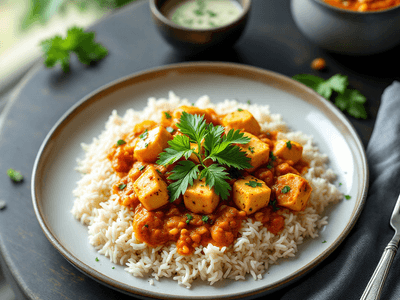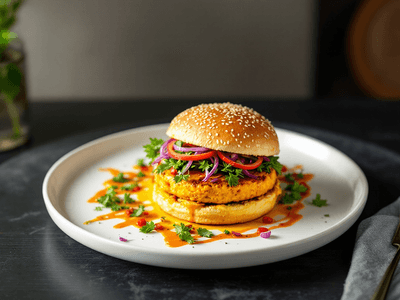
Mixed Vegetable Bread Pakoda
Lunch • India
How to Make Mixed Vegetable Bread Pakoda (Traditional & Healthy Version)
Mixed Vegetable Bread Pakoda is a beloved North Indian snack and lunch item that combines the wholesome goodness of seasonal vegetables with the comforting crunch of bread, all encased in a spiced besan (gram flour) batter. Traditionally enjoyed during the monsoon or winter months, this dish is a street food favourite found across Delhi, Punjab, and Uttar Pradesh. Mixed Vegetable Bread Pakoda carries nostalgic value for many, evoking memories of rainy afternoons and festive gatherings when families would huddle together over hot chai and freshly fried pakodas. The beauty of this recipe lies in its versatility and vibrant taste. The filling typically includes potatoes, carrots, green peas, and capsicum, seasoned with Indian masalas like garam masala, jeera (cumin), and amchur (dry mango powder) for a tangy kick. The outer bread and besan shell turns golden and crisp when cooked on a tawa or lightly air-fried, making it a healthier alternative to deep-frying. Bread Pakoda is a popular treat during festivals like Holi and Diwali, when quick, hearty snacks are in high demand. This version is designed to be healthier, using minimal oil and packing in fiber, vitamins, and plant-based protein, making it both satisfying and nutritious for lunch or a mid-day snack.
Ingredients(for 2 bread pakodas per serving)
- 4 Whole wheat bread slices (atta bread for higher fiber)
- 1 cup Besan (gram flour)
- 1/2 cup Boiled potatoes (aloo)
- 1/4 cup Chopped carrots (gajar)
- 1/4 cup Green peas (matar)
- 1/4 cup Chopped capsicum (shimla mirch)
- 2 tbsp Finely chopped coriander leaves (dhaniya patta)
- 1 Green chili (hari mirch, finely chopped) - optional
- 1/2 tsp Garam masala
- 1/2 tsp Cumin seeds (jeera)
- 1/2 tsp Amchur powder (dry mango powder) - optional
- 1/4 tsp Red chili powder (lal mirch) - optional
- 1/4 tsp Turmeric powder (haldi)
- to taste Salt (namak)
- 2 tbsp Oil (preferably mustard oil or any neutral oil)
- as required Water (to make batter)
Instructions
- 1
Prepare the vegetable filling: In a mixing bowl, combine boiled potatoes, chopped carrots, green peas, capsicum, coriander leaves, green chili, garam masala, cumin seeds, amchur powder, red chili powder, turmeric, and salt. Mix well to form a slightly coarse mixture.
5 minutes
Mash potatoes just enough to bind the veggies but keep some texture for a hearty filling.
- 2
Take a bread slice and trim the edges for a neat pakoda. Place 2-3 tablespoons of the vegetable mixture on one slice, spread evenly, and cover with another slice. Gently press to seal.
3 minutes
Use slightly stale bread for better absorption and a crispier pakoda.
- 3
Cut each prepared bread sandwich diagonally to form triangles. Repeat for all slices.
2 minutes
Cutting into triangles gives a traditional look and ensures even cooking.
- 4
In another bowl, prepare the besan batter by mixing besan, turmeric, red chili powder, salt, and water to form a smooth, thick batter (should coat the back of a spoon).
3 minutes
Add water gradually to avoid lumps and achieve the right consistency.
Why This Dish is Healthy
This healthy Mixed Vegetable Bread Pakoda recipe is a great alternative to traditional deep-fried versions. Using atta bread and a variety of vegetables increases fiber and micronutrient content, while tawa-cooking reduces calories from fat. The inclusion of besan provides protein and keeps you fuller for longer, making it an ideal lunch for those tracking calories or looking for balanced, wholesome Indian vegetarian meals.
Mixed Vegetable Bread Pakoda, made with whole wheat bread and a variety of vegetables, is a good source of dietary fiber, complex carbohydrates, and plant-based protein from besan. The addition of vegetables like carrots, peas, and capsicum boosts vitamin A, vitamin C, potassium, and antioxidants. Cooking on a tawa with minimal oil reduces unhealthy fats, making it a lighter option compared to deep-fried snacks. This dish can be adapted for higher protein or lower GI, suiting different dietary needs.
Pro Tips
- 💡Tip 1: Ensure the besan batter is thick enough to coat the bread without dripping excessively.
- 💡Tip 2: Use slightly stale bread for better texture and absorption.
- 💡Tip 3: Add a pinch of ajwain (carom seeds) to the batter for improved digestion and flavor.
Storage & Serving
Store leftover pakodas in an airtight container in the refrigerator for up to 24 hours. Reheat on a tawa or in an air-fryer to restore crispiness before serving.
Best served: Breakfast or Lunch
Nutrition Facts
| Nutrient | Per 100g |
|---|---|
| Energy | 260.0 kcal |