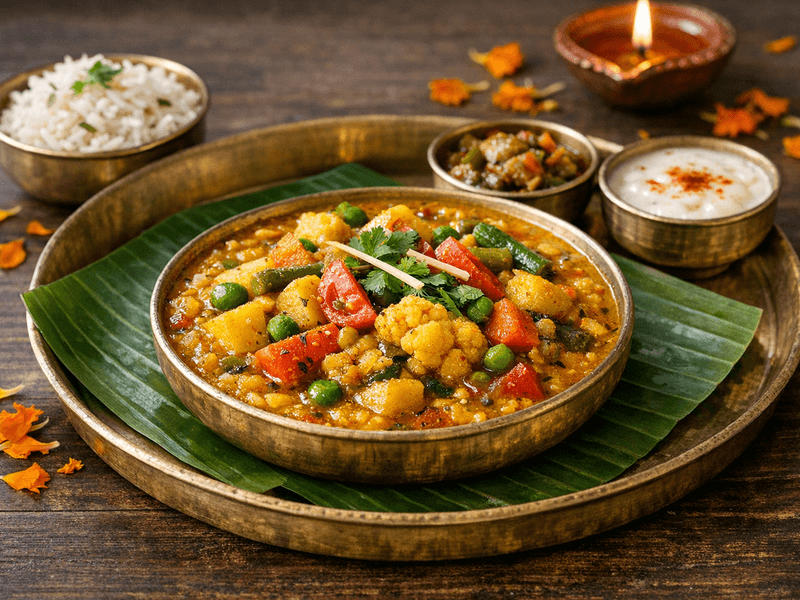
Mixed Vegetable and Dal Curry
Lunch • India
How to Make Mixed Vegetable and Dal Curry (Traditional & Healthy Version)
Mixed Vegetable and Dal Curry is a wholesome, protein-rich Indian lunch classic that brings together the goodness of seasonal sabzi (vegetables) and nutritious dal (lentils). This comforting curry has been a staple in Indian households for generations, celebrated for its versatility and balanced flavors. Its origins are deeply rooted in the everyday thalis of North and South India, where dal forms the heart of a nutritious meal. The subtle aroma of jeera (cumin), fresh dhania (coriander), and the medley of colorful vegetables simmered with toor dal or moong dal makes this dish both hearty and satisfying. Whether served with steamed rice, rotis, or millets, this curry is a favorite during festivals like Navratri and Ganesh Chaturthi, when vegetarian meals take center stage. The dish is highly customizable, allowing each region and household to add their own twist, often reflecting the seasonal bounty available. With its mild spices and comforting taste, Mixed Vegetable and Dal Curry is not only delicious but also a fantastic choice for anyone looking for a healthy, filling, and easy-to-digest Indian lunch option.
Ingredients(for 1 medium bowl per serving)
- 1/2 cup Toor dal (split pigeon peas) (arhar dal)
- 1/2 cup Carrot (chopped)
- 1/2 cup French beans (finely chopped)
- 1/2 cup Cauliflower florets (gobi)
- 1 small Potato (aloo, diced)
- 1 medium Tomato (finely chopped)
- 1 small Onion (finely chopped, pyaz)
- 1 Green chilli (slit) - optional
- 1 tsp Ginger-garlic paste (adrak-lahsun)
- 1/4 tsp Turmeric powder (haldi)
- 1/4 tsp Red chilli powder (lal mirch) - optional
- 1/2 tsp Cumin seeds (jeera)
- 1/4 tsp Mustard seeds (rai) - optional
- 1/2 tsp Coriander powder (dhania powder)
- 2 tbsp Fresh coriander leaves (chopped, dhania)
- to taste Salt
- 1 tsp Oil (preferably mustard or sunflower oil)
- 2-2.5 cups Water (as required)
Instructions
- 1
Wash and soak the toor dal in water for 10 minutes. Meanwhile, chop all the vegetables and keep them ready.
10 minutes
Soaking dal reduces cooking time and enhances digestibility.
- 2
In a pressure cooker, add soaked dal, all chopped vegetables (carrot, beans, cauliflower, potato), turmeric powder, and 2 cups water. Pressure cook for 2 whistles on medium flame.
10 minutes
Do not overcook to retain the texture of the vegetables.
- 3
Heat oil in a kadhai or deep pan. Add cumin seeds and, if using, mustard seeds. Let them splutter.
2 minutes
Tempering (tadka) releases aromatic oils from the spices.
- 4
Add chopped onions and sauté until translucent. Add ginger-garlic paste and green chilli, sauté for a minute.
3 minutes
Sautéing onions and ginger-garlic brings depth and sweetness to the curry.
Why This Dish is Healthy
This dish is a healthy choice because it combines protein-rich dal with nutrient-dense mixed vegetables, making it a complete meal. The use of fresh, seasonal vegetables boosts antioxidants and fiber content, supporting weight management and gut health. Minimal use of oil and the absence of heavy cream or butter keeps the calorie count in check, making it suitable for weight loss and diabetic-friendly diets. The spices used not only enhance flavor but also offer health benefits.
Mixed Vegetable and Dal Curry is packed with plant-based protein from toor dal, dietary fiber from a variety of vegetables, and essential micronutrients like iron, potassium, and vitamin C. The use of minimal oil and the inclusion of turmeric, ginger, and garlic make this dish anti-inflammatory and easy on the stomach. This recipe is low in saturated fat and free of cholesterol, supporting heart health. Lentils provide complex carbohydrates for sustained energy, while vegetables ensure a broad spectrum of vitamins and minerals vital for immunity and digestion.
Pro Tips
- 💡Tip 1: Use a mix of colored vegetables for better nutrition and appeal.
- 💡Tip 2: Add a pinch of asafoetida (hing) while tempering for improved digestion.
- 💡Tip 3: For extra flavor, squeeze a few drops of lemon juice before serving.
Storage & Serving
Store leftovers in an airtight container in the refrigerator for up to 2 days. Reheat gently on the stove, adding a splash of water if needed. Avoid freezing as texture may change.
Best served: Lunch
Nutrition Facts
| Nutrient | Per 100g |
|---|---|
| Energy | 180.0 kcal |